





Can a Corrugated Coffee Dispenser Keep Coffee Hot Without Foam?
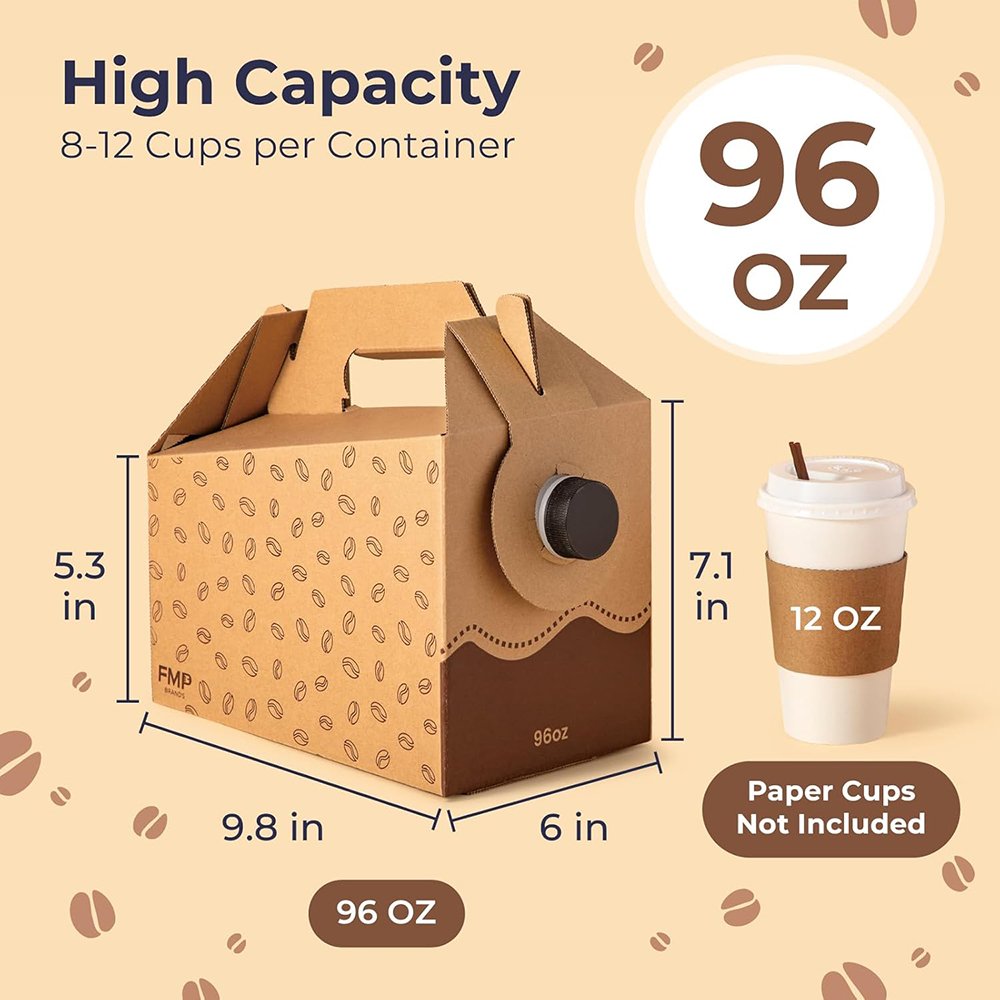
As coffee consumption continues to shift toward takeaway, catering, corporate events, and mobile beverage service, corrugated coffee dispenser packaging has become one of the fastest-growing alternatives to traditional insulated beverage containers. Modern coffee brands are looking for packaging that is portable, sustainable, brandable, and capable of maintaining serving temperature without relying on expanded polystyrene (EPS) or other plastic foam inserts.
At the same time, environmental regulations and consumer expectations are changing. Many countries and retailers are reducing or banning foam packaging due to recycling challenges, pushing manufacturers to develop plastic-free thermal packaging solutions.
One common question from coffee brands is:
“How long can a corrugated coffee dispenser keep coffee at approximately 80°C without using plastic foam insulation?”
The answer depends on far more than simply choosing thicker corrugated board. Heat retention is influenced by multiple design variables, including box structure, corrugated flute combination, air insulation, bag material, dispenser capacity, tap position, ambient temperature, and transportation conditions.
As a professional coffee bag in box manufacturer, BM has more than ten years of experience developing customized paper packaging, beverage dispensers, gift boxes, and retail display solutions. We work with coffee chains, beverage brands, foodservice distributors, and event organizers to design Coffee Box Dispensers, Coffee to Go Containers, Portable Coffee Carrier Containers, and complete coffee BIB systems that balance insulation, sustainability, durability, and attractive branding.
This guide explores how a corrugated coffee dispenser retains heat, what factors affect thermal performance, and how innovative structural design can significantly extend hot coffee holding time—without adding plastic foam inserts.
Why Corrugated Coffee Dispenser Packaging Is Replacing Foam-Based Beverage Containers
Traditional insulated beverage dispensers often rely on:
- Expanded polystyrene (EPS)
- Polyurethane foam
- Plastic insulation shells
Although these materials provide excellent insulation, they also introduce several disadvantages:
- Difficult recycling
- Larger environmental footprint
- Increased transportation volume
- Poor sustainability image
- Regulatory restrictions in many markets
A modern corrugated coffee dispenser offers several advantages:
- Fully printable brand graphics
- Lower shipping weight
- Flat-packed transportation
- Better recyclability
- Lower storage costs
- Easier customization
For many coffee brands, sustainable packaging has become part of the overall customer experience.
How a Corrugated Coffee Dispenser Retains Heat
Unlike vacuum-insulated containers, a corrugated coffee dispenser does not actively trap heat. Instead, it slows heat loss by reducing thermal transfer through carefully engineered packaging layers.
Heat escapes through three primary mechanisms:
1. Heat Conduction
Heat naturally travels from hot coffee toward the cooler environment.
Major conduction paths include:
- Inner bag
- Corrugated board
- Dispensing tap
- Handle area
Reducing conductive heat transfer is one of the primary goals of structural packaging design.
2. Heat Convection
Air movement removes heat from the package surface.
Outdoor events, delivery vehicles, or air-conditioned cafés accelerate this process.
Packaging engineers can reduce convection by minimizing unnecessary openings and creating enclosed air chambers within the box.
3. Thermal Radiation
Even without direct contact, hot surfaces continuously radiate heat.
Although radiation represents a smaller percentage of overall heat loss compared with conduction and convection, reflective inner materials or optimized board structures can help minimize this effect.
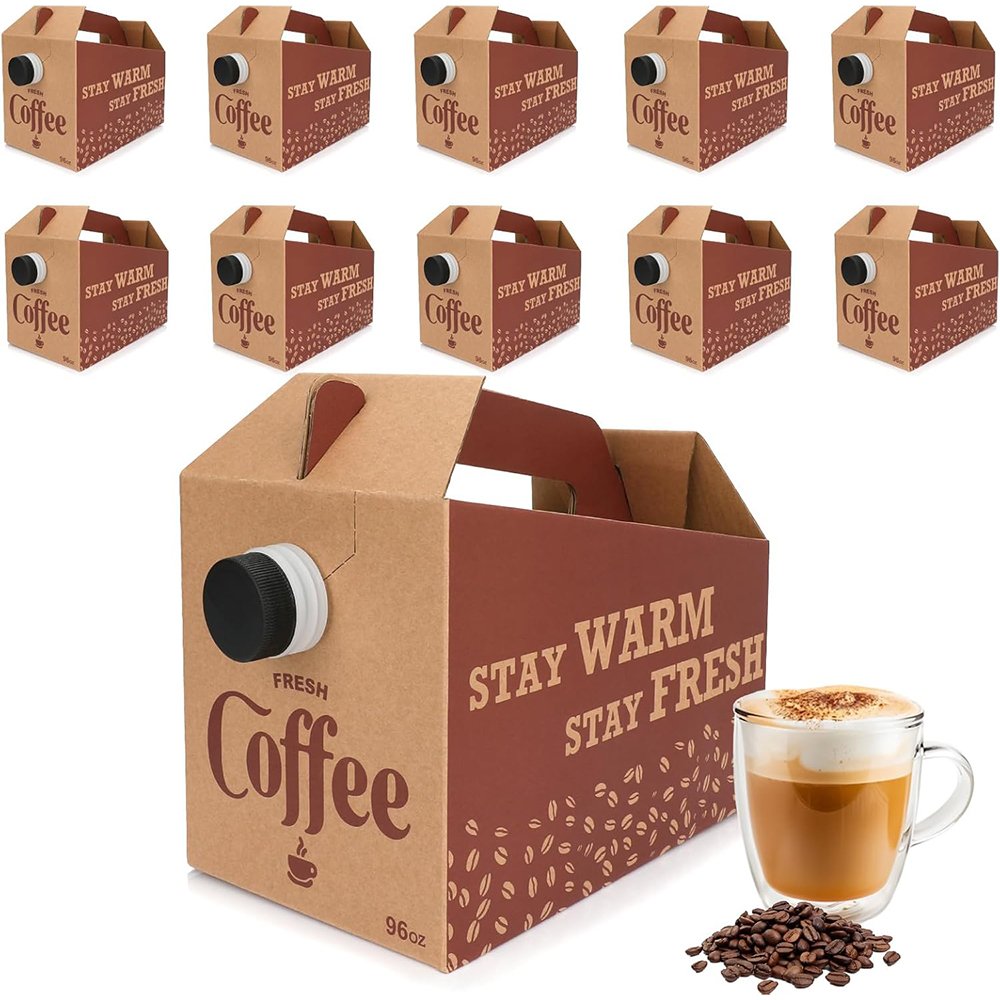
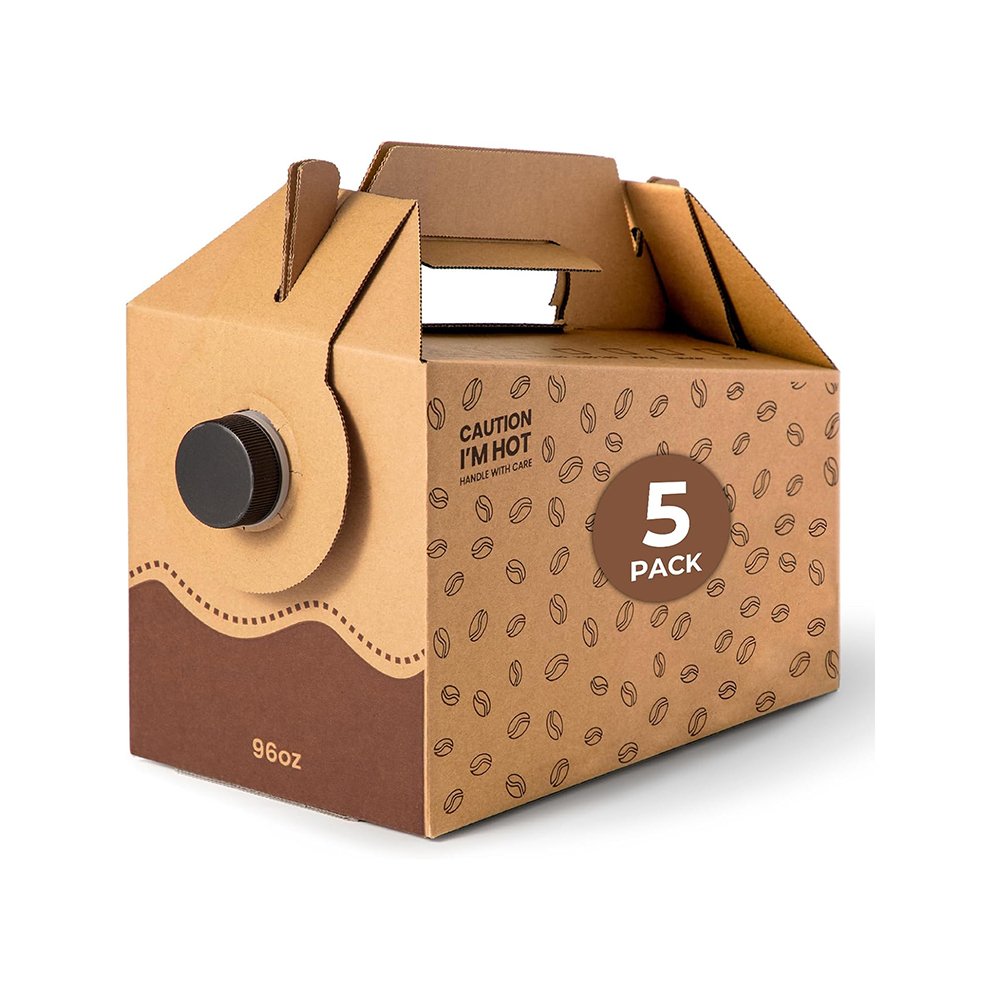
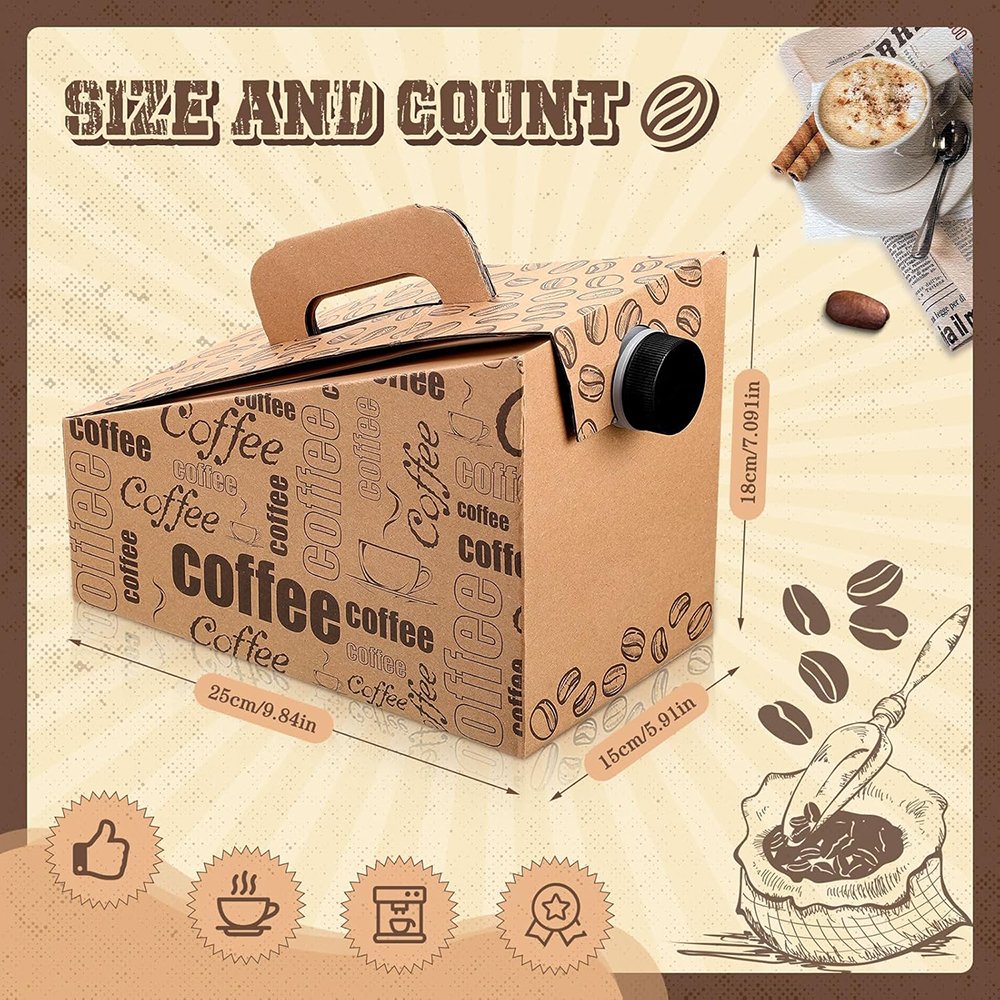
Corrugated Coffee Dispenser Design Factors That Affect Heat Retention
The insulation performance of a corrugated coffee dispenser depends on a combination of engineering decisions rather than a single material.
1. Corrugated Flute Selection
The corrugated medium naturally creates air pockets, and still air is an effective thermal insulator.
Different flute profiles offer different insulation characteristics.
Single-Wall Corrugated Board
Advantages:
- Lightweight
- Economical
- Easy printing
Limitations:
- Limited insulation
- Lower compression strength
Suitable for:
- Short-duration coffee service
- Local takeaway
Double-Wall Corrugated Board
Double-wall structures significantly improve:
- Thermal resistance
- Stacking strength
- Structural rigidity
This design is commonly recommended for commercial Coffee Box Dispensers.
Triple-Wall Corrugated Board
For larger capacities or long transportation distances, triple-wall board provides:
- Greater air insulation
- Higher compression strength
- Improved temperature stability
However, it also increases weight and material cost.
A professional coffee dispenser factory balances these trade-offs according to the customer’s application.
Air Gap Engineering in Corrugated Coffee Dispenser Design
One of the most effective insulation methods does not require expensive materials.
It simply requires intelligent structural design.
A well-designed corrugated coffee dispenser intentionally creates controlled air spaces between:
- The beverage bag
- The outer box
- Reinforcement panels
These enclosed air pockets slow heat transfer.
Instead of adding foam, engineers optimize:
- Internal spacing
- Folded paper structures
- Multi-layer corrugated panels
This approach maintains sustainability while improving insulation performance.
The Coffee Bag Also Influences Heat Retention
The outer box receives most of the attention, but the inner coffee BIB bag also affects thermal performance.
A professional coffee bag in box manufacturer carefully evaluates:
- Film thickness
- Barrier structure
- Heat resistance
- Flexibility
Certain multilayer barrier films reduce thermal loss more effectively than thin single-layer films while also preserving coffee aroma and preventing oxygen ingress.
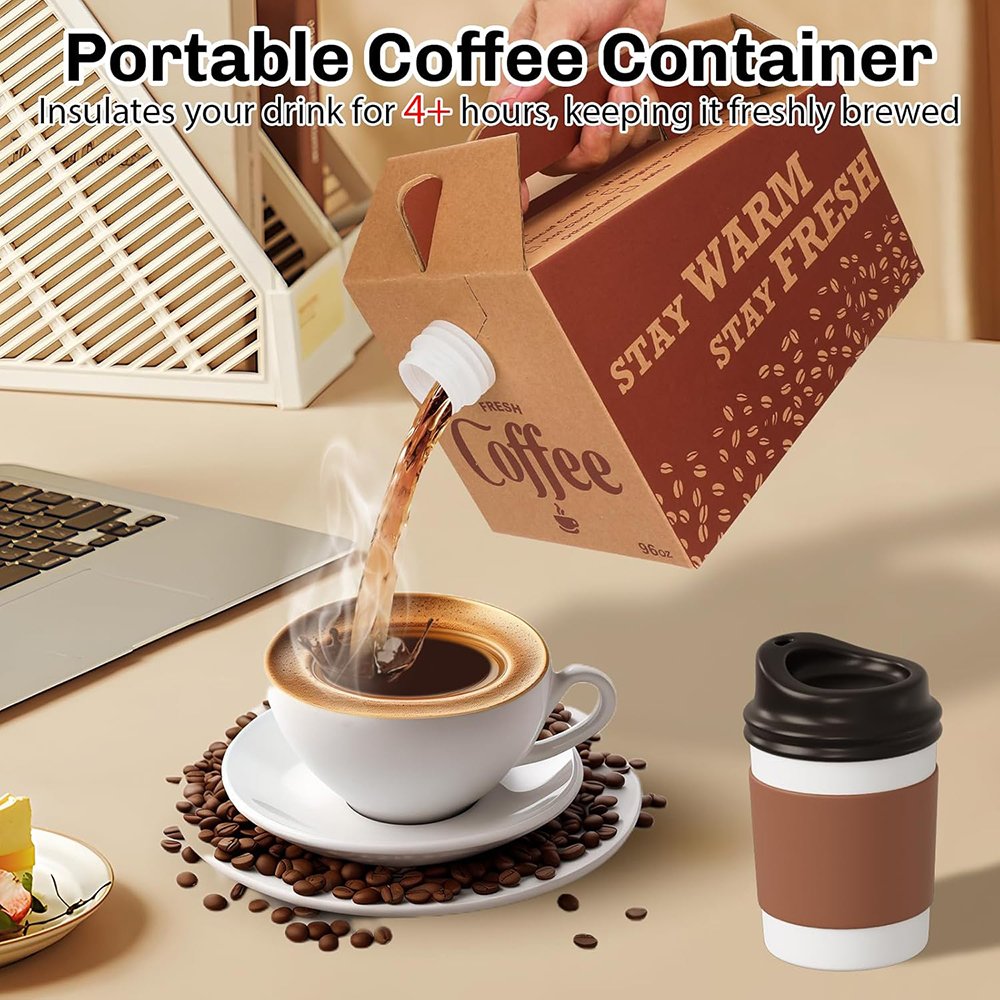
Capacity Matters: Larger Coffee Dispensers Stay Hot Longer
Thermal mass is one of the biggest contributors to heat retention.
A 10L dispenser naturally cools more slowly than a 3L dispenser because:
- Larger liquid volume stores more heat energy.
- The surface-area-to-volume ratio decreases.
- Less heat escapes per liter of coffee.
Approximate trends under typical indoor conditions (20–25°C ambient temperature) are:
| Capacity | Relative Heat Retention |
|---|---|
| 3L | Suitable for short events or takeaway service |
| 5L | Balanced performance for cafés and meetings |
| 10L | Longest temperature retention for catering and events |
Actual holding time depends on dispenser design, dispensing frequency, ambient temperature, and whether the tap is opened repeatedly.
How Corrugated Coffee Dispenser Structure Improves Thermal Performance
Double-Wall Side Panels
Adding secondary paperboard walls creates additional insulation layers.
Benefits include:
- Reduced conductive heat transfer
- Improved compression resistance
- Better transportation durability
Internal Paper Honeycomb Supports
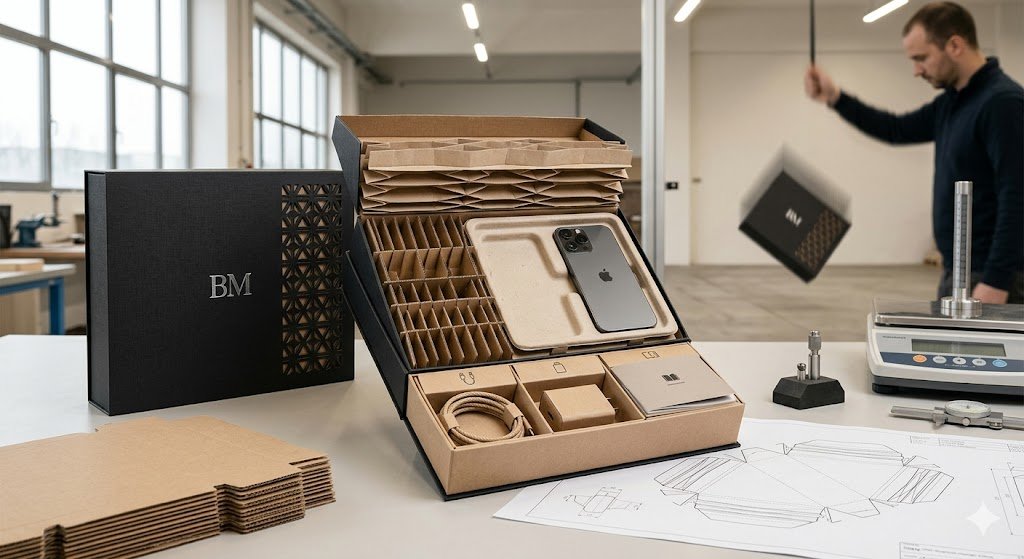
Instead of foam inserts, some premium designs use paper honeycomb structures.
Advantages:
- Excellent insulation
- Lightweight construction
- قابلة لإعادة التدوير بالكامل
- High compression strength
This approach aligns with brands pursuing plastic-free packaging.
Folded Paper Air Chambers
Creative folding structures can create multiple enclosed air chambers that function similarly to insulated wall cavities.
These structures:
- Trap still air
- Reduce heat movement
- Require no additional materials
Can Reflective Paper Improve Corrugated Coffee Dispenser Performance?
Yes—within limits.
Reflective paper or metallized paper liners can reduce radiant heat loss, especially when combined with air gaps.
However, reflective materials alone cannot replace structural insulation.
The best performance comes from combining:
- Double-wall corrugated board
- Air chamber engineering
- High-quality coffee BIB films
- Controlled vent placement
- Optimized dispenser geometry
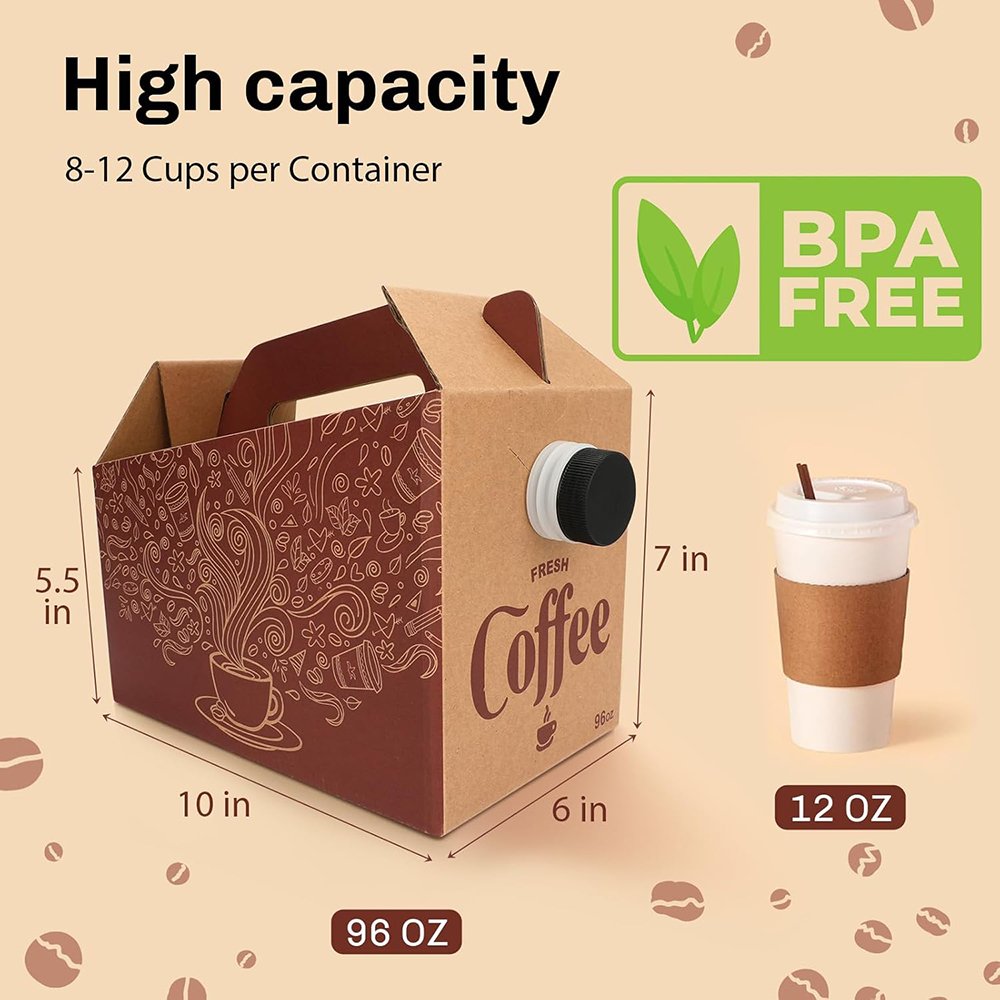
Why the Dispensing Tap Can Become a Heat Loss Point
Every Coffee Beverage Dispenser supplier understands that the tap is more than a dispensing component.
It also acts as a thermal bridge.
Heat travels through:
- Valve components
- Plastic body
- External spigot
Professional engineering reduces this loss by:
- Minimizing exposed valve surfaces
- Using shorter flow channels
- Improving valve sealing
- Optimizing spigot placement
Environmental Conditions Affect Corrugated Coffee Dispenser Performance
Heat retention varies dramatically depending on where the dispenser is used.
Common factors include:
- Outdoor temperature
- Wind exposure
- Air conditioning
- Direct sunlight
- Repeated dispensing frequency
For example:
A dispenser used inside a meeting room will typically retain serving temperature significantly longer than the same dispenser used outdoors during winter or in a delivery vehicle with frequent door openings.
Therefore, manufacturers should design packaging based on actual usage scenarios rather than laboratory conditions alone.
Testing Methods Used by Professional Coffee Dispenser Manufacturers
Reliable thermal performance should always be validated through testing.
Professional coffee box factory engineering teams typically perform:
Thermal Holding Tests
Measure beverage temperature over time under controlled ambient conditions.
Transportation Simulation
Evaluate thermal stability after vibration, handling, and stacking.
Structural Compression Testing
Ensure insulation structures do not collapse under liquid weight.
Dispensing Cycle Testing
Repeated dispensing is simulated to understand how opening frequency affects temperature retention.
These evaluations provide practical data that supports packaging optimization.
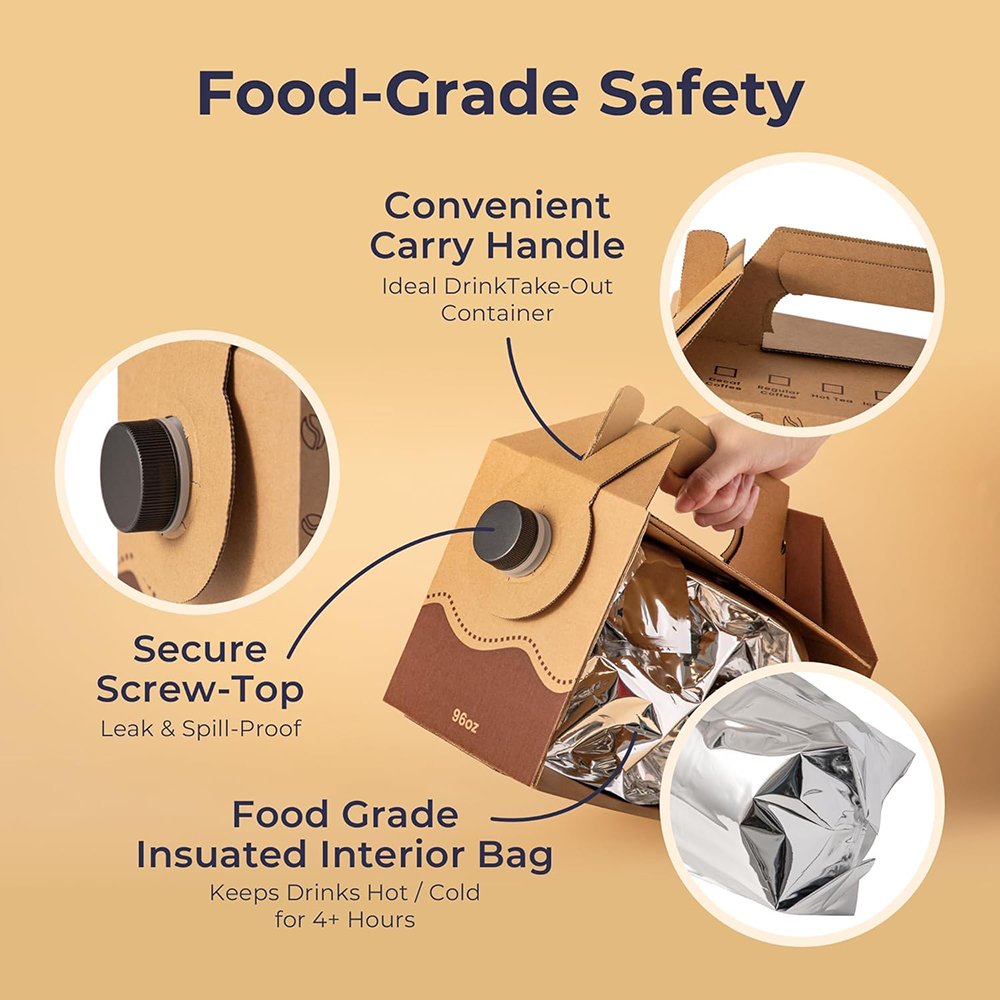
Common Design Mistakes That Reduce Heat Retention
Using Thin Single-Wall Board
Although economical, single-wall corrugated board often loses heat quickly in commercial beverage applications.
Oversized Internal Space
Large empty gaps allow excessive air circulation inside the package, accelerating cooling.
Ignoring Tap Placement
Poorly positioned taps expose larger portions of the beverage system to ambient air.
Prioritizing Appearance Over Structure
Premium printing is important, but structural engineering determines insulation performance.
A visually attractive dispenser that cools too quickly ultimately reduces customer satisfaction.
How BM Designs High-Performance Corrugated Coffee Dispensers
As an experienced coffee bag in box manufacturer, BM develops customized beverage packaging systems that integrate:
- Thermal engineering
- Structural optimization
- Brand presentation
- الاستدامة
- Transportation reliability
Our engineering team collaborates with customers to optimize:
- Capacity selection
- Corrugated flute combinations
- Paperboard grades
- Internal reinforcement
- Handle design
- Tap positioning
- Printing finishes
- Logistics performance
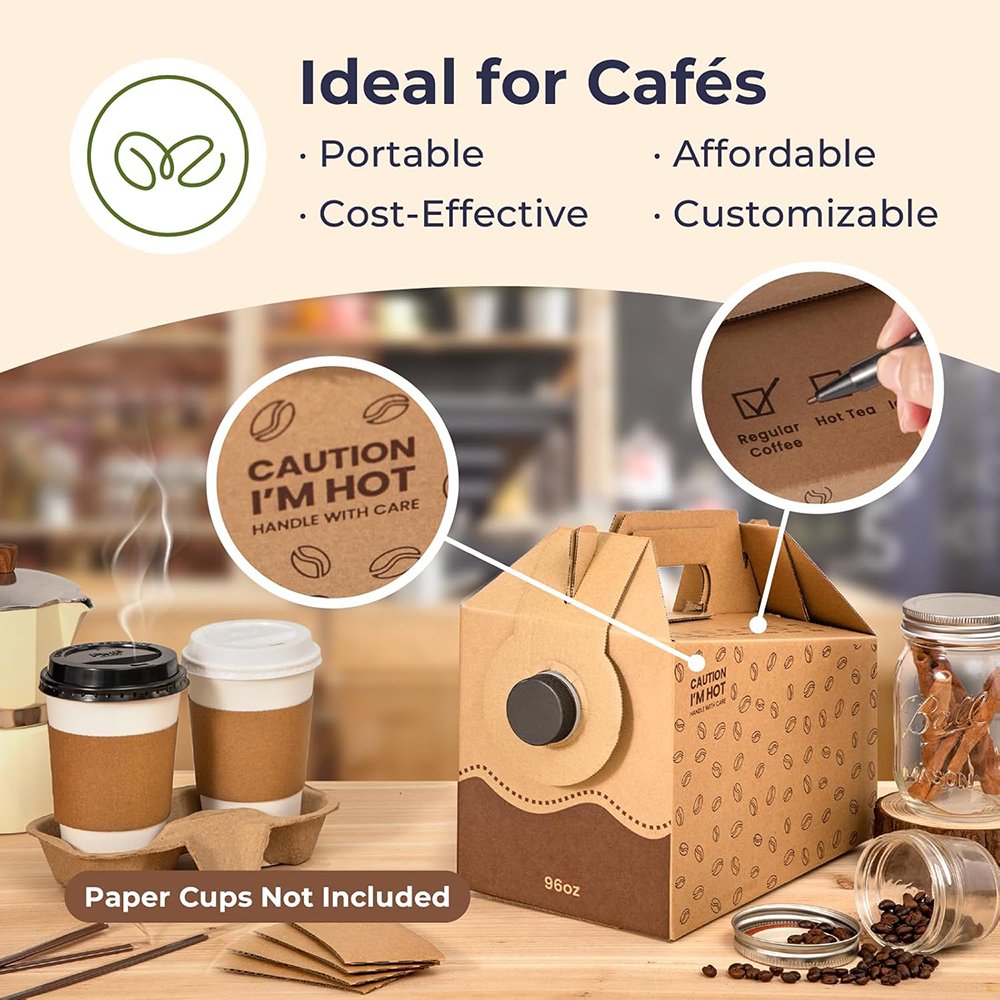
Whether the application is a Coffee Box Dispenser, Coffee to Go Container, Coffee to Go Drink Container, or Portable Coffee Carrier Container, BM focuses on creating packaging that performs reliably while enhancing the customer’s brand image.
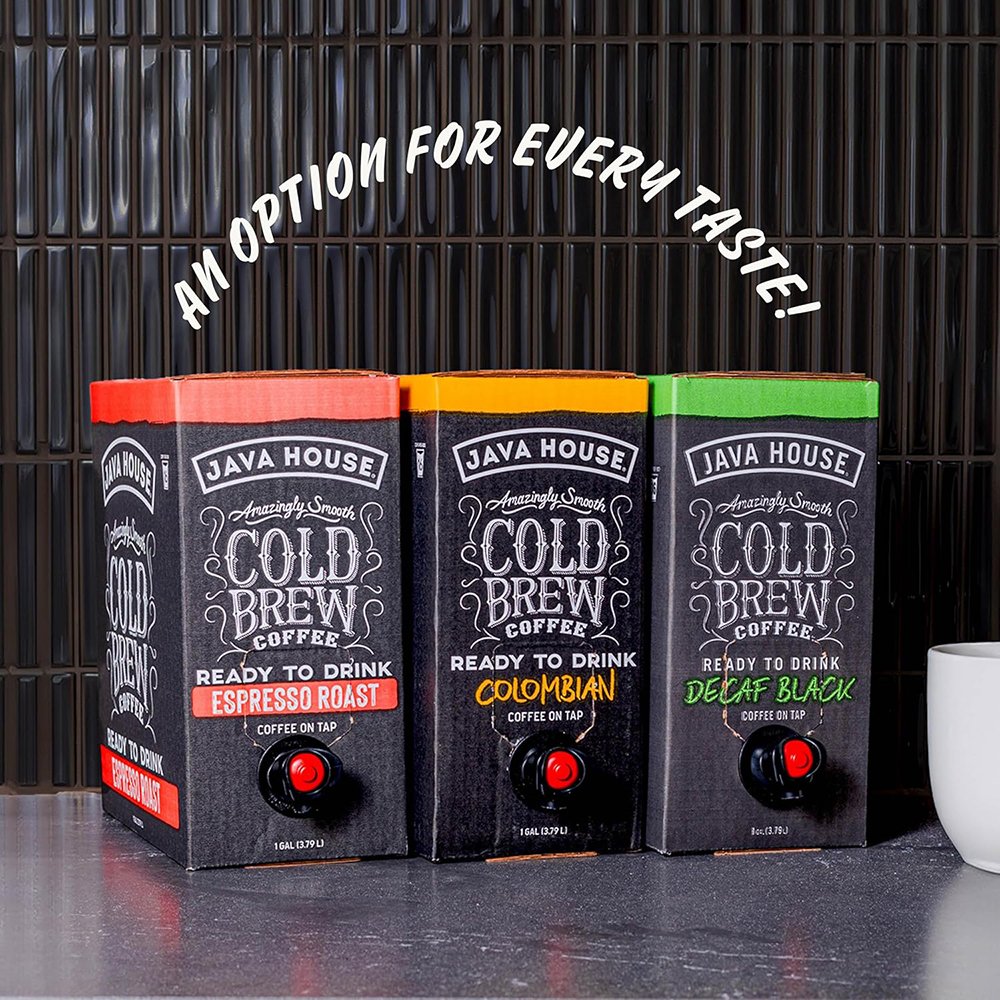
Future Trends for Corrugated Coffee Dispenser Packaging
The next generation of corrugated coffee dispenser solutions will increasingly combine sustainability with advanced engineering.
Emerging trends include:
- Plastic-free insulation systems
- Recyclable paper honeycomb thermal structures
- Lightweight high-strength corrugated materials
- Bio-based moisture-resistant coatings
- Digital temperature indicators
- Smart NFC-enabled coffee BIB packaging
- Improved thermal barrier paper technologies
These innovations will help coffee brands reduce environmental impact while maintaining excellent beverage quality.
Smart Structural Design Can Extend Heat Retention Without Plastic Foam
A corrugated coffee dispenser can effectively maintain hot coffee without plastic foam inserts—but success depends on intelligent engineering rather than simply adding thicker paper.
The best-performing systems combine:
- Optimized corrugated flute structures
- Multi-layer air chamber design
- High-performance coffee BIB films
- Moisture-resistant paperboard
- Strong compression-resistant construction
- Carefully designed dispensing taps
- Real-world transportation and thermal testing
Rather than relying on foam insulation, modern paper-based engineering enables coffee brands to deliver sustainable, premium, and reliable beverage packaging that meets both customer expectations and environmental goals.
As a trusted coffee dispenser factory and coffee bag in box manufacturer, BM provides customized packaging solutions for global coffee brands, including Coffee Box Dispensers, Coffee Beverage Dispenser supplier services, Coffee to Go Containers, Coffee to Go Drink Containers, and Portable Coffee Carrier Containers.
By combining packaging innovation with manufacturing expertise, BM helps customers develop corrugated coffee dispenser systems that protect beverage quality, strengthen brand value, and support a more sustainable future.
نبذة عن شركة بي إم لتصنيع علب الورق
نحن مصنع متخصص في تصميم وتصنيع علب التغليف الورقية حسب الطلب، ولدينا خبرة عشر سنوات في هذا المجال. نركز على تزويد عملائنا بحلول تغليف عالية الجودة ومخصصة، تغطي مجالات الإلكترونيات الاستهلاكية، والمستلزمات الطبية، ومستحضرات التجميل، وغيرها، وذلك من خلال تصميم مبتكر وتقنية متقنة، لإضفاء لمسة جمالية مميزة على منتجاتهم.
بصفتنا مصنعًا متخصصًا في تصميم وتصنيع علب التغليف الورقية حسب الطلب، نقدم خدمات شاملة تغطي الإلكترونيات الاستهلاكية، والمستلزمات الطبية، ومستحضرات التجميل، وغيرها من المجالات. سواءً أكان الأمر يتعلق بعلبة هدايا فاخرة لأجهزة إلكترونية راقية، أو تغليف احترافي للمعدات الطبية، أو علبة خارجية أنيقة لمستحضرات التجميل، فإننا قادرون على تصميم حلول التغليف الأمثل وفقًا لاحتياجات عملائنا وخصائص منتجاتهم. وقد حظيت خبرتنا وكفاءتنا بتقدير العديد من العلامات التجارية، وأصبحنا شريكًا موثوقًا به لها.
لماذا تختار مصنع بي إم لصناديق الورق؟
جودة فائقة: بصفتنا أحد أفضل مصنعي علب الكرتون المخصصة في الصين، يضمن فريق مراقبة الجودة لدينا أن كل منتج تستلمه يتمتع بأعلى جودة. لدينا أجهزة اختبار جودة احترافية.
تصميم المنتج: يمتلك قسم العينات لدينا عملية متكاملة لتحويل الرسومات إلى منتجات واقعية. كما نعمل على تحسين تصميم منتجك بناءً على خبرتنا الطويلة. أخبرنا برأيك.
وقت تسليم ثابت: بصفتنا أفضل مصنع ومورد لصناديق الهدايا، لدينا قدرة تصنيعية كافية، ولن تتغلب علينا الطلبات الكبيرة، وسنظل قادرين على تسليم طلبك في الوقت المحدد.
أفضل سعر: نحن مصنع متخصص في علب الورق وأفضل مصنع في الصين، ولهذا السبب يمكننا توفير أكياس عالية الجودة بأفضل سعر.
الإدارة الدقيقة: لا يمكن تحقيق أي شيء دون تطبيق إدارة دقيقة. نحن شركة تمتلك نظام إدارة متكامل.
خدمة على مدار الساعة: بصفتنا أفضل مصنّع لصناديق الورق، نوفر استجابة فورية على مدار الساعة طوال أيام الأسبوع. نرحب بملاحظاتكم لتحسين خدماتنا. تواصلوا معنا.(+86 18925520049)
الأسئلة الشائعة حول صندوق الورق من بي إم
نحن شركة تصنيع صينية رائدة، ويقع مصنعنا في دونغقوان. نرحب بزيارتكم لمصنعنا!
نحن شركة متخصصة في توريد منتجات التغليف الورقي، وخاصة في مجال تغليف الهدايا. نستطيع إنتاج أنواع مختلفة من الصناديق والأكياس الورقية متعددة الاستخدامات.
• نقدم خدمات متكاملة ونقبل التصاميم المخصصة حسب متطلباتكم.
• بالطبع، عادةً ما نقدم عينات مجانية، وما عليك سوى تغطية تكاليف الشحن. أما بالنسبة للعينات المطبوعة حسب الطلب، فيُرجى إرسال متطلباتك إلينا للتحقق من تكلفة العينة.
• يستغرق إنتاج العينة حوالي 7 أيام.
نعم، نحن نقدم خدمات تصميم مجانية، وتصميم هيكلي، وتصميم جرافيكي بسيط.
بالتأكيد. يمكننا تصميم أي عبوة حسب طلبك. نقدم الآن خدمة تصميم وتصنيع العبوات حسب الطلب (ODM) للكميات الصغيرة من 100 إلى 500 قطعة، مع إمكانية إضافة شعارك الخاص.
اعتمادًا على كمية الطلب وتفاصيل الإنتاج، سيستغرق الأمر حوالي 15 إلى 20 يومًا.
يتم دائمًا إجراء عينة ما قبل الإنتاج قبل بدء الإنتاج بكميات كبيرة؛ ويتم دائمًا إجراء فحص نهائي قبل الشحن.
• الحجم، والمادة، وتفاصيل الطباعة، والكمية، ووجهة الشحن، إلخ.
• يمكنك أيضًا إخبارنا بمتطلباتك وسنوصي لك بالمنتجات المناسبة.
• عن طريق البحر أو الجو أو البريد السريع.
• إذا كان لديك وكيل شحن خاص بك في الصين، فسيكون السعر هو سعر المصنع أو سعر FOB.
•CFR أو CIF، إلخ، إذا كنت بحاجة إلينا للشحن نيابة عنك.
• يمكن استخدام DDP و DDU أيضًا.
• المزيد من الخيارات، سنأخذ خياراتك بعين الاعتبار.
• يتحدد السعر بناءً على الكمية والمادة وطريقة المعالجة والحجم وعوامل أخرى. بالإضافة إلى ذلك، وبفضل جهودنا المستمرة
بفضل الابتكار التكنولوجي، تتميز أسعار بعض منتجاتنا بتنافسيتها العالية، لذا يرجى الاتصال بنا للحصول على عرض أسعار.