




Is a Coffee Bag in Box Really Eco-Friendly?
As sustainability becomes a purchasing priority for coffee brands and consumers alike, packaging is under greater scrutiny than ever before. Coffee chains, specialty roasters, catering companies, and beverage distributors are actively looking for environmentally responsible alternatives to single-use plastic containers and rigid beverage dispensers.
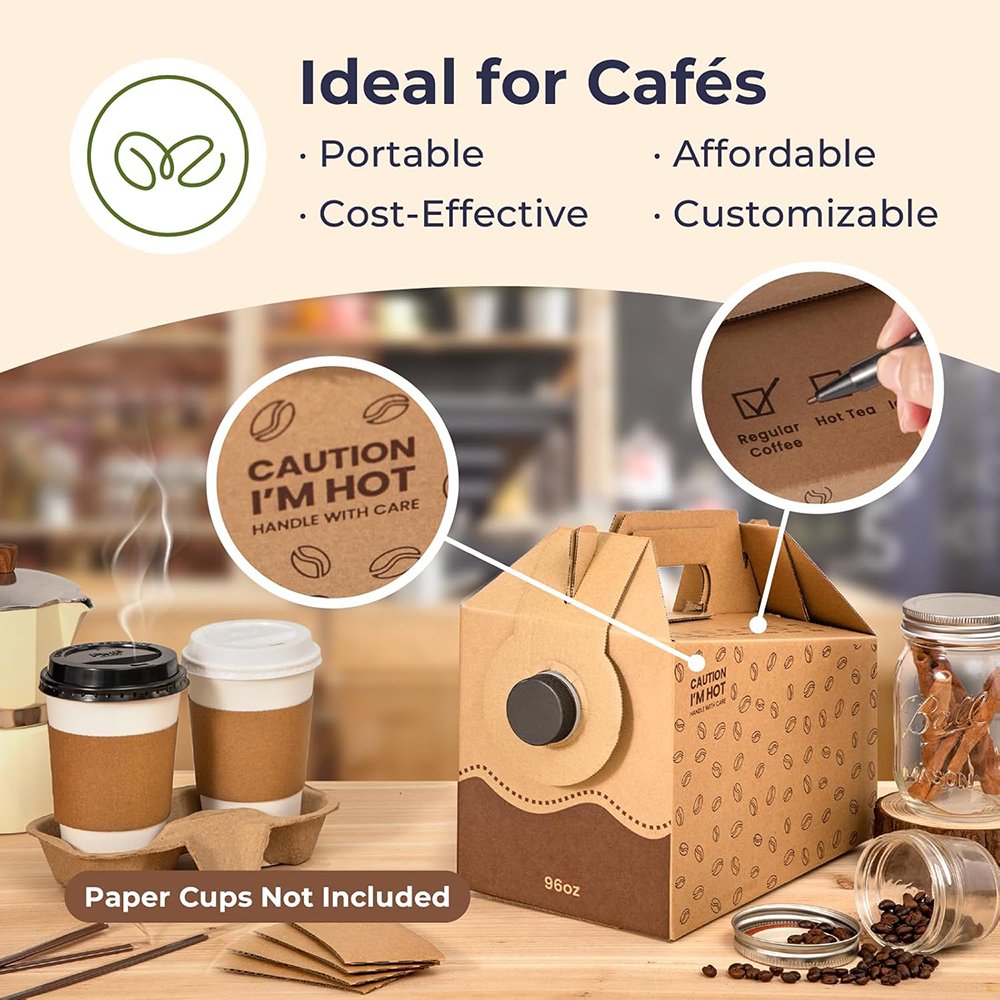
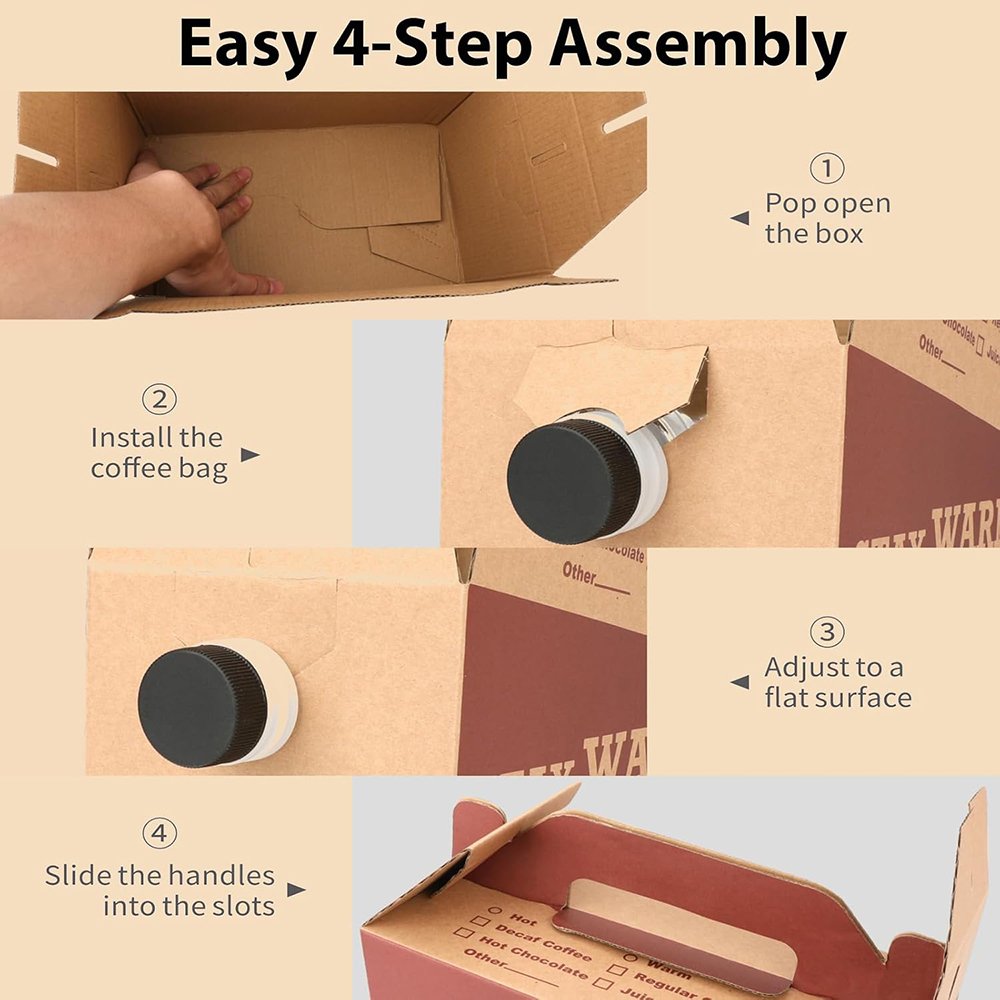
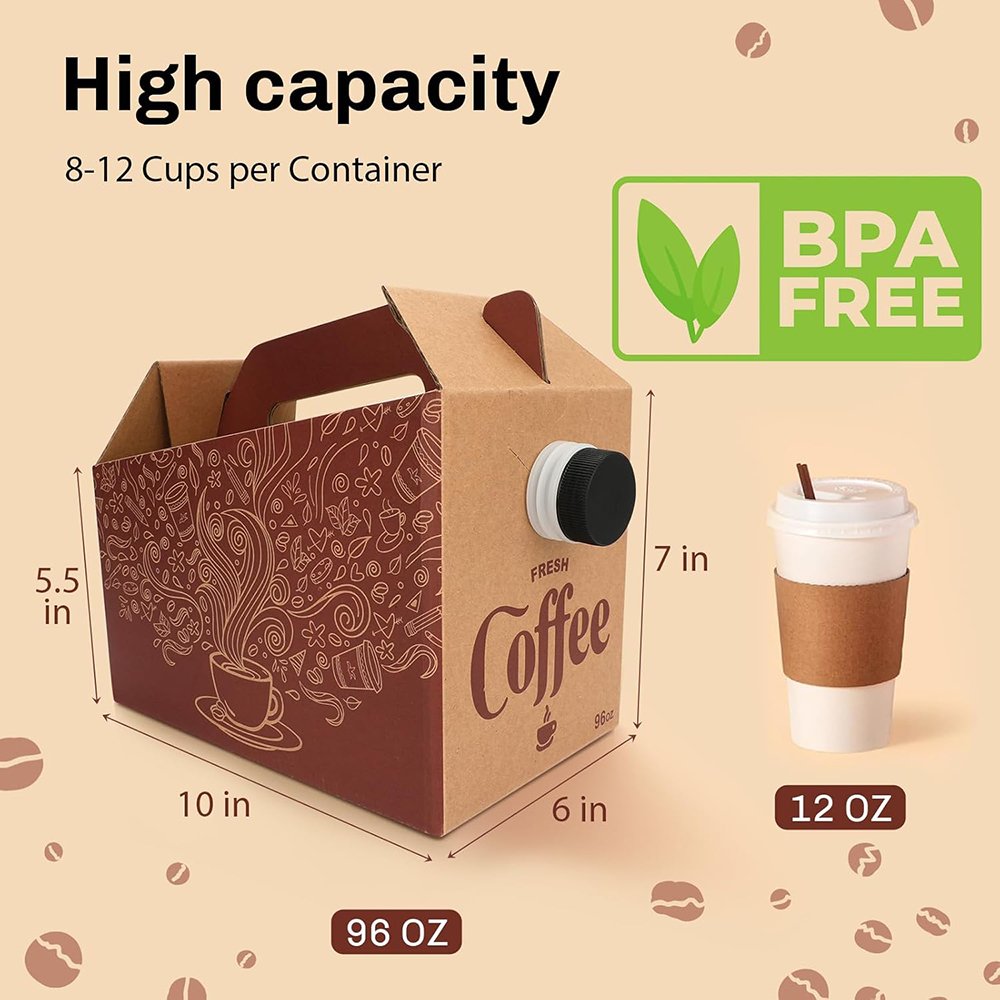
Among the most popular solutions is the 箱入りコーヒーバッグ, also known as coffee BIB. Combining a corrugated paper outer box with a flexible inner bag and dispensing tap, a 箱入りコーヒーバッグ offers excellent portability, reduced transportation costs, and a premium customer experience.
However, one question is asked repeatedly by procurement managers, sustainability officers, and environmentally conscious consumers:
Is a coffee bag in box truly 100% recyclable if the outer box is made from kraft paper but the inner bag consists of multiple plastic layers?
The short answer is:
Usually no—but it is still one of the most sustainable beverage packaging systems available today when properly designed, separated, and recycled.
Understanding why requires looking beyond simple marketing claims.
As an experienced 箱入りコーヒーバッグメーカー, BM has over ten years of expertise designing customized beverage packaging solutions for coffee brands worldwide. Our engineering team continuously develops environmentally responsible 持ち帰り用コーヒー容器, コーヒーボックスディスペンサー, and 携帯用コーヒーキャリア容器 that balance product protection, food safety, user convenience, and sustainability.
This comprehensive guide explains how a 箱入りコーヒーバッグ is constructed, what components are recyclable, why multilayer films are still necessary, emerging recyclable-material technologies, and how coffee brands can reduce their environmental footprint without sacrificing product performance.
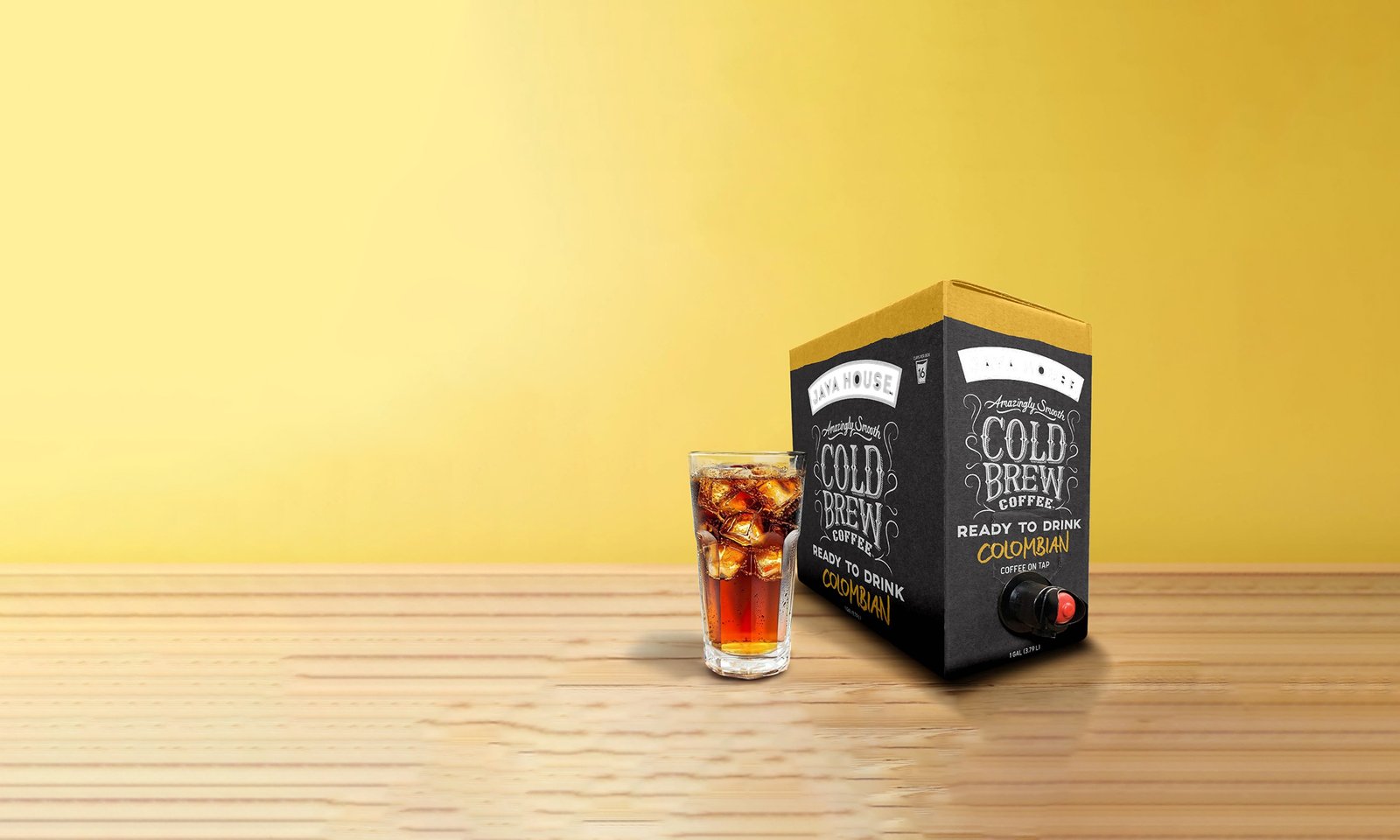
Understanding the Structure of a Coffee Bag in Box
Before discussing recyclability, it is important to understand the individual components of a 箱入りコーヒーバッグ.
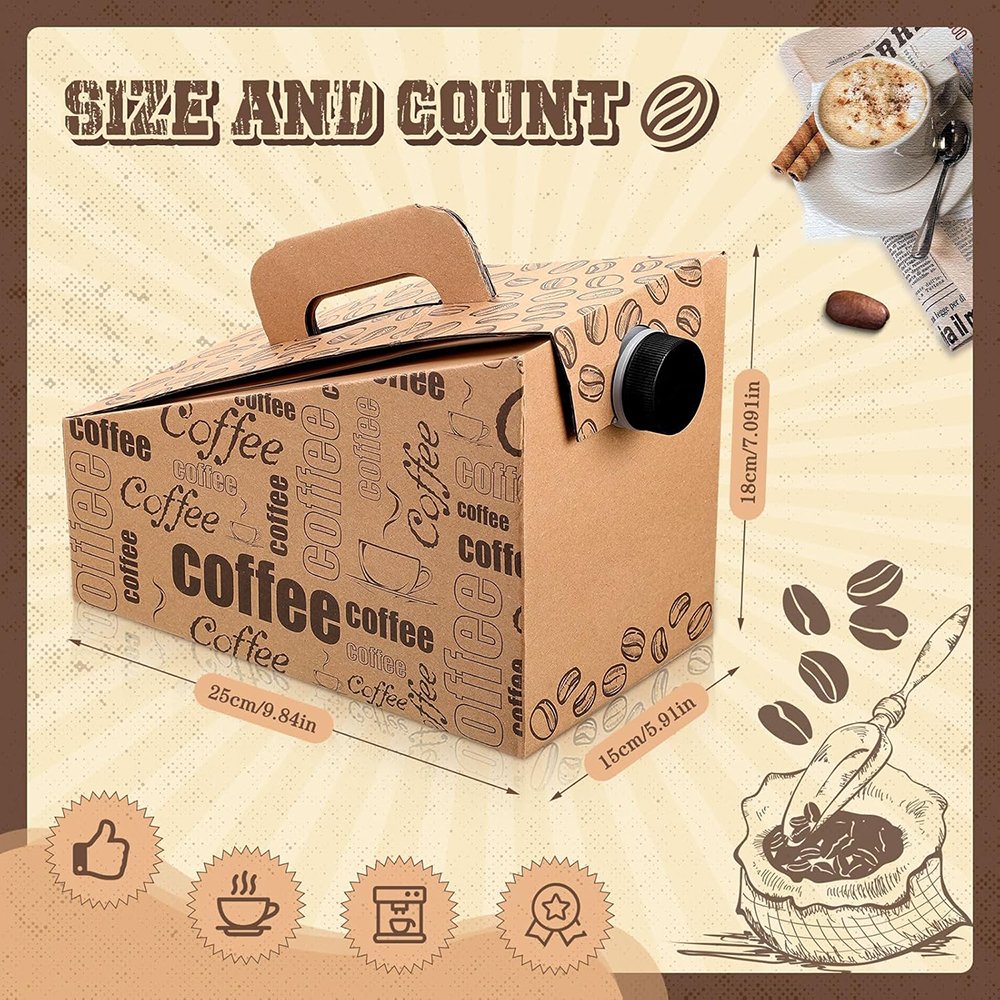
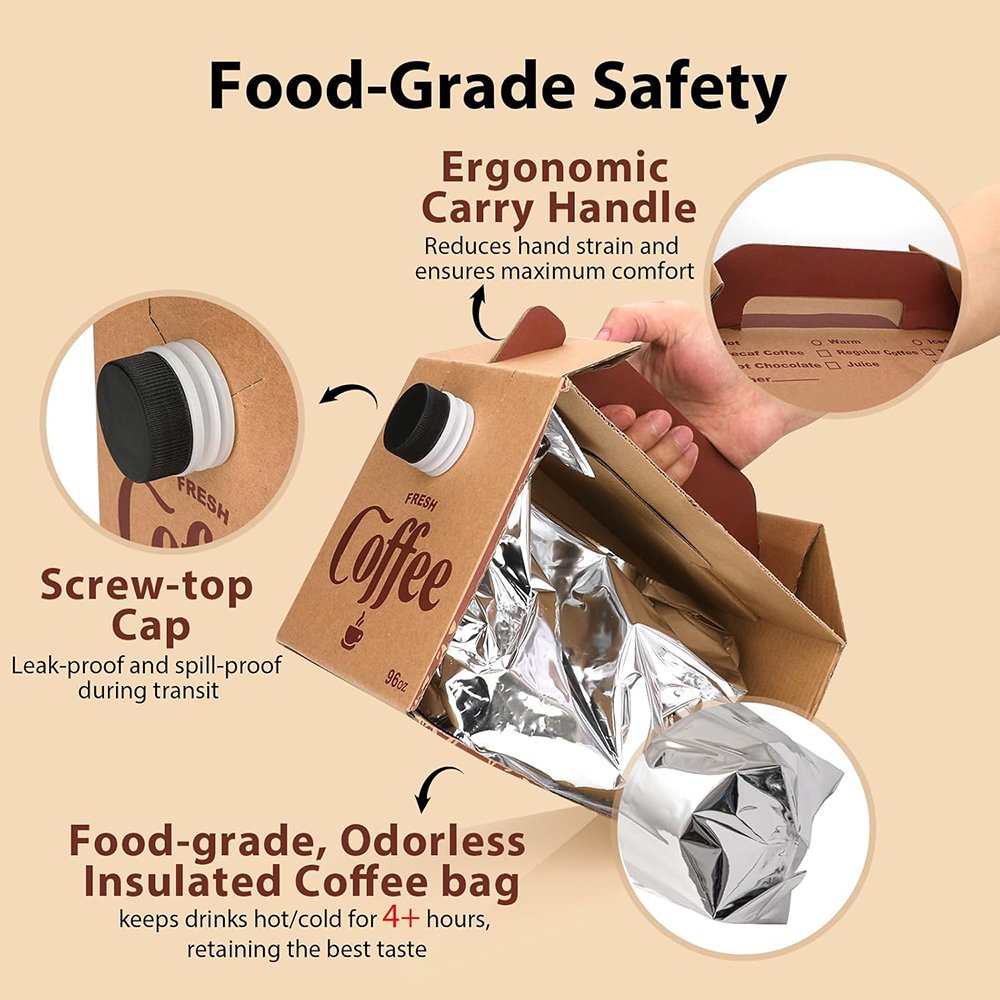
A typical system contains:
- Corrugated kraft paper outer box
- Flexible inner barrier bag
- Dispensing tap (spigot)
- Optional carrying handle reinforcement
- Printing inks
- Adhesives
- Protective coatings
Each material has different recycling characteristics.
Coffee Bag in Box Outer Kraft Box: Highly Recyclable
The corrugated kraft box is generally the easiest component to recycle.
High-quality kraft paper typically offers:
- Excellent fiber recovery
- High recycled fiber value
- Wide acceptance in paper recycling systems
- Renewable raw materials
- Low transportation emissions due to flat shipping
If designed without excessive plastic lamination, the outer 箱入りコーヒーバッグ can usually enter conventional paper recycling streams after use.
Why Coffee Bag in Box Uses Multi-Layer Plastic Bags
Many consumers wonder why manufacturers do not simply replace the plastic bag with paper.
The answer lies in beverage preservation.
Coffee is extremely sensitive to:
- Oxygen
- Moisture
- Light
- Aroma loss
- Microbial contamination
Paper alone cannot provide sufficient protection.
Therefore, most 箱入りコーヒーバッグ systems use multilayer barrier films combining different polymers, each performing a unique function.
Typical layers may provide:
- Heat sealing
- Mechanical strength
- Oxygen barrier
- Moisture barrier
- Puncture resistance
- Flexibility
Without these properties, coffee quality and shelf life would decline significantly.
Why Multi-Layer Plastic Makes Coffee Bag in Box Recycling More Difficult
The challenge is not plastic itself.
The challenge is multiple materials permanently bonded together.
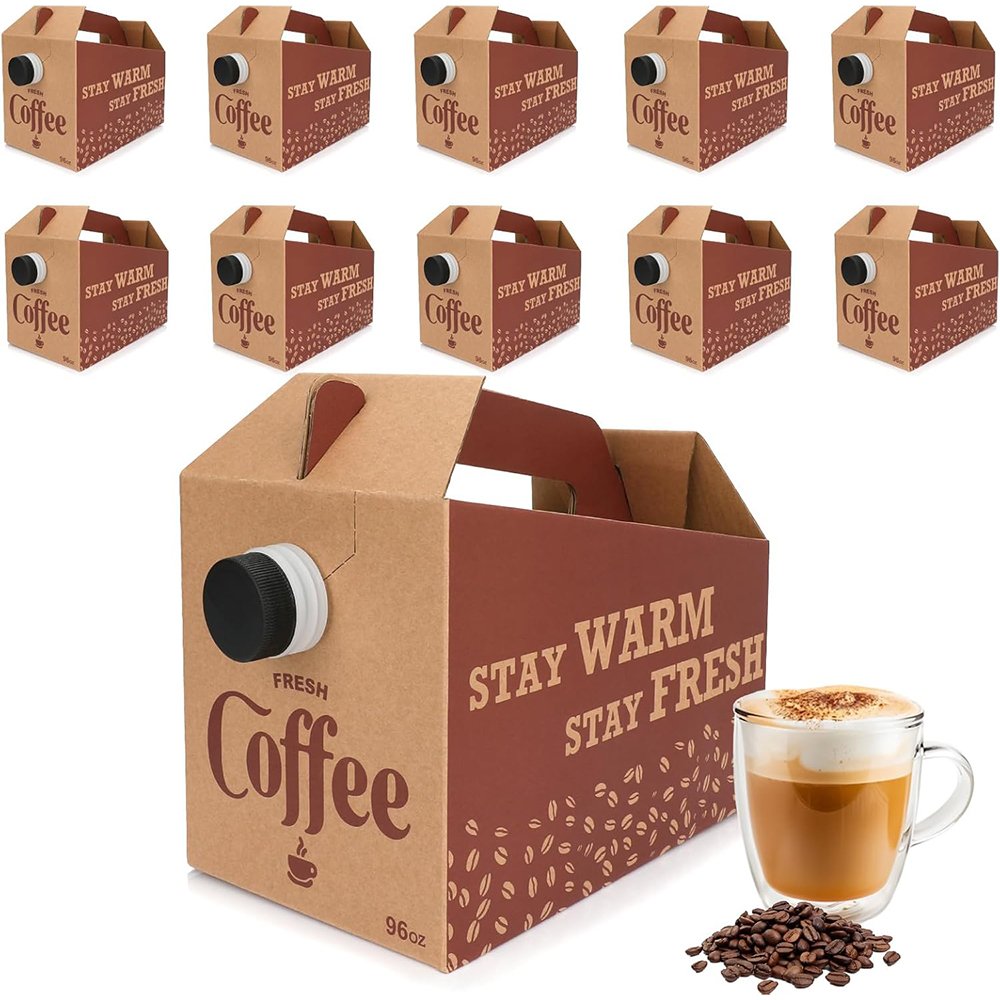
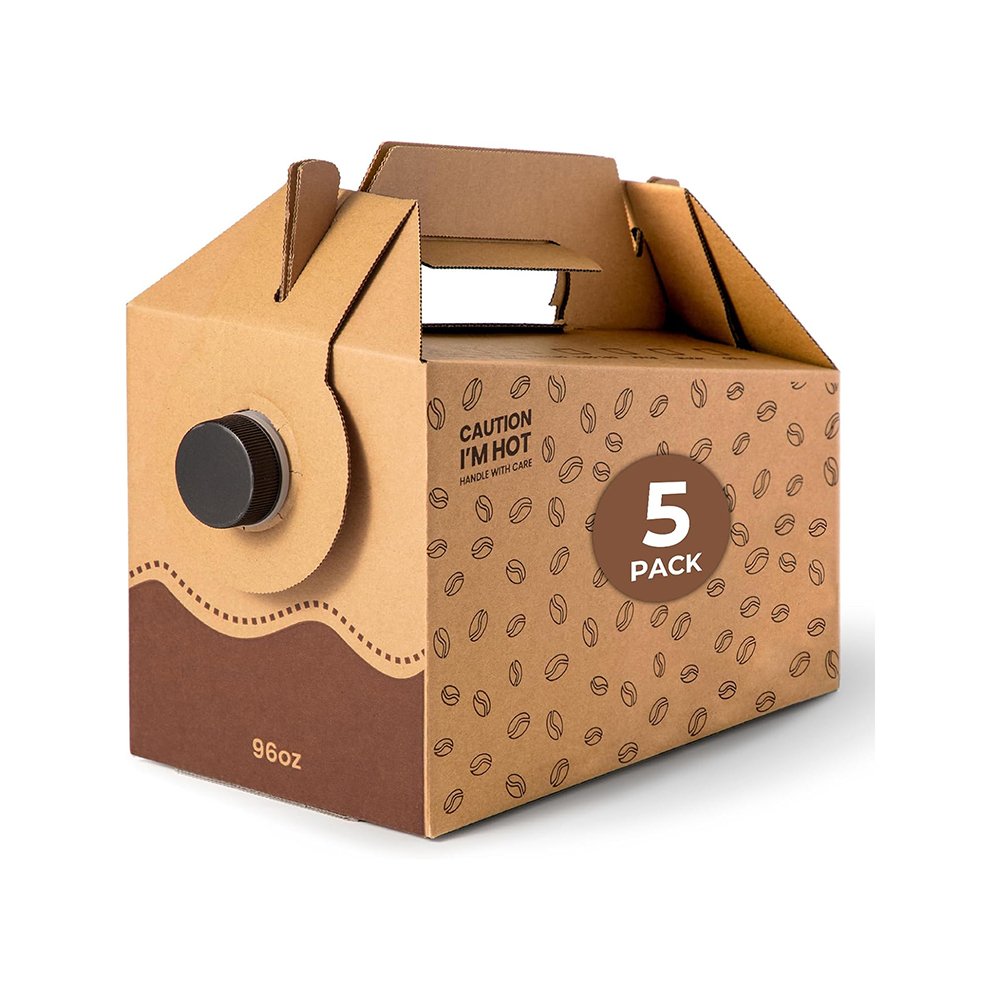
A multilayer beverage bag may contain combinations of:
- Polyethylene (PE)
- EVOH
- Nylon (PA)
- Metallized films
- Adhesive tie layers
These layers cannot easily be separated during conventional recycling.
As a result, many municipal recycling systems currently do not process them alongside standard plastic films.
Can a Coffee Bag in Box Be Considered 100% Recyclable?
Strictly speaking, most current 箱入りコーヒーバッグ systems are not 100% recyclable as a complete unit because:
- The kraft box is recyclable.
- The inner multilayer bag often requires specialized recycling.
- The plastic tap may require separate disposal or dedicated recycling.
- Some coatings and laminations may limit recyclability.
However, this does not mean the packaging is environmentally poor.
In many life-cycle assessments, Bag-in-Box systems compare favorably with rigid plastic containers because they use significantly less plastic per liter of beverage and reduce transportation emissions through lightweight construction.
Coffee Bag in Box Material Separation Is the Key
One important principle often overlooked is component separation.
Instead of evaluating the package as one object, sustainability should consider whether individual components can be separated easily.
An optimized 箱入りコーヒーバッグ should allow users to:
- Remove the inner bag.
- Separate the dispensing tap if possible.
- Flatten the kraft outer box.
- Recycle the corrugated carton through local paper recycling.
- Dispose of or recycle the remaining components according to local facilities.
Simple separation improves the likelihood that valuable paper fibers are recovered.
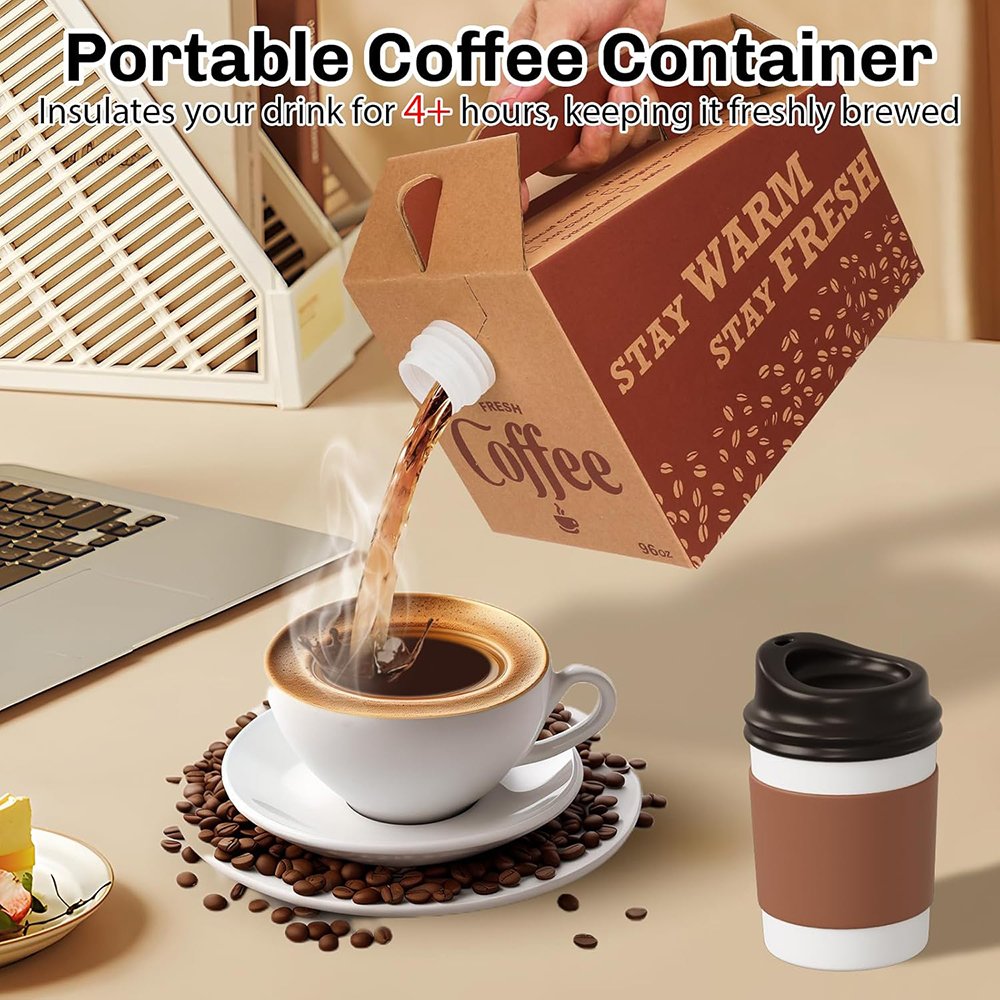
Coffee Bag in Box Has a Lower Plastic-to-Product Ratio
Compared with rigid beverage jugs or buckets, a 箱入りコーヒーバッグ generally uses much less plastic for the same beverage volume.
For example:
- A rigid container must support itself structurally.
- A flexible bag relies on the corrugated carton for support.
Because of this shared structural design, the plastic component can often be significantly lighter while still protecting the coffee.
This reduced material usage is one reason Bag-in-Box systems are widely recognized as resource-efficient packaging formats.
Coffee Bag in Box Reduces Transportation Emissions
Sustainability extends beyond recycling.
Transportation efficiency plays a major role in overall environmental impact.
A 箱入りコーヒーバッグ offers several logistics advantages:
- Flat-packed corrugated boxes save shipping space.
- Flexible bags weigh less than rigid containers.
- More units fit on each pallet.
- Reduced transportation weight lowers fuel consumption.
For global coffee brands, these efficiencies contribute to a smaller carbon footprint.
Coffee Bag in Box and Food Waste Reduction
Packaging sustainability also includes preventing product waste.
Discarded coffee has its own environmental footprint due to:
- Water consumption during cultivation
- Energy used in roasting
- Transportation emissions
- Packaging materials
- Brewing resources
A well-designed 箱入りコーヒーバッグ with high-barrier films helps preserve flavor and freshness, extending usable shelf life and reducing beverage waste. In many cases, the environmental benefit of preventing product spoilage outweighs the impact of using a more complex barrier film.
Emerging Recyclable Materials for Coffee Bag in Box
Packaging technology continues to evolve.
Several promising developments include:
Mono-Material PE Barrier Films
Instead of combining multiple incompatible polymers, newer mono-material polyethylene structures aim to provide barrier performance while improving recyclability where suitable collection systems exist.
Recyclable Barrier Technologies
Advanced coatings are being developed to replace certain traditional barrier layers without compromising coffee protection.
Bio-Based Plastics
Some manufacturers are exploring renewable feedstocks derived from plants rather than fossil resources. These materials can reduce dependence on petroleum, though recyclability and performance vary.
Fiber-Based Dispensing Components
Research is also underway into paper-based or hybrid dispensing elements that reduce virgin plastic content.
Designing a More Sustainable Coffee Bag in Box
A responsible 箱入りコーヒーバッグメーカー considers sustainability throughout the design process.
Important practices include:
Minimize Material Usage
Use only the amount of paper and plastic necessary to achieve required performance.
Avoid Unnecessary Laminations
Excessive plastic coatings on the outer carton may hinder paper recycling.
Optimize Structural Strength
Stronger engineering can sometimes reduce material consumption without sacrificing durability.
Use Water-Based or Low-Impact Printing Systems
Environmentally responsible inks can improve recyclability and reduce emissions during production.
Design for Easy Disassembly
Simple separation of paper, plastic bag, and tap encourages proper recycling.
Coffee Bag in Box Certifications to Consider
Coffee brands increasingly request packaging that aligns with recognized environmental standards.
Depending on the product and market, relevant certifications or sourcing practices may include:
- Responsibly sourced paper fiber
- Food-contact compliance
- Responsible manufacturing systems
- Chain-of-custody documentation for certified paper where required
Specific certification needs vary by region and customer requirements.
Common Sustainability Myths About Coffee Bag in Box
Myth 1: Multi-Layer Plastic Means the Entire Package Is Non-Recyclable
False.
The recyclable kraft carton remains a valuable recovered material even if the flexible bag follows a different end-of-life pathway.
Myth 2: Paper Packaging Is Always Better Than Plastic
Not necessarily.
If replacing a barrier film causes product spoilage or dramatically shortens shelf life, the total environmental impact may increase due to wasted coffee.
Myth 3: Heavier Packaging Is More Sustainable
Generally incorrect.
Using more material than necessary increases resource consumption and transportation emissions.
Myth 4: Recyclability Is the Only Sustainability Metric
A comprehensive assessment also considers:
- Carbon emissions
- Transportation efficiency
- Material consumption
- Product protection
- Food waste prevention
- Renewable resource use
How BM Develops Sustainable Coffee Bag in Box Solutions
プロとして 箱入りコーヒーバッグメーカー, BM believes sustainability begins at the design stage.
Our engineering team works with coffee brands to optimize:
- Corrugated kraft board selection
- Lightweight structural engineering
- Efficient dieline layouts
- Barrier bag compatibility
- Dispensing tap integration
- Transportation performance
- Material efficiency
- Easy component separation for recycling
Our customized beverage packaging solutions include:
- Coffee Bag in Box
- Coffee BIB
- コーヒーボックスディスペンサー
- 持ち帰り用コーヒー容器
- 持ち帰り用コーヒー容器
- 携帯用コーヒーキャリア容器
We help customers balance product protection, branding, operational efficiency, and environmental responsibility without compromising beverage quality.
Future Trends in Coffee Bag in Box Sustainability
The next generation of 箱入りコーヒーバッグ packaging is likely to focus on:
Recyclable Mono-Material Barrier Bags
Improving compatibility with plastic recycling streams where infrastructure exists.
Lower-Carbon Paperboard
Using responsibly sourced and lighter-weight corrugated materials while maintaining strength.
Plastic Reduction
Redesigning taps, handles, and accessories to minimize virgin plastic use.
Circular Packaging Design
Creating systems that are easier to separate, recycle, and reintroduce into manufacturing cycles.
Digital Product Information
QR codes and smart packaging can guide consumers on proper disposal and recycling practices, helping increase actual recycling rates.
Frequently Asked Questions
Is a coffee bag in box 100% recyclable?
In most current designs, no. The corrugated outer box is typically recyclable, while the multilayer plastic bag and dispensing tap may require different recycling or disposal methods depending on local infrastructure.
Why not replace the plastic bag with paper?
Paper alone cannot provide the oxygen, moisture, and aroma barriers needed to preserve coffee quality and shelf life.
Is a coffee bag in box still environmentally friendly?
Yes. When thoughtfully engineered, it can reduce material use, improve transportation efficiency, protect the beverage from spoilage, and recover valuable paper fibers through recycling.
Can sustainability be improved further?
Absolutely. Ongoing innovations in mono-material barrier films, lightweight paper engineering, recyclable components, and easier material separation continue to improve the environmental performance of Bag-in-Box systems.
Sustainable Coffee Bag in Box Design Is About the Entire System
The question is not simply whether a 箱入りコーヒーバッグ is “100% recyclable.” The better question is:
How can the entire packaging system minimize environmental impact while still protecting premium coffee?
A high-performance 箱入りコーヒーバッグ combines:
- Recyclable corrugated kraft paper
- Efficient use of barrier materials
- Durable yet lightweight construction
- Reduced transportation emissions
- Excellent product protection
- Easy separation of components after use
- Continuous innovation toward more recyclable materials
When these elements are carefully engineered together, Bag-in-Box packaging remains one of the most resource-efficient solutions available for transporting and dispensing coffee.
As an experienced coffee bag in box factory and 箱入りコーヒーバッグメーカー, BM is committed to helping coffee brands develop sustainable packaging that meets today’s operational needs while preparing for tomorrow’s circular economy. From custom コーヒーボックスディスペンサー and コーヒー飲料ディスペンサー solutions to 持ち帰り用コーヒー容器, 持ち帰り用コーヒー容器, and 携帯用コーヒーキャリア容器, we provide tailored packaging systems that combine performance, premium branding, and responsible environmental design.
BMペーパーボックスメーカーについて
当社は、10年の業界経験を持つ、紙製パッケージボックスのカスタマイズを専門とする工場です。独創的なデザインと卓越した技術を駆使し、家電製品、医療機器消耗品、化粧品など、幅広い分野に対応した高品質なカスタマイズパッケージソリューションを提供することで、お客様の製品に無限の魅力を添えます。.
プロの紙製パッケージボックスカスタマイズ工場として、当社は家電製品、医療機器消耗品、化粧品など幅広い分野に対応しています。高級家電製品の洗練されたギフトボックス、医療機器のプロフェッショナルなパッケージ、化粧品のファッショナブルな外箱など、お客様のニーズと製品の特性に合わせて最適なパッケージソリューションをご提案いたします。当社の専門性は多くのブランド顧客から高く評価され、信頼できるパートナーとして認められています。.
BMペーパーボックスファクトリーを選ぶ理由
最高品質:中国有数のカスタム紙箱メーカーとして、当社の品質管理チームは、お客様にお届けするすべての製品が最高品質であることを保証します。当社はプロ仕様の品質検査機を保有しています。.
製品設計:当社のサンプル部門は、図面を実際の製品に仕上げる全工程を網羅しています。また、長年の経験に基づき、お客様の製品設計を改善いたします。ぜひご意見をお聞かせください。.
安定した納期:最高のギフトボックスメーカーおよびサプライヤーとして、当社は十分な製造能力を有しており、大量注文でも対応可能です。お客様のご注文を期日通りにお届けいたします。.
最安値:当社は紙箱の製造工場であり、中国で最高のメーカーです。そのため、最高品質の袋を最安値で提供できます。.
精密な管理:精密な管理を実施しなければ、何も達成できません。当社は、包括的な管理システムを備えた企業です。.
24時間365日対応:最高の紙箱メーカーとして、24時間365日迅速に対応いたします。お客様からのフィードバックを参考に、より良いサプライヤーを目指します。お問い合わせください。(+86 18925520049)
BMペーパーボックスに関するよくある質問
当社は中国の大手メーカーであり、工場は東莞市にあります。ぜひ工場見学にお越しください!
• 当社は、特にギフト包装分野において、紙製包装製品の専門サプライヤーです。多目的に使用できる様々な種類の紙箱や紙袋を製造できます。.
・当社はワンストップサービスを提供しており、お客様のご要望に応じたカスタムデザインも承ります。.
・もちろん、通常は無料サンプルをご提供いたしますので、送料のみご負担ください。カスタム印刷サンプルをご希望の場合は、サンプル費用を確認するため、ご要望をお送りください。.
・サンプル製作には約7日かかります。.
はい、弊社では無料のデザインサービス、構造設計、簡単なグラフィックデザインを提供しています。.
もちろんです。お客様のデザインでどんなパッケージでも製作可能です。現在、100個から500個までの少量生産に対応したODMパッケージサービスを開始しており、もちろんお客様独自のロゴを入れることもできます。.
注文数量と生産内容によって異なりますが、約15日から20日程度かかります。.
量産前には必ず試作品を作成し、出荷前には必ず最終検査を実施する。
・サイズ、素材、印刷の詳細、数量、配送先など.
・お客様のご要望をお聞かせいただければ、弊社から最適な製品をご提案いたします。.
・海上輸送、航空輸送、または速達便による輸送。.
• 中国国内に自社輸送業者をお持ちの場合、それは工場出荷価格またはFOB価格となります。.
•CFRまたはCIFなど。当社がお客様の代理で発送する必要がある場合。.
• DDPおよびDDUも使用できます。.
•より多くの選択肢をご用意いたします。ご希望に合わせて対応させていただきます。.
• 価格は数量、材質、加工方法、サイズなどの要因によって決まります。さらに、当社は継続的に
技術革新により、当社の製品の一部価格は非常に競争力があります。お見積もりをご希望の場合は、お問い合わせください。.