





Can a Corrugated Coffee Dispenser Keep Coffee Hot Without Foam?
As coffee consumption continues to shift toward takeaway, catering, corporate events, and mobile beverage service, corrugated coffee dispenser packaging has become one of the fastest-growing alternatives to traditional insulated beverage containers. Modern coffee brands are looking for packaging that is portable, sustainable, brandable, and capable of maintaining serving temperature without relying on expanded polystyrene (EPS) or other plastic foam inserts.
At the same time, environmental regulations and consumer expectations are changing. Many countries and retailers are reducing or banning foam packaging due to recycling challenges, pushing manufacturers to develop plastic-free thermal packaging solutions.
One common question from coffee brands is:
“How long can a corrugated coffee dispenser keep coffee at approximately 80°C without using plastic foam insulation?”
The answer depends on far more than simply choosing thicker corrugated board. Heat retention is influenced by multiple design variables, including box structure, corrugated flute combination, air insulation, bag material, dispenser capacity, tap position, ambient temperature, and transportation conditions.
プロとして 箱入りコーヒーバッグメーカー, BM has more than ten years of experience developing customized paper packaging, beverage dispensers, gift boxes, and retail display solutions. We work with coffee chains, beverage brands, foodservice distributors, and event organizers to design コーヒーボックスディスペンサー, 持ち帰り用コーヒー容器, 携帯用コーヒーキャリア容器, and complete coffee BIB systems that balance insulation, sustainability, durability, and attractive branding.
This guide explores how a corrugated coffee dispenser retains heat, what factors affect thermal performance, and how innovative structural design can significantly extend hot coffee holding time—without adding plastic foam inserts.
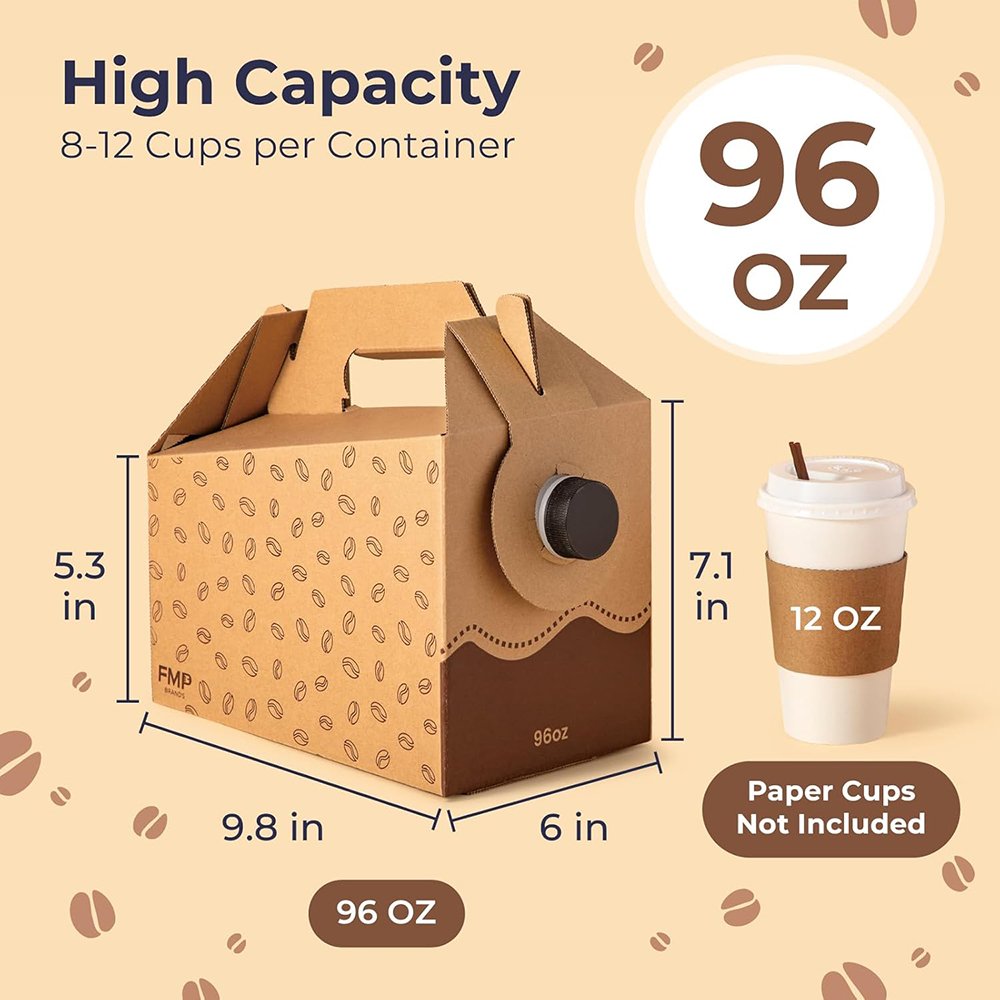
Why Corrugated Coffee Dispenser Packaging Is Replacing Foam-Based Beverage Containers
Traditional insulated beverage dispensers often rely on:
- Expanded polystyrene (EPS)
- Polyurethane foam
- Plastic insulation shells
Although these materials provide excellent insulation, they also introduce several disadvantages:
- Difficult recycling
- Larger environmental footprint
- Increased transportation volume
- Poor sustainability image
- Regulatory restrictions in many markets
A modern corrugated coffee dispenser offers several advantages:
- Fully printable brand graphics
- Lower shipping weight
- Flat-packed transportation
- Better recyclability
- Lower storage costs
- Easier customization
For many coffee brands, sustainable packaging has become part of the overall customer experience.
How a Corrugated Coffee Dispenser Retains Heat
Unlike vacuum-insulated containers, a corrugated coffee dispenser does not actively trap heat. Instead, it slows heat loss by reducing thermal transfer through carefully engineered packaging layers.
Heat escapes through three primary mechanisms:
1. Heat Conduction
Heat naturally travels from hot coffee toward the cooler environment.
Major conduction paths include:
- Inner bag
- Corrugated board
- Dispensing tap
- Handle area
Reducing conductive heat transfer is one of the primary goals of structural packaging design.
2. Heat Convection
Air movement removes heat from the package surface.
Outdoor events, delivery vehicles, or air-conditioned cafés accelerate this process.
Packaging engineers can reduce convection by minimizing unnecessary openings and creating enclosed air chambers within the box.
3. Thermal Radiation
Even without direct contact, hot surfaces continuously radiate heat.
Although radiation represents a smaller percentage of overall heat loss compared with conduction and convection, reflective inner materials or optimized board structures can help minimize this effect.
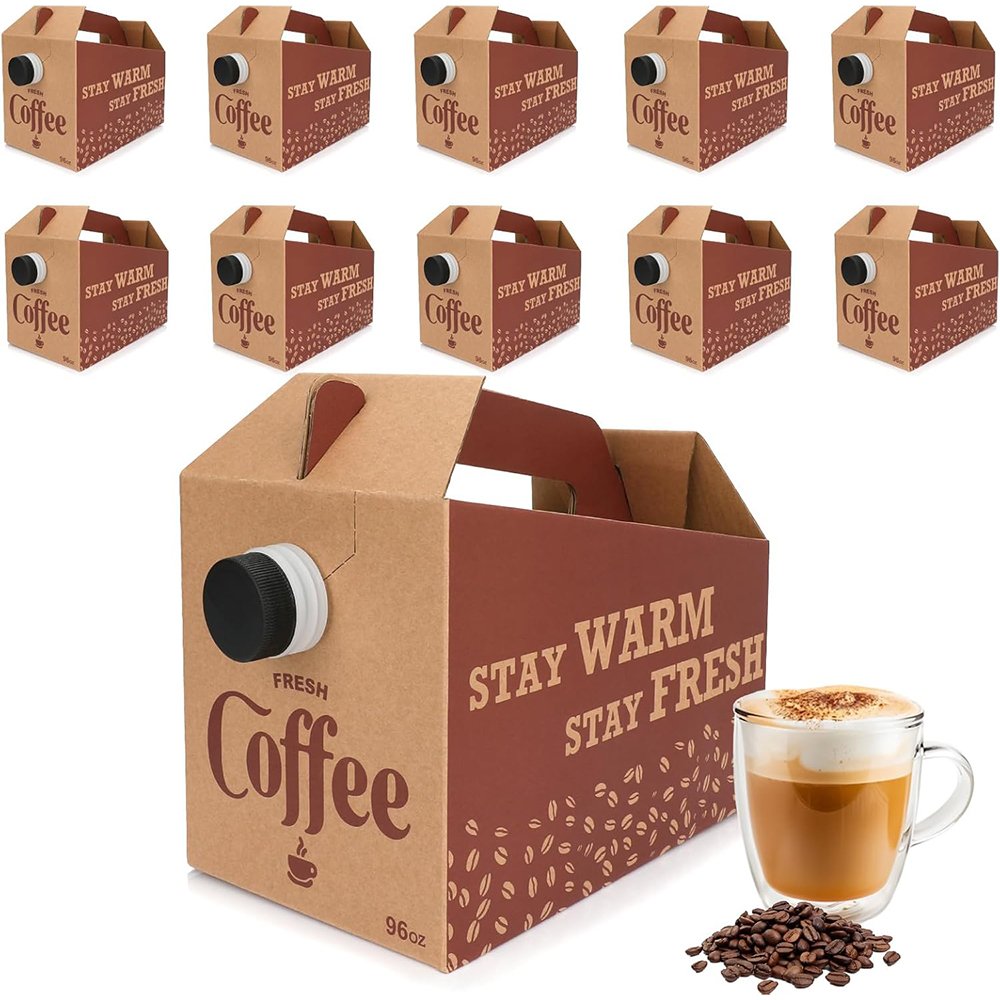
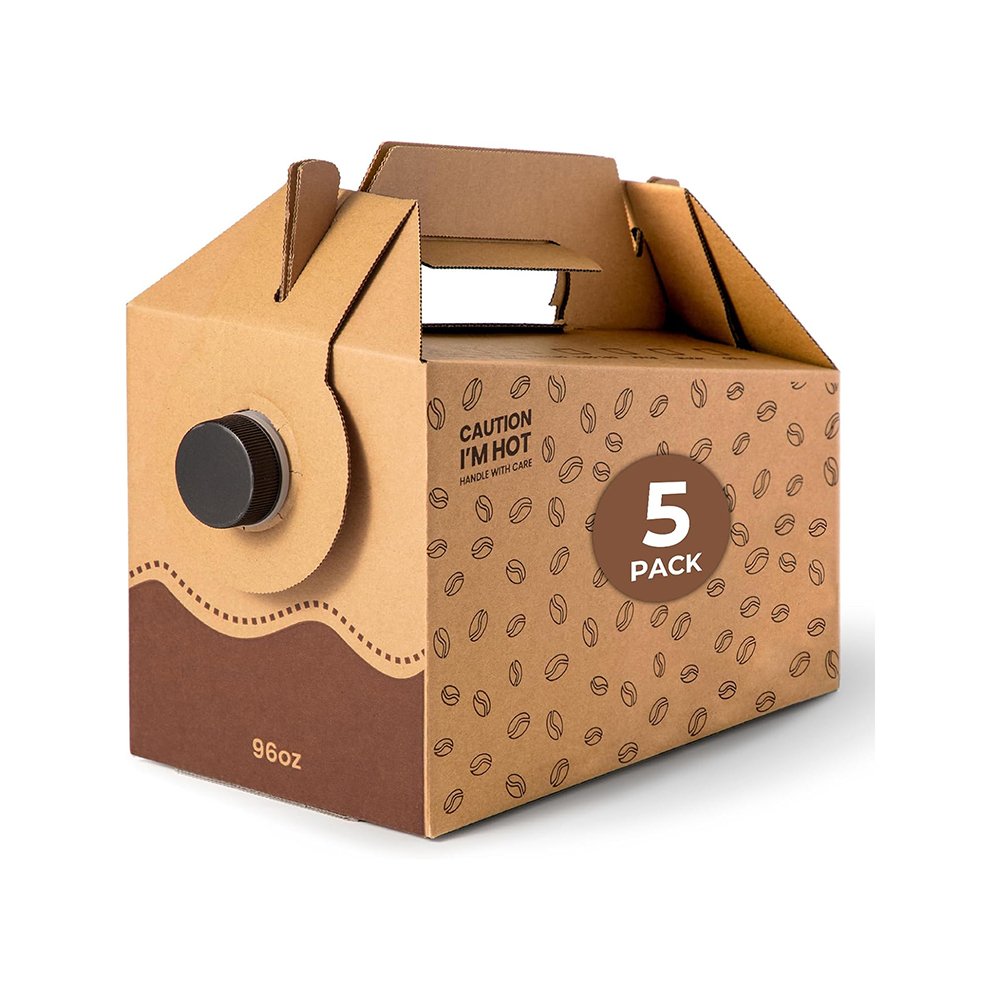
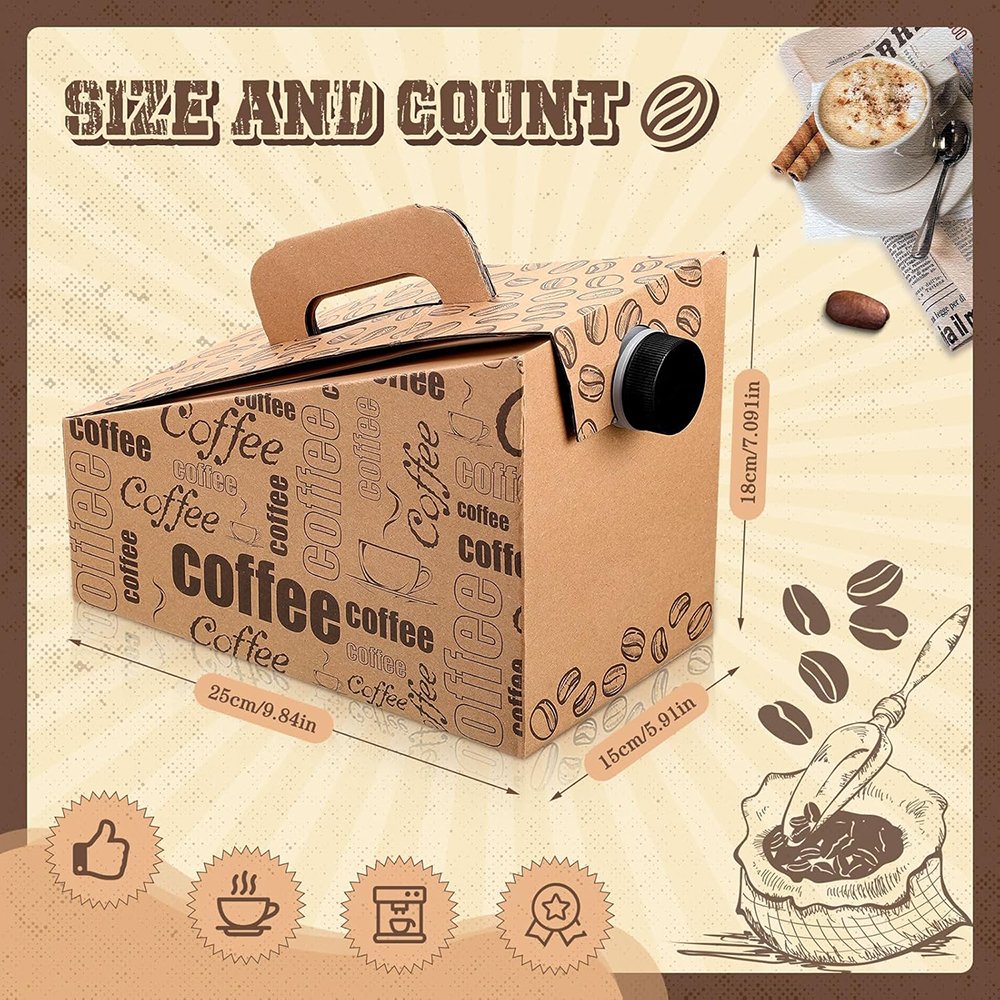
Corrugated Coffee Dispenser Design Factors That Affect Heat Retention
The insulation performance of a corrugated coffee dispenser depends on a combination of engineering decisions rather than a single material.
1. Corrugated Flute Selection
The corrugated medium naturally creates air pockets, and still air is an effective thermal insulator.
Different flute profiles offer different insulation characteristics.
Single-Wall Corrugated Board
Advantages:
- Lightweight
- Economical
- Easy printing
Limitations:
- Limited insulation
- Lower compression strength
Suitable for:
- Short-duration coffee service
- Local takeaway
Double-Wall Corrugated Board
Double-wall structures significantly improve:
- Thermal resistance
- Stacking strength
- Structural rigidity
This design is commonly recommended for commercial コーヒーボックスディスペンサー.
Triple-Wall Corrugated Board
For larger capacities or long transportation distances, triple-wall board provides:
- Greater air insulation
- Higher compression strength
- Improved temperature stability
However, it also increases weight and material cost.
A professional coffee dispenser factory balances these trade-offs according to the customer’s application.
Air Gap Engineering in Corrugated Coffee Dispenser Design
One of the most effective insulation methods does not require expensive materials.
It simply requires intelligent structural design.
A well-designed corrugated coffee dispenser intentionally creates controlled air spaces between:
- The beverage bag
- The outer box
- Reinforcement panels
These enclosed air pockets slow heat transfer.
Instead of adding foam, engineers optimize:
- Internal spacing
- Folded paper structures
- Multi-layer corrugated panels
This approach maintains sustainability while improving insulation performance.
The Coffee Bag Also Influences Heat Retention
The outer box receives most of the attention, but the inner coffee BIB bag also affects thermal performance.
A professional 箱入りコーヒーバッグメーカー carefully evaluates:
- Film thickness
- Barrier structure
- Heat resistance
- Flexibility
Certain multilayer barrier films reduce thermal loss more effectively than thin single-layer films while also preserving coffee aroma and preventing oxygen ingress.
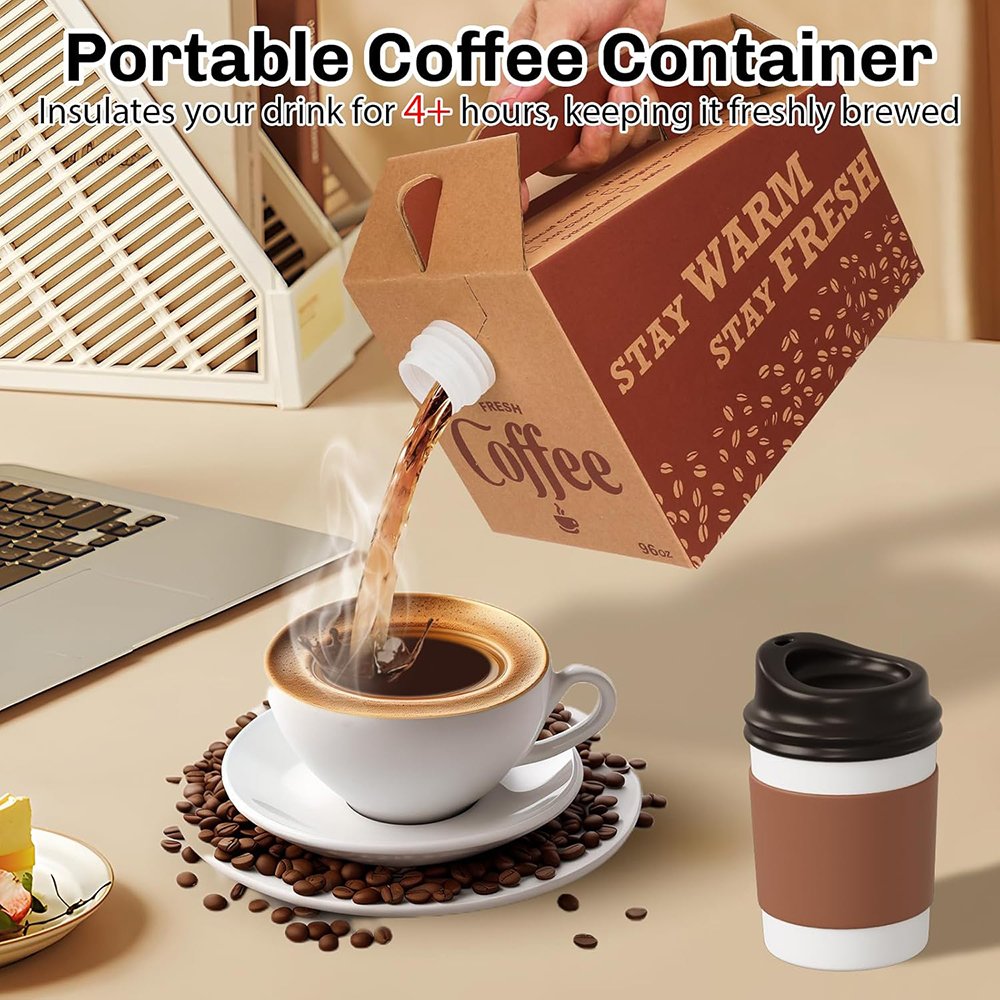
Capacity Matters: Larger Coffee Dispensers Stay Hot Longer
Thermal mass is one of the biggest contributors to heat retention.
A 10L dispenser naturally cools more slowly than a 3L dispenser because:
- Larger liquid volume stores more heat energy.
- The surface-area-to-volume ratio decreases.
- Less heat escapes per liter of coffee.
Approximate trends under typical indoor conditions (20–25°C ambient temperature) are:
| Capacity | Relative Heat Retention |
|---|---|
| 3L | Suitable for short events or takeaway service |
| 5L | Balanced performance for cafés and meetings |
| 10L | Longest temperature retention for catering and events |
Actual holding time depends on dispenser design, dispensing frequency, ambient temperature, and whether the tap is opened repeatedly.
How Corrugated Coffee Dispenser Structure Improves Thermal Performance
Double-Wall Side Panels
Adding secondary paperboard walls creates additional insulation layers.
Benefits include:
- Reduced conductive heat transfer
- Improved compression resistance
- Better transportation durability
Internal Paper Honeycomb Supports
Instead of foam inserts, some premium designs use paper honeycomb structures.
Advantages:
- Excellent insulation
- Lightweight construction
- Fully recyclable
- High compression strength
This approach aligns with brands pursuing plastic-free packaging.
Folded Paper Air Chambers
Creative folding structures can create multiple enclosed air chambers that function similarly to insulated wall cavities.
These structures:
- Trap still air
- Reduce heat movement
- Require no additional materials
Can Reflective Paper Improve Corrugated Coffee Dispenser Performance?
Yes—within limits.
Reflective paper or metallized paper liners can reduce radiant heat loss, especially when combined with air gaps.
However, reflective materials alone cannot replace structural insulation.
The best performance comes from combining:
- Double-wall corrugated board
- Air chamber engineering
- High-quality coffee BIB films
- Controlled vent placement
- Optimized dispenser geometry
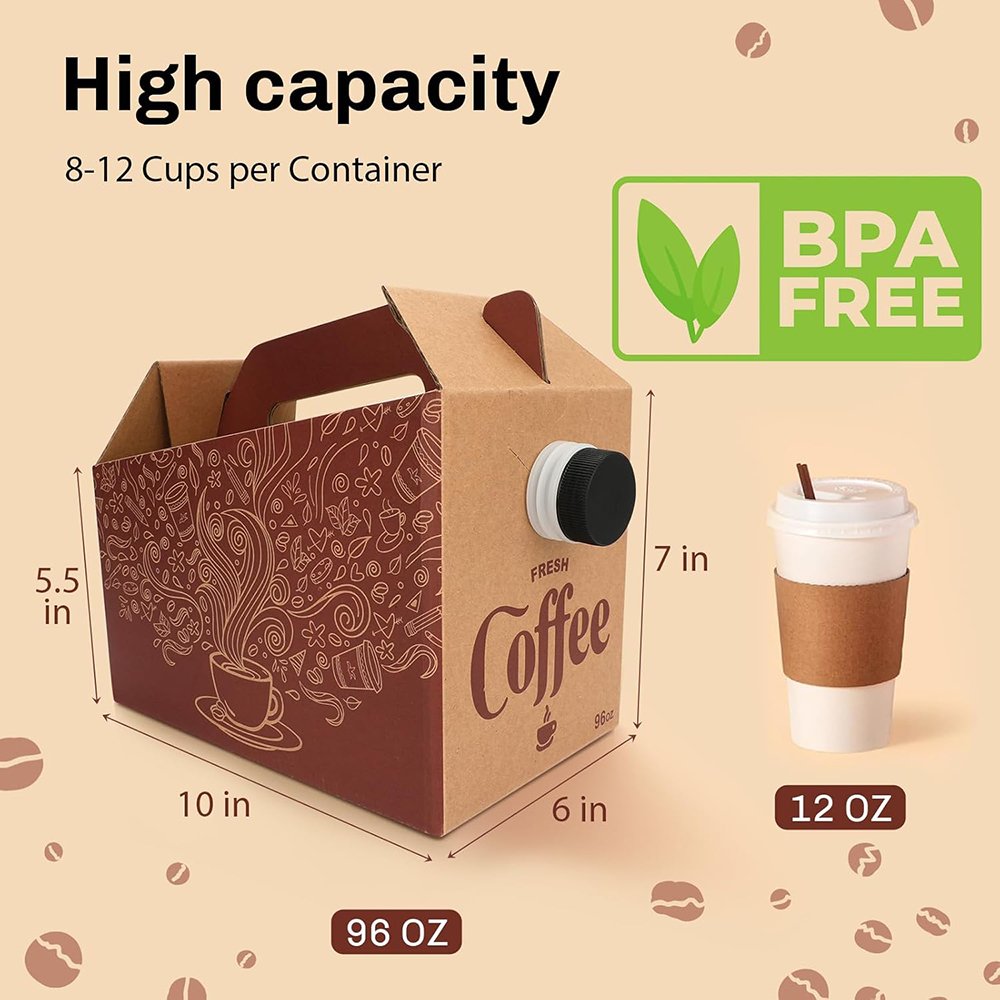
Why the Dispensing Tap Can Become a Heat Loss Point
Every Coffee Beverage Dispenser supplier understands that the tap is more than a dispensing component.
It also acts as a thermal bridge.
Heat travels through:
- Valve components
- Plastic body
- External spigot
Professional engineering reduces this loss by:
- Minimizing exposed valve surfaces
- Using shorter flow channels
- Improving valve sealing
- Optimizing spigot placement
Environmental Conditions Affect Corrugated Coffee Dispenser Performance
Heat retention varies dramatically depending on where the dispenser is used.
Common factors include:
- Outdoor temperature
- Wind exposure
- Air conditioning
- Direct sunlight
- Repeated dispensing frequency
For example:
A dispenser used inside a meeting room will typically retain serving temperature significantly longer than the same dispenser used outdoors during winter or in a delivery vehicle with frequent door openings.
Therefore, manufacturers should design packaging based on actual usage scenarios rather than laboratory conditions alone.
Testing Methods Used by Professional Coffee Dispenser Manufacturers
Reliable thermal performance should always be validated through testing.
プロ coffee box factory engineering teams typically perform:
Thermal Holding Tests
Measure beverage temperature over time under controlled ambient conditions.
Transportation Simulation
Evaluate thermal stability after vibration, handling, and stacking.
Structural Compression Testing
Ensure insulation structures do not collapse under liquid weight.
Dispensing Cycle Testing
Repeated dispensing is simulated to understand how opening frequency affects temperature retention.
These evaluations provide practical data that supports packaging optimization.
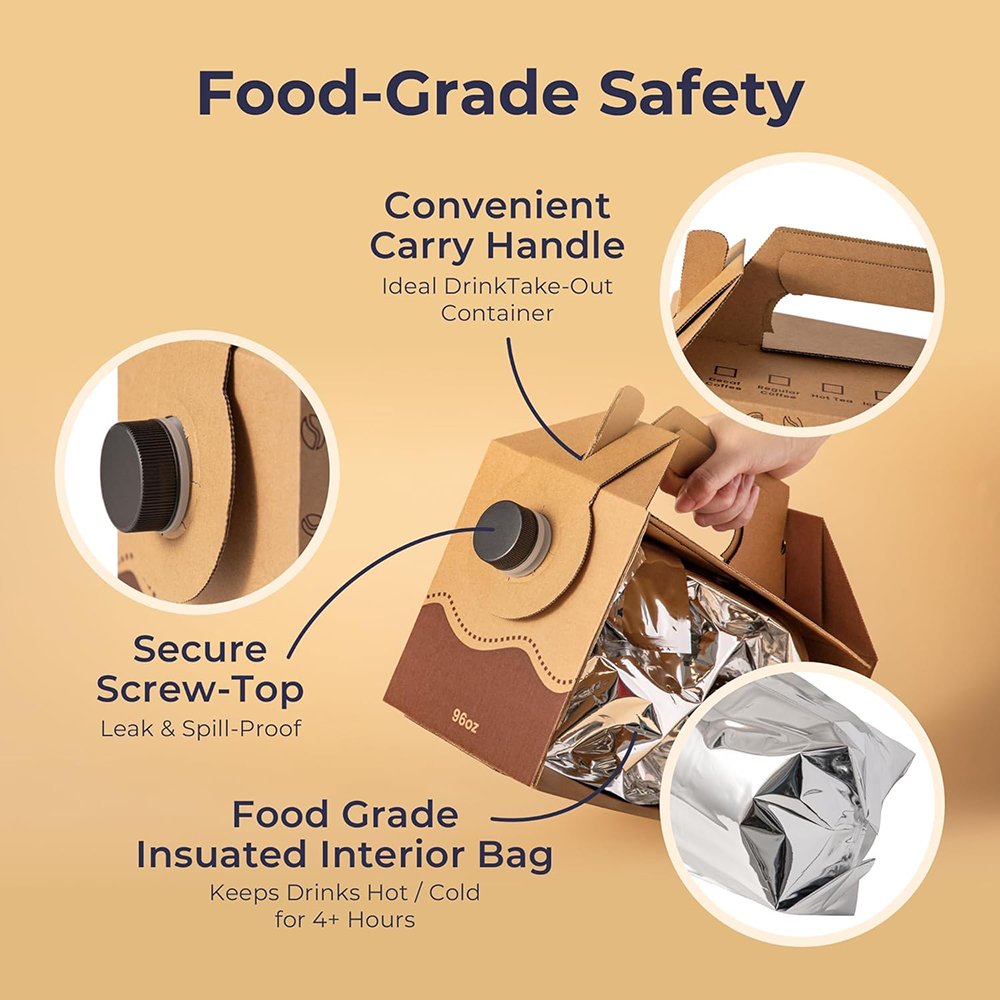
Common Design Mistakes That Reduce Heat Retention
Using Thin Single-Wall Board
Although economical, single-wall corrugated board often loses heat quickly in commercial beverage applications.
Oversized Internal Space
Large empty gaps allow excessive air circulation inside the package, accelerating cooling.
Ignoring Tap Placement
Poorly positioned taps expose larger portions of the beverage system to ambient air.
Prioritizing Appearance Over Structure
Premium printing is important, but structural engineering determines insulation performance.
A visually attractive dispenser that cools too quickly ultimately reduces customer satisfaction.
How BM Designs High-Performance Corrugated Coffee Dispensers
As an experienced 箱入りコーヒーバッグメーカー, BM develops customized beverage packaging systems that integrate:
- Thermal engineering
- 構造最適化
- Brand presentation
- Sustainability
- Transportation reliability
Our engineering team collaborates with customers to optimize:
- Capacity selection
- Corrugated flute combinations
- Paperboard grades
- Internal reinforcement
- Handle design
- Tap positioning
- Printing finishes
- Logistics performance
Whether the application is a Coffee Box Dispenser, Coffee to Go Container, Coffee to Go Drink Container, or Portable Coffee Carrier Container, BM focuses on creating packaging that performs reliably while enhancing the customer’s brand image.
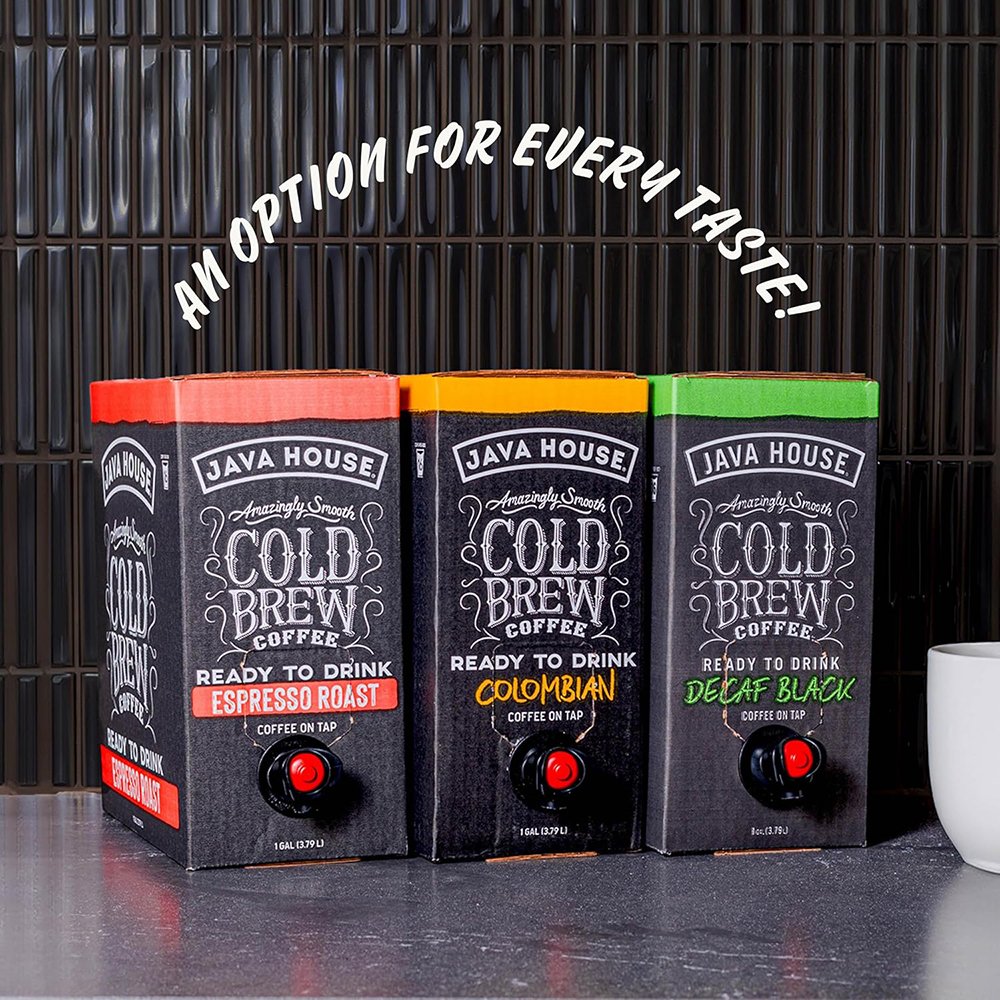
Future Trends for Corrugated Coffee Dispenser Packaging
The next generation of corrugated coffee dispenser solutions will increasingly combine sustainability with advanced engineering.
Emerging trends include:
- Plastic-free insulation systems
- Recyclable paper honeycomb thermal structures
- Lightweight high-strength corrugated materials
- Bio-based moisture-resistant coatings
- Digital temperature indicators
- Smart NFC-enabled coffee BIB packaging
- Improved thermal barrier paper technologies
These innovations will help coffee brands reduce environmental impact while maintaining excellent beverage quality.
Smart Structural Design Can Extend Heat Retention Without Plastic Foam
A corrugated coffee dispenser can effectively maintain hot coffee without plastic foam inserts—but success depends on intelligent engineering rather than simply adding thicker paper.
The best-performing systems combine:
- Optimized corrugated flute structures
- Multi-layer air chamber design
- High-performance coffee BIB films
- Moisture-resistant paperboard
- Strong compression-resistant construction
- Carefully designed dispensing taps
- Real-world transportation and thermal testing
Rather than relying on foam insulation, modern paper-based engineering enables coffee brands to deliver sustainable, premium, and reliable beverage packaging that meets both customer expectations and environmental goals.
As a trusted coffee dispenser factory and 箱入りコーヒーバッグメーカー, BM provides customized packaging solutions for global coffee brands, including コーヒーボックスディスペンサー, Coffee Beverage Dispenser supplier services, 持ち帰り用コーヒー容器, 持ち帰り用コーヒー容器, and 携帯用コーヒーキャリア容器.
By combining packaging innovation with manufacturing expertise, BM helps customers develop corrugated coffee dispenser systems that protect beverage quality, strengthen brand value, and support a more sustainable future.
BMペーパーボックスメーカーについて
当社は、10年の業界経験を持つ、紙製パッケージボックスのカスタマイズを専門とする工場です。独創的なデザインと卓越した技術を駆使し、家電製品、医療機器消耗品、化粧品など、幅広い分野に対応した高品質なカスタマイズパッケージソリューションを提供することで、お客様の製品に無限の魅力を添えます。.
プロの紙製パッケージボックスカスタマイズ工場として、当社は家電製品、医療機器消耗品、化粧品など幅広い分野に対応しています。高級家電製品の洗練されたギフトボックス、医療機器のプロフェッショナルなパッケージ、化粧品のファッショナブルな外箱など、お客様のニーズと製品の特性に合わせて最適なパッケージソリューションをご提案いたします。当社の専門性は多くのブランド顧客から高く評価され、信頼できるパートナーとして認められています。.
BMペーパーボックスファクトリーを選ぶ理由
最高品質:中国有数のカスタム紙箱メーカーとして、当社の品質管理チームは、お客様にお届けするすべての製品が最高品質であることを保証します。当社はプロ仕様の品質検査機を保有しています。.
製品設計:当社のサンプル部門は、図面を実際の製品に仕上げる全工程を網羅しています。また、長年の経験に基づき、お客様の製品設計を改善いたします。ぜひご意見をお聞かせください。.
安定した納期:最高のギフトボックスメーカーおよびサプライヤーとして、当社は十分な製造能力を有しており、大量注文でも対応可能です。お客様のご注文を期日通りにお届けいたします。.
最安値:当社は紙箱の製造工場であり、中国で最高のメーカーです。そのため、最高品質の袋を最安値で提供できます。.
精密な管理:精密な管理を実施しなければ、何も達成できません。当社は、包括的な管理システムを備えた企業です。.
24時間365日対応:最高の紙箱メーカーとして、24時間365日迅速に対応いたします。お客様からのフィードバックを参考に、より良いサプライヤーを目指します。お問い合わせください。(+86 18925520049)
BMペーパーボックスに関するよくある質問
当社は中国の大手メーカーであり、工場は東莞市にあります。ぜひ工場見学にお越しください!
• 当社は、特にギフト包装分野において、紙製包装製品の専門サプライヤーです。多目的に使用できる様々な種類の紙箱や紙袋を製造できます。.
・当社はワンストップサービスを提供しており、お客様のご要望に応じたカスタムデザインも承ります。.
・もちろん、通常は無料サンプルをご提供いたしますので、送料のみご負担ください。カスタム印刷サンプルをご希望の場合は、サンプル費用を確認するため、ご要望をお送りください。.
・サンプル製作には約7日かかります。.
はい、弊社では無料のデザインサービス、構造設計、簡単なグラフィックデザインを提供しています。.
もちろんです。お客様のデザインでどんなパッケージでも製作可能です。現在、100個から500個までの少量生産に対応したODMパッケージサービスを開始しており、もちろんお客様独自のロゴを入れることもできます。.
注文数量と生産内容によって異なりますが、約15日から20日程度かかります。.
量産前には必ず試作品を作成し、出荷前には必ず最終検査を実施する。
・サイズ、素材、印刷の詳細、数量、配送先など.
・お客様のご要望をお聞かせいただければ、弊社から最適な製品をご提案いたします。.
・海上輸送、航空輸送、または速達便による輸送。.
• 中国国内に自社輸送業者をお持ちの場合、それは工場出荷価格またはFOB価格となります。.
•CFRまたはCIFなど。当社がお客様の代理で発送する必要がある場合。.
• DDPおよびDDUも使用できます。.
•より多くの選択肢をご用意いたします。ご希望に合わせて対応させていただきます。.
• 価格は数量、材質、加工方法、サイズなどの要因によって決まります。さらに、当社は継続的に
技術革新により、当社の製品の一部価格は非常に競争力があります。お見積もりをご希望の場合は、お問い合わせください。.