





Why the Last 5–10% of Coffee Matters in a Coffee BIB
For coffee shops, specialty coffee roasters, catering companies, and beverage brands, every liter of cold brew represents product value. Yet many businesses unknowingly lose part of that value because of an overlooked packaging issue known as the “Last Drop” problem.
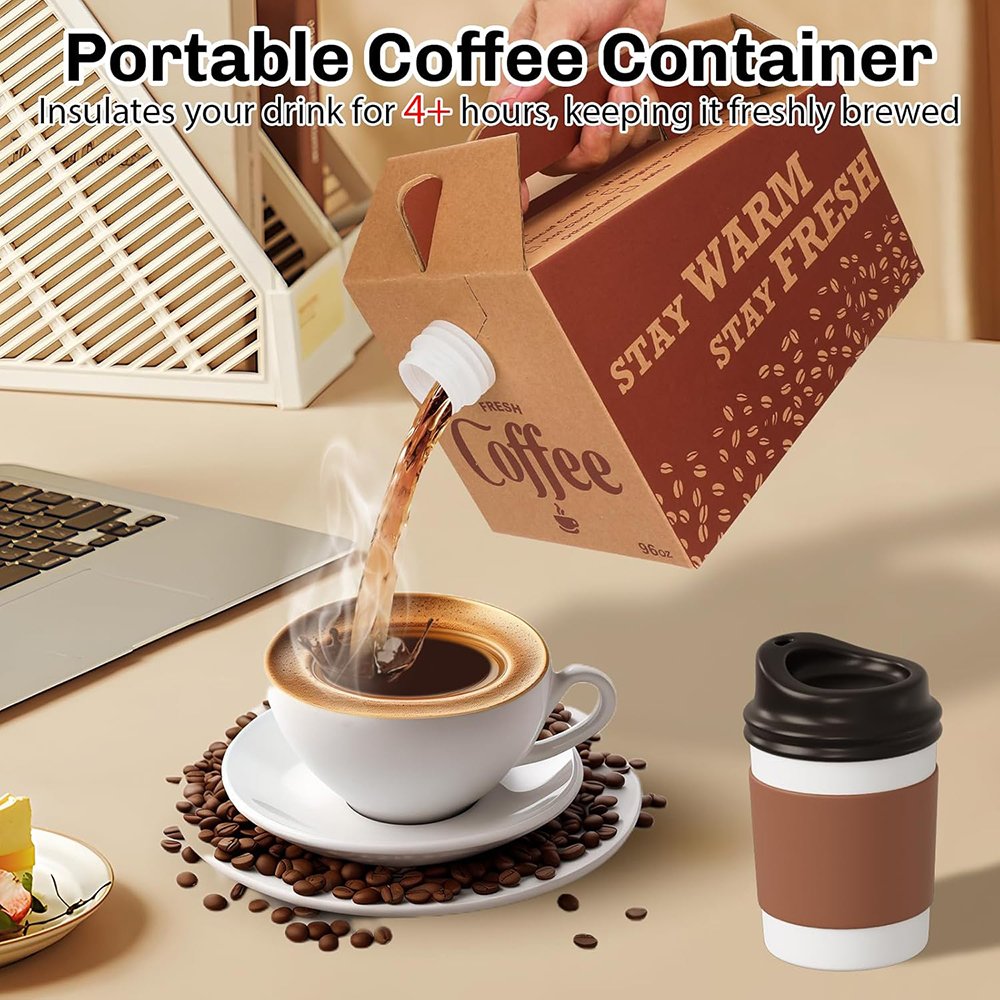
Imagine serving a 5L coffee BIB (Bag-in-Box) dispenser at an office meeting or a weekend event. As the coffee level drops, customers begin tilting the box or lifting one corner to extract the remaining beverage. Even after repeated attempts, a noticeable amount of coffee remains trapped inside the bag. Depending on the bag structure and box design, this residual volume can reach 3–10% of the total capacity.
For a 5L coffee BIB, that could mean 150–500 ml of perfectly good cold brew left inside the package—equivalent to one or two servings.
The cause is rarely the dispensing tap alone. More often, it is the interaction between the internal bag geometry, corrugated box structure, spigot position, 그리고 gravity flow path.
As an experienced 커피 백인박스 제조업체, BM has spent years optimizing beverage packaging systems for coffee chains, foodservice distributors, catering companies, and beverage brands. Beyond designing attractive 커피 박스 디스펜서, our engineering team focuses on practical details that improve user experience, including structural features that help every last drop reach the dispensing tap.
This article explores why residual coffee remains inside a coffee BIB, how internal sloped structures solve the problem, and which engineering practices help maximize beverage recovery while maintaining structural strength and manufacturing efficiency.
Why Does Coffee Remain Inside a Coffee BIB?
Many people assume the inner bag simply empties under gravity. In reality, the process is more complex.
Several factors influence how completely a coffee BIB drains:
- Bag geometry
- Corrugated box dimensions
- Internal support surfaces
- Dispensing tap location
- Film flexibility
- Coffee viscosity
- Air replacement inside the bag
If these elements are not properly coordinated, coffee pools inside the bag instead of flowing toward the spigot.
The Hidden Cost of the Coffee BIB "Last Drop" Problem
Although losing a few hundred milliliters may appear insignificant, the long-term financial impact can be considerable.
For example:
A café using twenty 5L coffee BIB packages per day may lose several liters of beverage daily if each bag retains only a small amount of coffee.
Consequences include:
- Lower product yield
- Increased ingredient cost
- Reduced customer satisfaction
- Inconsistent serving portions
- More packaging waste
- Lower sustainability performance
For premium cold brew products, every recovered serving improves profitability.
How Gravity Works Inside a Coffee BIB
Unlike rigid beverage containers, a coffee BIB relies on a flexible inner bag.
As coffee is dispensed:
- The bag collapses.
- Internal volume decreases.
- Air should not enter.
- The remaining liquid flows toward the dispensing tap.
However, gravity only works efficiently if the bag naturally directs the coffee toward the lowest point.
When flat bottom surfaces remain inside the box, liquid collects in pockets instead of draining completely.
Coffee BIB Internal Slant Design: The Most Effective Solution
One of the simplest yet most effective improvements is creating a sloped support surface inside the corrugated box.
Instead of allowing the bag to rest on a perfectly horizontal bottom panel, the internal structure gently guides the beverage toward the dispensing tap.
Benefits include:
- Improved liquid drainage
- Reduced residual volume
- Faster dispensing near the end of use
- Better customer experience
This principle is similar to drainage systems used in industrial tanks, where sloped bottoms prevent liquid accumulation.
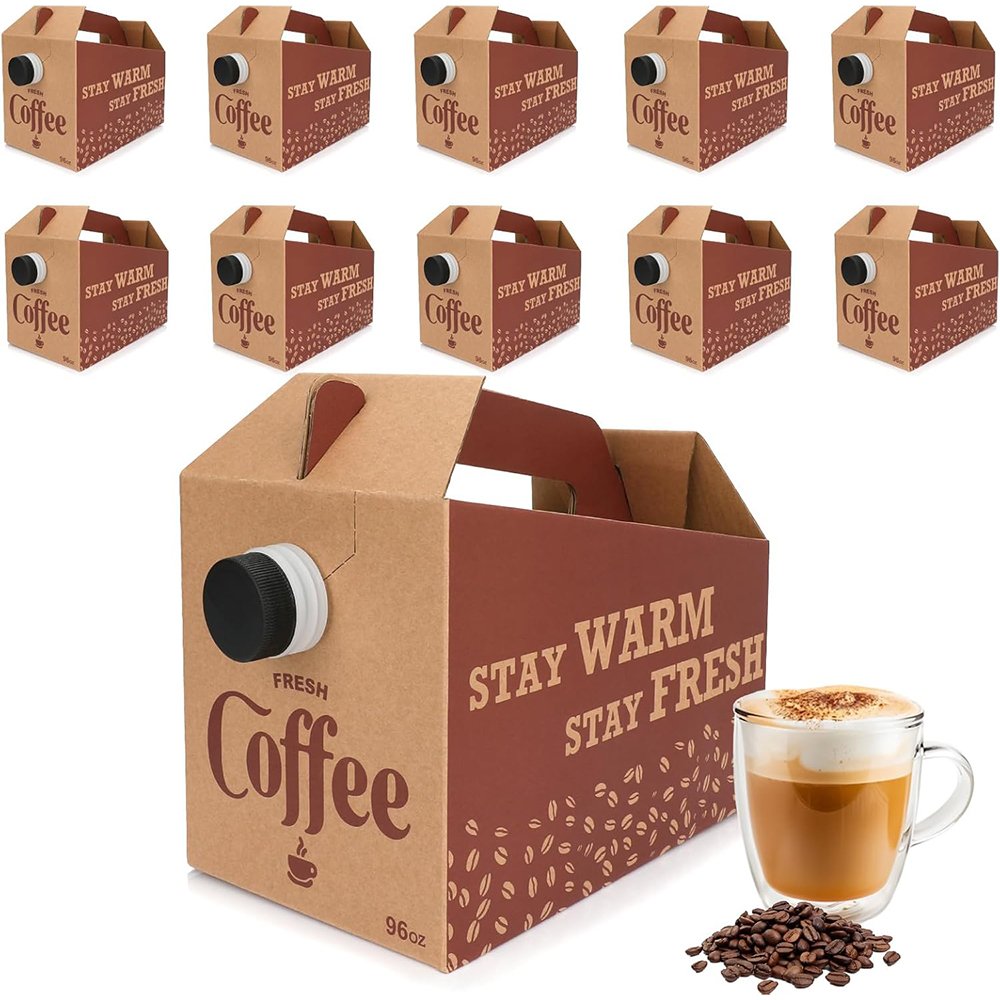
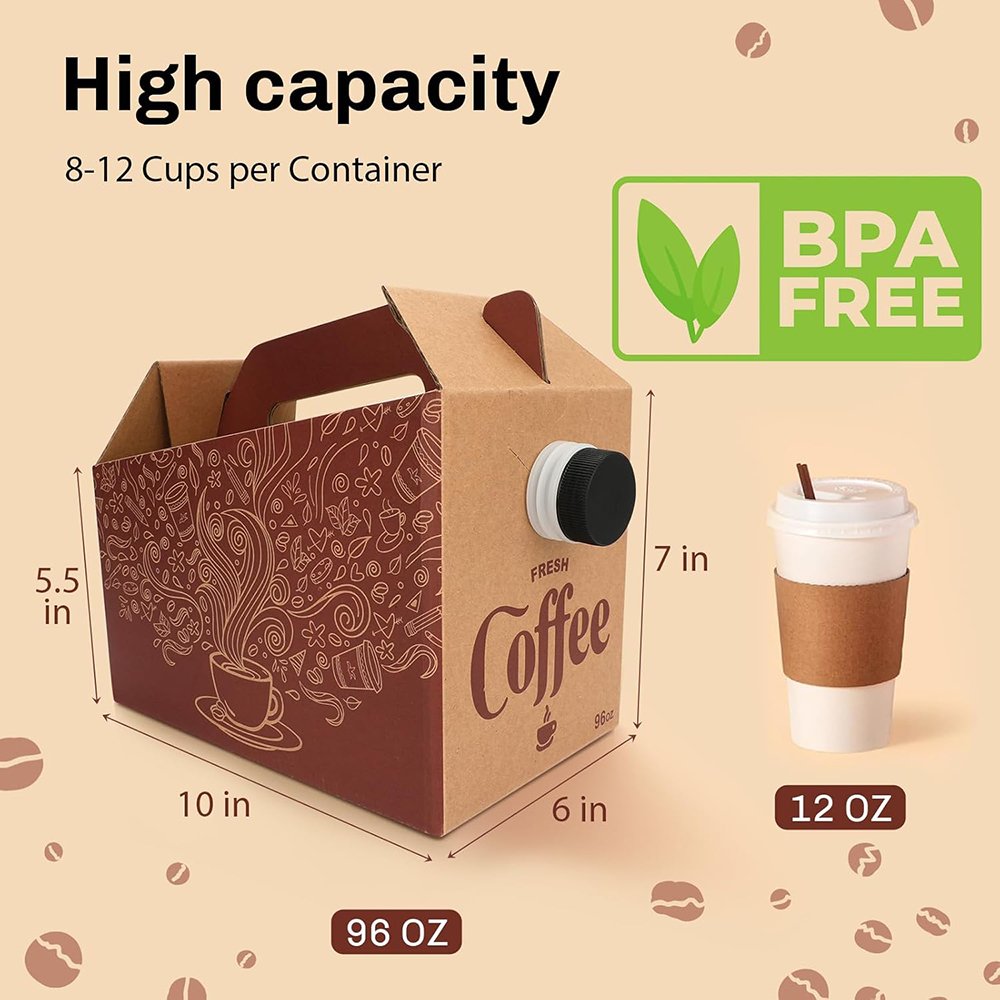
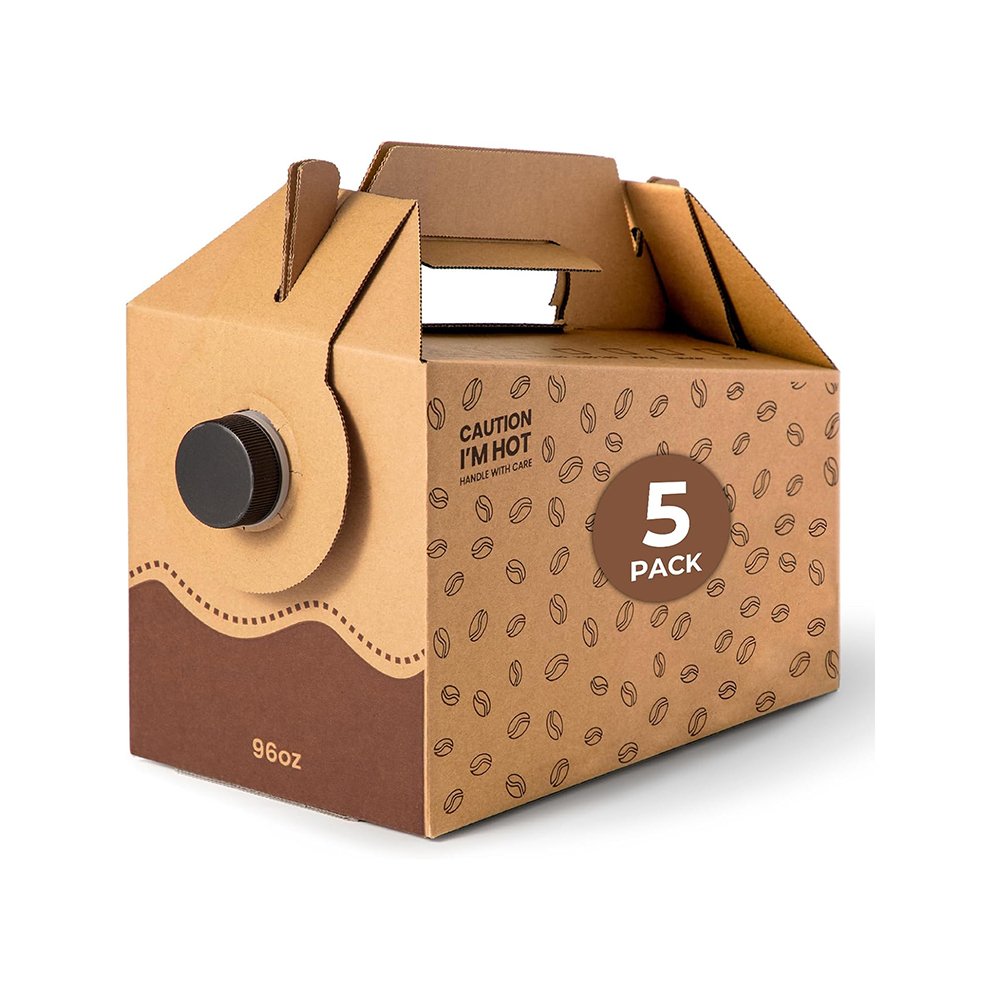
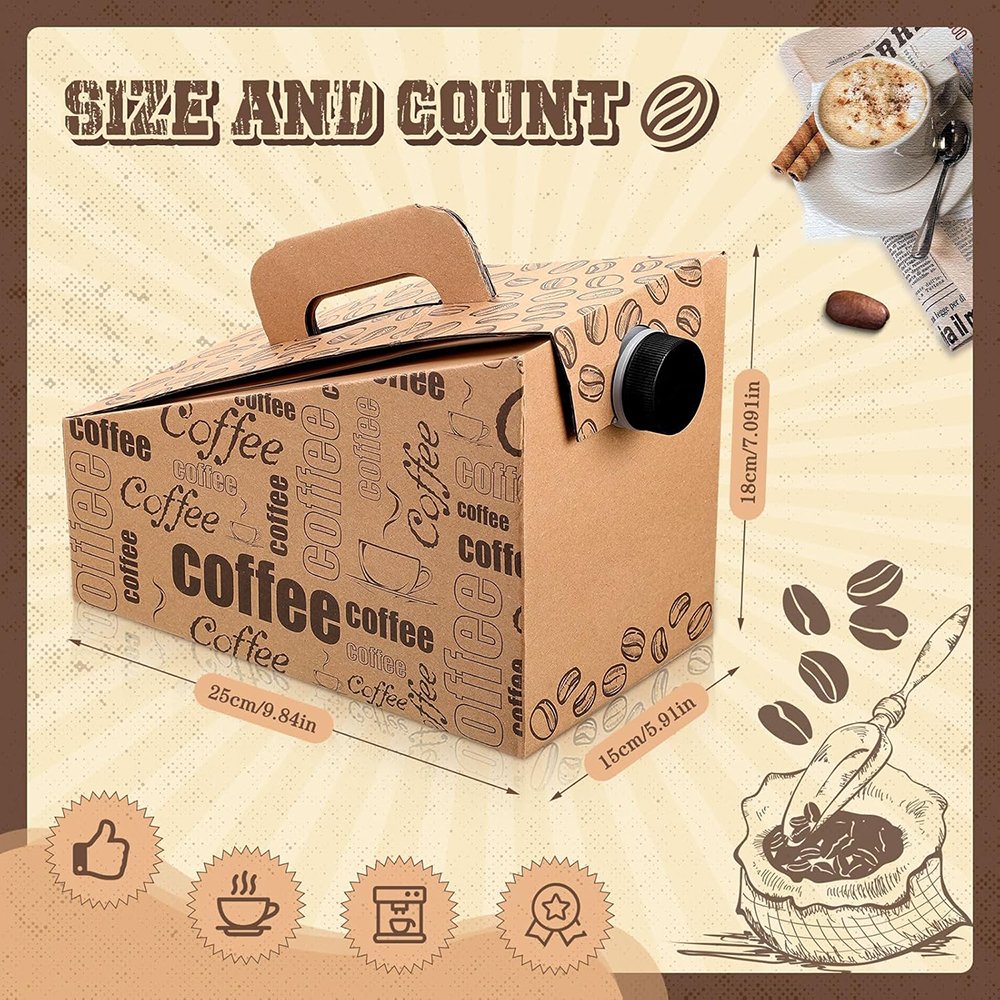
Coffee BIB Sloped Bottom Angles: How Much Is Enough?
The objective is not to create a steep incline.
Instead, packaging engineers typically optimize a gentle slope that:
- Encourages continuous gravity flow
- Maintains structural stability
- Prevents excessive stress on the bag
- Supports transportation loads
The ideal angle depends on several variables, including:
- Bag dimensions
- Coffee volume
- Film flexibility
- Tap location
- Corrugated board thickness
Rather than relying on fixed values, experienced designers validate the geometry through physical prototypes and dispensing tests.
Coffee BIB Bag Shape Influences Liquid Recovery
The internal bag is just as important as the outer box.
A poorly shaped bag may create folds that trap coffee.
Professional coffee bag in box manufacturers optimize:
Weld Position
Heat-seal locations influence how the bag collapses during dispensing.
Corner Geometry
Rounded internal corners reduce liquid pockets.
Film Flexibility
The bag should collapse smoothly without forming rigid folds that interrupt liquid flow.
Volume Distribution
Balanced bag dimensions improve contact with the sloped support surface.
Dispensing Tap Position Is Critical for Coffee BIB Performance
Even the best sloped box cannot recover all the coffee if the tap is positioned too high.
The dispensing outlet should align closely with the package’s lowest effective drainage point.
Professional Coffee Beverage Dispenser suppliers carefully coordinate:
- Spigot height
- Bag outlet location
- Box opening dimensions
- Internal support angle
Together, these features maximize beverage recovery.
Coffee BIB Internal Support Structures Improve Drainage
The outer box does more than protect the bag.
It actively controls how the bag behaves during dispensing.
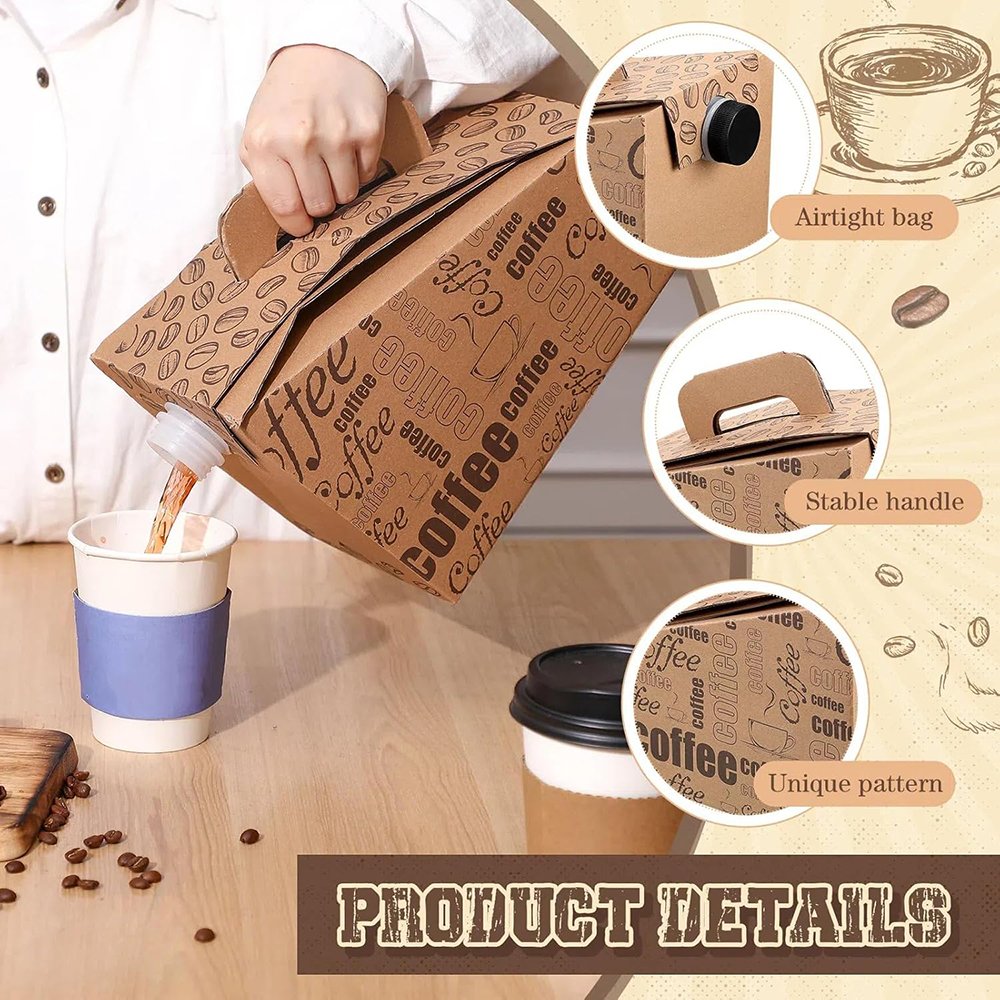
Modern coffee BIB designs may incorporate:
Raised Rear Platform
Slightly elevates the rear of the bag.
Integrated Sloped Insert
Creates a continuous gravity path toward the dispensing tap.
Folded Corrugated Guide
A specially folded paper structure supports the bag while maintaining drainage.
Honeycomb Paper Support
Lightweight paper honeycomb structures provide strength while preserving the designed slope.
These solutions eliminate the need for plastic inserts.
How Film Flexibility Affects Coffee BIB Drainage
Different multilayer films collapse differently.
An overly stiff film may:
- Bridge over low areas
- Create trapped liquid pockets
- Resist complete collapse
A highly flexible film allows gravity to pull the remaining coffee toward the outlet more effectively.
Professional coffee bag in box factory engineers therefore evaluate both barrier performance and mechanical flexibility during material selection.
Coffee Viscosity Also Influences the "Last Drop" Problem
Not all beverages flow equally.
Cold brew coffee containing:
- Milk
- Plant-based creamers
- Sugar syrups
- Flavor concentrates
may flow more slowly than black cold brew.
Higher viscosity increases the importance of optimized internal slopes because thicker liquids require stronger gravity assistance to drain completely.
Testing Coffee BIB Liquid Recovery
Professional packaging development should include beverage recovery testing.
Typical evaluations include:
Complete Dispensing Test
Measure the total percentage of coffee successfully dispensed.
Residual Volume Measurement
Determine how much liquid remains inside the bag after normal dispensing.
Multi-Angle Testing
Evaluate recovery under different operating positions.
교통 시뮬레이션
Ensure internal support structures maintain their shape after shipping.
User Experience Testing
Observe whether customers naturally obtain complete drainage without manually lifting or shaking the package.
Common Design Mistakes That Cause Coffee BIB Waste
Flat Bottom Construction
Horizontal support surfaces often leave coffee trapped inside the bag.
Poor Spigot Placement
If the outlet sits above the true drainage point, residual liquid remains.
Oversized Boxes
Large internal spaces allow the bag to shift during dispensing.
Weak Internal Support
Collapsed support structures eliminate the intended drainage angle.
Ignoring Bag Geometry
Even an excellent corrugated box cannot compensate for an improperly designed inner bag.
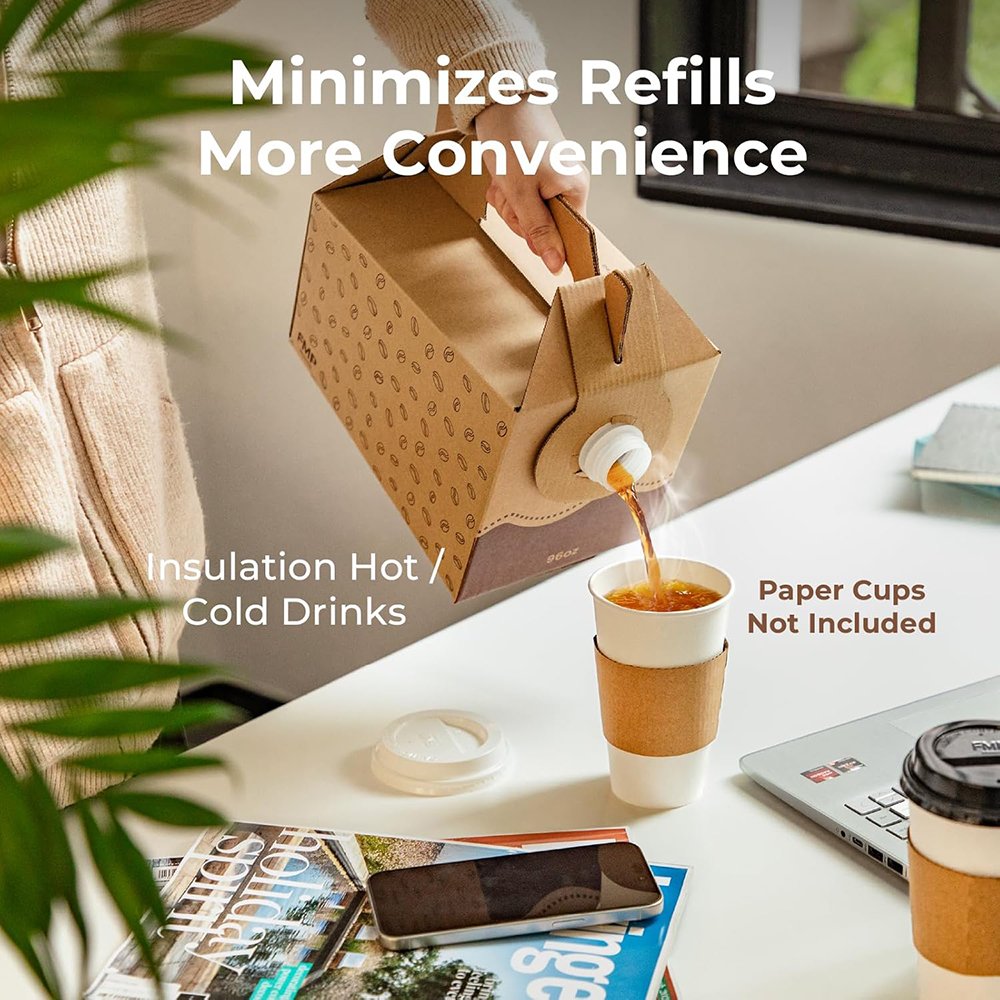
Coffee BIB Design Should Balance Drainage and Structural Strength
Improving drainage should never compromise transportation performance.
Packaging engineers must balance:
- Liquid recovery
- Compression strength
- Manufacturing cost
- Assembly efficiency
- Flat-pack shipping
- 지속가능성
Professional 커피 상자 공장 design focuses on optimizing the complete system rather than one individual component.
How BM Optimizes Coffee BIB Packaging for Maximum Beverage Recovery
As a trusted 커피 백인박스 제조업체, BM develops customized beverage packaging based on practical commercial use rather than theoretical concepts.
Our engineering team evaluates:
- Beverage capacity
- Dispensing frequency
- Cold brew formulation
- Transportation method
- Customer operating habits
- 유통기한 요건
We optimize:
- Internal sloped support structures
- Corrugated board configuration
- Bag geometry
- Spigot positioning
- 구조 보강
- Transportation durability
- User-friendly assembly
Our customized packaging solutions include:
- 커피 비브
- 커피 박스 디스펜서
- Coffee Beverage Dispenser supplier projects
- 커피 테이크아웃 용기
- 커피 테이크아웃 음료 용기
- 휴대용 커피 운반 용기
The result is packaging that protects beverage quality while helping customers recover nearly every usable drop.
Future Trends in Coffee BIB Liquid Recovery Design
The next generation of coffee BIB packaging will increasingly integrate structural engineering with digital product development.
Emerging innovations include:
Computer-Aided Fluid Simulation
Virtual flow analysis helps optimize drainage before tooling begins.
Adaptive Bag Geometry
Future multilayer bags may collapse more uniformly to improve beverage recovery.
Sustainable Paper Support Structures
Replacing plastic supports with recyclable paper engineering.
Smart Dispensing Systems
Future Coffee Box Dispensers may include integrated sensors that indicate remaining beverage volume and optimal pouring angle.
Frequently Asked Questions
Can a sloped box completely eliminate leftover coffee?
No packaging system can guarantee absolute zero residual liquid under every condition. However, a properly engineered sloped support structure, optimized bag geometry, and well-positioned dispensing tap can significantly reduce waste compared with conventional flat-bottom designs.
Will adding a slope weaken the box?
Not if it is engineered correctly. Reinforced corrugated structures can maintain excellent compression strength while providing an effective drainage angle.
Should the bag or the box be redesigned first?
Ideally, both should be developed together. Maximum beverage recovery depends on the interaction between the flexible inner bag and the supporting corrugated structure.
Is this important only for cold brew coffee?
No. The same design principles apply to tea concentrates, juice, dairy beverages, wine, sauces, and many other Bag-in-Box products where product yield directly affects profitability.

A Better Coffee BIB Lets Customers Enjoy Every Last Drop
The “Last Drop” problem is more than a minor inconvenience—it directly affects product yield, customer satisfaction, sustainability, and operating costs.
A thoughtfully engineered coffee BIB combines:
- Optimized internal sloped supports
- Proper dispensing tap positioning
- Flexible high-quality barrier films
- Well-designed bag geometry
- Strong corrugated structures
- Real-world dispensing validation
Together, these design elements help guide the beverage naturally toward the outlet, minimizing residual coffee and maximizing the value of every package.
As an experienced coffee BIB factory and 커피 백인박스 제조업체, BM specializes in developing complete beverage packaging systems that combine innovative structural engineering with premium printing and reliable manufacturing. Whether you require customized 커피 박스 디스펜서, 커피 테이크아웃 용기, 커피 테이크아웃 음료 용기, or 휴대용 커피 운반 용기, our team works closely with customers to create packaging that not only protects the product but also ensures that every last drop reaches the cup instead of remaining inside the bag.
BM 종이 상자 제조업체 소개
저희는 10년 이상의 업계 경력을 보유한 전문 종이 포장 상자 맞춤 제작 공장입니다. 가전제품, 의료기기 소모품, 화장품 등 다양한 분야에 걸쳐 고객에게 고품질 맞춤형 포장 솔루션을 제공하는 데 주력하고 있으며, 독창적인 디자인과 정교한 기술로 고객 제품에 무한한 매력을 더하고 있습니다.
저희는 전문 종이 포장 상자 맞춤 제작 업체로서, 가전제품, 의료기기 소모품, 화장품 등 다양한 분야에 걸쳐 폭넓은 서비스를 제공합니다. 고급 가전제품을 위한 정교한 선물 상자부터 의료기기 전문 포장, 세련된 화장품 외관 상자까지, 고객의 요구와 제품 특성에 맞춰 최적의 포장 솔루션을 맞춤 제작해 드립니다. 저희의 전문성은 수많은 브랜드 고객들에게 인정받아 신뢰할 수 있는 파트너로 자리매김했습니다.
BM 종이 상자 공장을 선택해야 하는 이유
최고급 품질: 중국 최고의 맞춤형 종이 상자 제조업체 중 하나로서, 당사의 품질 관리팀은 고객님께서 받으시는 모든 제품이 최상의 품질임을 보장합니다. 당사는 전문적인 품질 검사 장비를 보유하고 있습니다.
제품 디자인: 저희 샘플링 부서는 도면을 실제 제품으로 구현하는 완벽한 공정을 갖추고 있습니다. 또한, 오랜 경험을 바탕으로 고객님의 제품 디자인을 더욱 개선해 드립니다. 의견을 들려주세요.
안정적인 배송 시간: 최고의 선물 상자 제조업체 및 공급업체로서, 저희는 충분한 생산 능력을 갖추고 있어 대량 주문에도 문제없이 제시간에 배송해 드릴 수 있습니다.
최저가 보장: 저희는 종이 상자 제조 전문 공장이자 중국 최고의 제조업체로서, 최고 품질의 가방을 최저가로 제공할 수 있습니다.
정밀한 관리: 정밀한 관리가 없으면 아무것도 이룰 수 없습니다. 저희 회사는 완벽한 관리 시스템을 갖추고 있습니다.
24시간 연중무휴 서비스: 최고의 종이 상자 제조업체로서 24시간 연중무휴 즉각적인 응답을 제공합니다. 더 나은 공급업체가 되기 위해 고객님의 의견을 경청하겠습니다. 지금 바로 문의하세요.(+86 18925520049)
BM 종이 상자 관련 FAQ
저희는 중국 최고의 제조업체이며 공장은 동관에 위치하고 있습니다. 공장 방문을 환영합니다!
• 저희는 특히 선물 포장 분야에서 전문적인 종이 포장 제품 공급업체입니다. 다양한 용도의 종이 상자와 종이 봉투를 생산할 수 있습니다.
• 저희는 원스톱 서비스를 제공하며, 고객의 요구사항에 따라 맞춤 디자인도 가능합니다.
•물론, 일반적으로 샘플은 무료로 제공해 드리며, 배송비만 부담하시면 됩니다. 맞춤 인쇄 샘플의 경우, 샘플 비용 확인을 위해 요구 사항을 보내주시기 바랍니다.
• 샘플 제작에는 약 7일이 소요됩니다.
네, 저희는 구조 설계 및 간단한 그래픽 디자인을 포함한 무료 디자인 서비스를 제공합니다.
물론입니다. 고객님의 디자인으로 어떤 포장이든 제작해 드릴 수 있습니다. 현재 100개에서 500개까지의 소량 주문에 적합한 ODM 포장 서비스를 제공하고 있으며, 로고도 그대로 넣으실 수 있습니다.
주문 수량 및 생산 세부 사항에 따라 약 15~20일이 소요됩니다.
대량 생산 전에는 항상 시제품을 제공하고, 출하 전에는 항상 최종 검사를 실시합니다.
• 크기, 재질, 인쇄 세부 사항, 수량, 배송지 등.
• 또한, 고객님의 요구사항을 알려주시면 저희가 적합한 제품을 추천해 드리겠습니다.
• 해상, 항공 또는 특송으로 운송 가능합니다.
• 중국에 자체 운송업체가 있는 경우, 이는 공장도 가격 또는 FOB 가격입니다.
• CFR 또는 CIF 등, 저희가 대신 운송해 드려야 하는 경우 알려주세요.
• DDP와 DDU도 사용할 수 있습니다.
• 더 많은 선택지가 있다면, 귀하의 선택 사항을 고려해 보겠습니다.
• 가격은 수량, 재질, 가공 방법, 크기 및 기타 요인에 따라 결정됩니다. 또한, 당사의 지속적인 노력으로 인해
기술 혁신 덕분에 일부 제품의 가격 경쟁력이 매우 뛰어납니다. 견적 문의는 언제든지 연락 주십시오.