








Why Coffee Box Handle Strength Matters More Than You Think
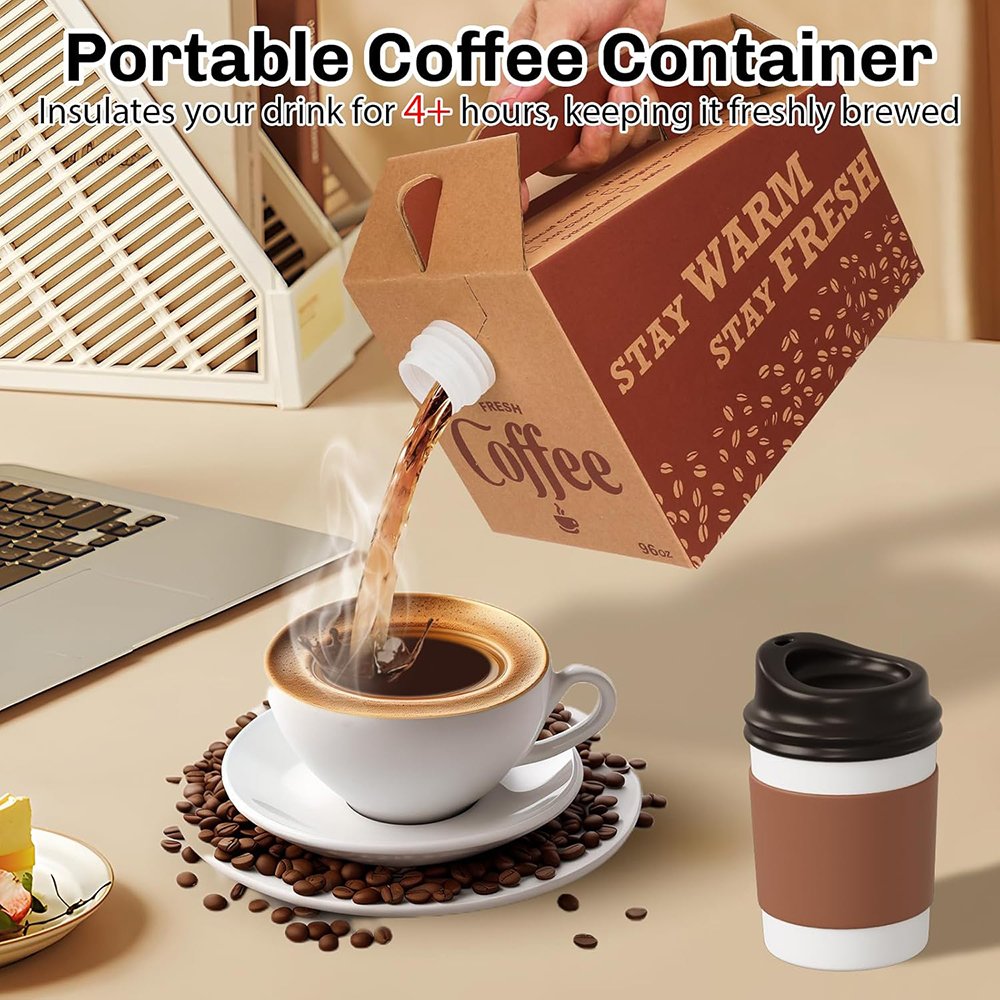
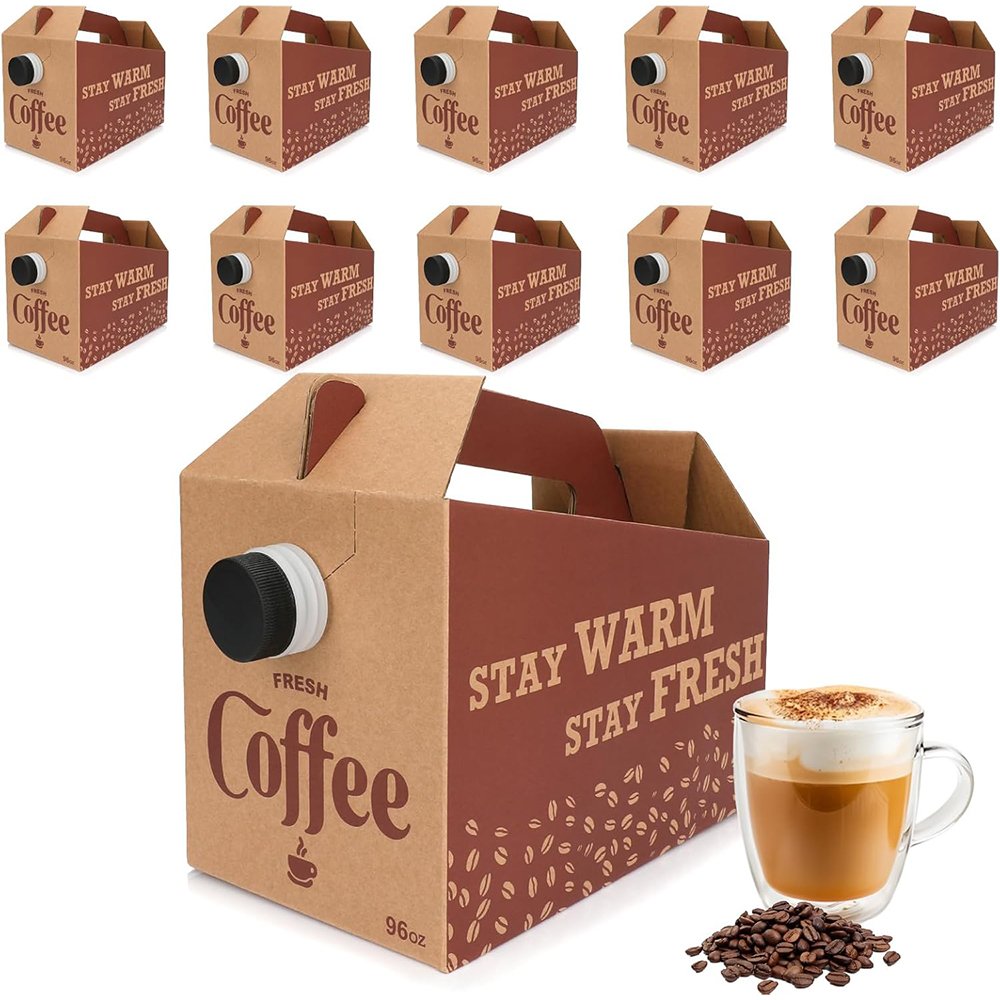
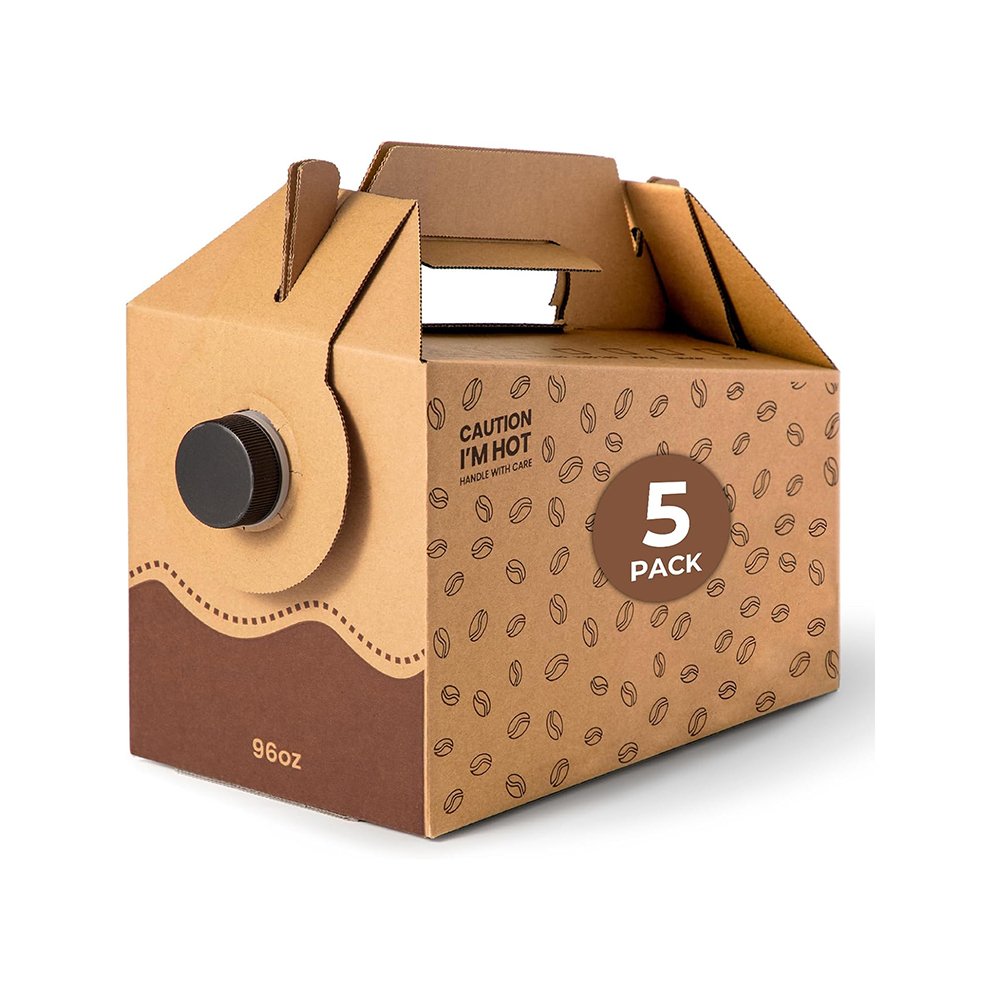
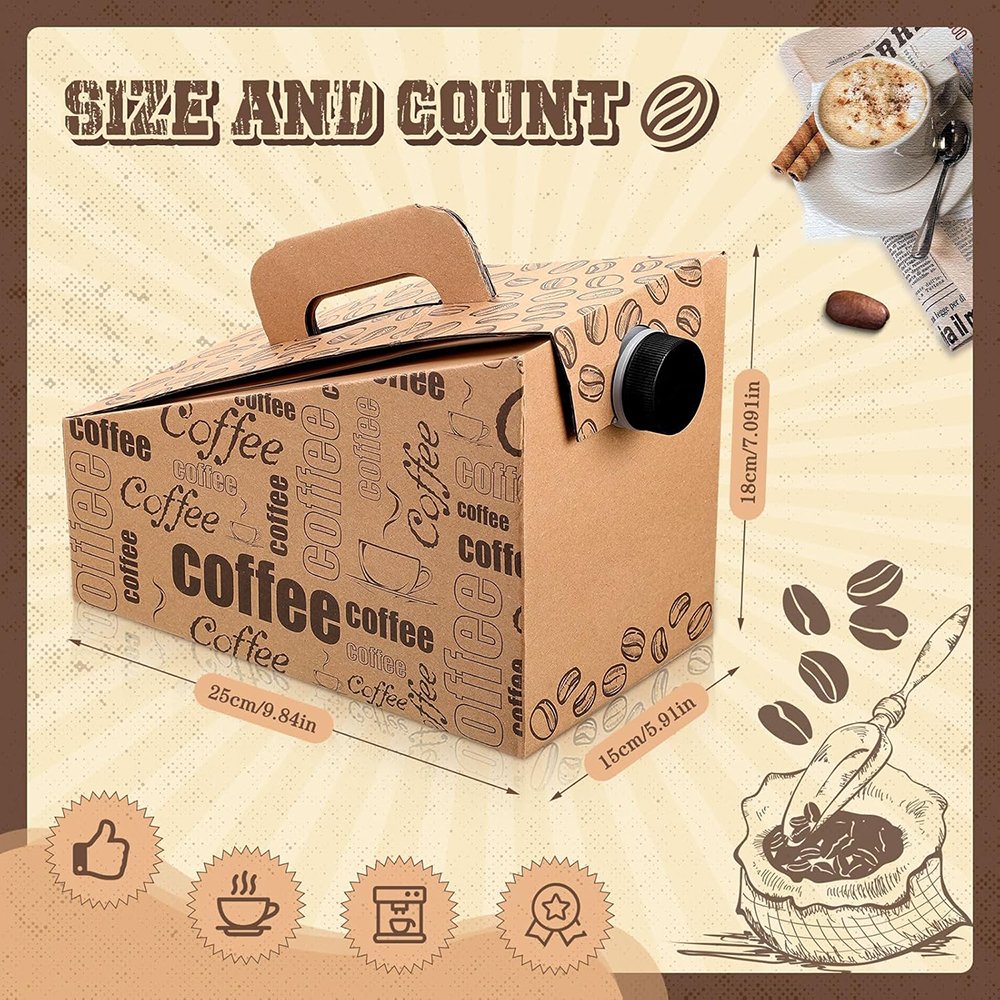
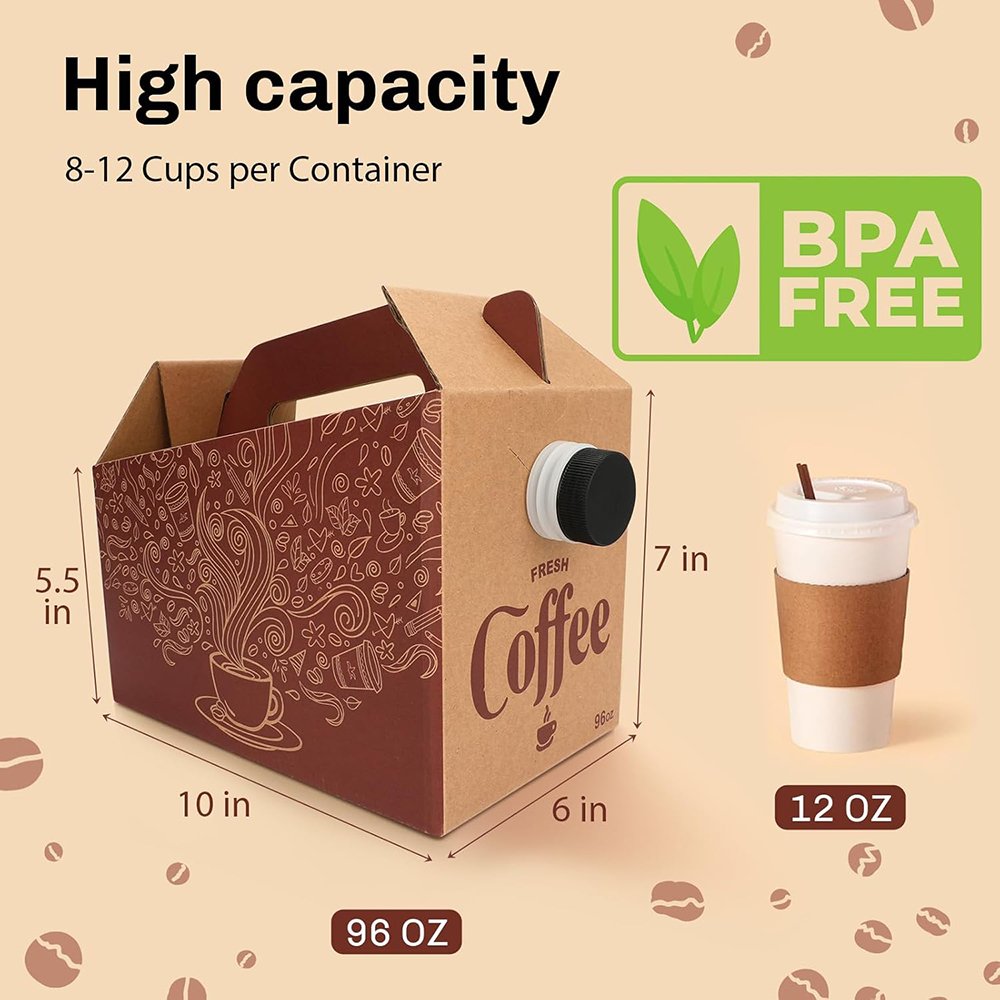
For cafés, coffee chains, catering companies, and beverage brands, the coffee box has evolved from simple packaging into a portable beverage solution. Modern coffee bag in box (Coffee BIB) systems allow customers to carry several liters of freshly brewed coffee to offices, meetings, picnics, family gatherings, conferences, and outdoor events. A typical 3L coffee box weighs approximately 3.2–3.5 kg when filled with hot coffee, while a 5L version may exceed 5 kg.
While most manufacturers focus on the corrugated structure, insulation, printing quality, or dispensing tap, one component often determines the customer’s final impression of the product—the handle.
Imagine a customer purchasing a 3L coffee box for an office meeting. They leave the café and walk approximately 500 meters. Halfway through the journey, the die-cut handle begins to stretch, the paper fibers weaken, and eventually the handle tears. The heavy box falls to the ground, spilling hot coffee, damaging the customer’s clothing, creating safety hazards, and completely ruining the brand experience.
This is not merely a packaging failure—it is a failure of structural engineering.
The good news is that modern corrugated packaging technology offers numerous ways to reinforce handles without significantly increasing production costs or compromising sustainability.
プロとして 箱入りコーヒーバッグメーカー, BM has over ten years of experience designing custom paper packaging, beverage dispensers, retail displays, and structural packaging solutions. We work with coffee chains, foodservice distributors, and beverage brands worldwide to develop コーヒーボックスディスペンサー, 持ち帰り用コーヒー容器, and 携帯用コーヒーキャリア容器 that combine excellent portability with reliable load-bearing performance.
This guide explains why corrugated handles fail, how engineers analyze handle stress, and what design techniques create stronger, more comfortable, and more reliable coffee box handles.
Why Coffee Box Handles Fail
Many people assume that handle failure occurs simply because the cardboard is too thin.
In reality, handle failure is usually caused by multiple factors working together.
Common causes include:
- Stress concentration around die-cut corners
- Poor paper fiber orientation
- Weak corrugated board selection
- Insufficient reinforcement
- Repeated dynamic loading while walking
- Moisture exposure
- Excessive handle opening size
Understanding these factors is the first step toward designing a stronger coffee box.
The Forces Acting on a Coffee Box Handle
A filled coffee box does not apply a constant downward load.
Instead, walking introduces dynamic forces.
Each step creates small upward and downward accelerations.
As a result, the handle experiences:
- Vertical tension
- Cyclic fatigue
- Localized tearing stress
- Twisting forces
- Sudden shock loads
These repeated movements often produce forces greater than the package’s static weight.
A handle that supports 3.5 kg on a laboratory table may fail during a short walk if dynamic loading is ignored.
Coffee Box Paper Fiber Direction Matters
Corrugated board has directional strength.
Paper fibers resist tearing differently depending on their orientation.
プロ coffee box factory engineers carefully align the handle so that the primary load follows the strongest fiber direction whenever possible.
Improper orientation may reduce handle durability even when thicker paper is used.
Choosing the Right Corrugated Board for Coffee Box Handles
Handle performance begins with board selection.
Several factors should be considered.
Double-Wall Corrugated Board
Compared with single-wall structures, double-wall corrugated board provides:
- Higher tear resistance
- Greater compression strength
- Improved stiffness
- Better fatigue resistance
This is commonly recommended for commercial コーヒーボックスディスペンサー carrying several liters of liquid.
High-Strength Kraft Liners
Virgin kraft paper generally provides superior tear resistance compared with lower-grade recycled liners.
For heavy-duty beverage packaging, stronger liner paper often delivers greater improvement than simply increasing board thickness.
Coffee Box Handle Reinforcement Techniques
Professional structural packaging designers use several reinforcement methods.
Multi-Layer Handle Panels
Instead of relying on a single layer of corrugated board, multiple folded layers create a thicker lifting area.
Advantages include:
- Improved tear resistance
- Reduced stress concentration
- Increased user comfort
Internal Reinforcement Plates
Additional paperboard reinforcement hidden inside the handle area distributes load over a larger surface.
This reduces localized tearing around the handle opening.
Extended Handle Bridges
Rather than terminating the handle directly beside the opening, extended reinforcement bridges spread the lifting force across a wider section of the carton.
Rounded Die-Cut Corners Reduce Tearing
Sharp corners create stress concentrations.
These areas become the starting point for tears.
Replacing sharp angles with generous radii significantly improves durability.
This simple modification often provides measurable improvements without increasing material cost.
Coffee Box Handle Width Influences Customer Comfort
A narrow handle concentrates pressure on the user’s hand.
This encourages customers to grip the box differently, creating additional twisting forces.
A wider handle:
- Improves comfort
- Reduces localized pressure
- Distributes load more evenly
- Increases carrying stability
For 携帯用コーヒーキャリア容器, ergonomic design is just as important as structural strength.
Moisture Resistance Protects Coffee Box Handles
Hot coffee often generates condensation.
Rain, humidity, or accidental spills may also wet the handle area.
Wet paper loses strength much faster than dry paper.
プロ coffee bag in box manufacturers improve moisture resistance through:
- Water-resistant coatings
- Moisture-resistant liner papers
- Functional barrier coatings
- Optimized corrugated structures
These measures help preserve handle strength throughout transportation.
Handle Geometry Should Match Coffee Box Weight
Different capacities require different handle designs.
For example:
3L Coffee Box
Prioritize:
- Comfortable grip
- Lightweight construction
- Quick assembly
5L Coffee Box
Require:
- Larger reinforcement area
- Higher tear resistance
- Improved load distribution
Catering Coffee Box
May require additional structural support due to extended transportation distances.
Professional engineering tailors the handle to the intended application rather than using one universal design.
Coffee Box Structural Design Supports Handle Strength
The handle does not function independently.
The entire carton contributes to load transfer.
Important structural elements include:
Top Panel Rigidity
A rigid top panel distributes lifting forces evenly.
Side Wall Strength
Strong side panels prevent deformation during carrying.
Bottom Reinforcement
A reinforced bottom reduces box distortion, minimizing additional stress on the handle.
Internal Coffee BIB Position
A properly positioned inner bag keeps the center of gravity stable, reducing twisting during transportation.

Finite Element Analysis Improves Coffee Box Handle Design
Many modern coffee box factory engineers now use computer simulation before producing prototypes.
Finite Element Analysis (FEA) allows designers to visualize:
- Stress concentration
- Material deformation
- Load distribution
- Fatigue behavior
This reduces development time while improving structural reliability.
Testing Coffee Box Handle Durability
Professional packaging should undergo comprehensive testing before commercial production.
Static Load Test
Measures maximum lifting capacity.
Dynamic Carry Test
Simulates real walking conditions over extended distances.
Cyclic Fatigue Test
Evaluates repeated lifting and lowering.
Drop Testing
Ensures handles remain intact after accidental impacts.
Environmental Testing
Measures performance after humidity and temperature exposure.
User Evaluation
Observe real users carrying the coffee box to identify ergonomic improvements.
Testing under practical conditions often reveals issues that laboratory load measurements alone cannot detect.
Common Coffee Box Handle Design Mistakes
Using Shipping Carton Handles
Packaging designed for logistics is not necessarily suitable for consumers carrying beverages.
Ignoring Dynamic Loads
Walking generates repeated forces much greater than static weight.
Oversized Handle Openings
Large die-cut openings reduce remaining paper strength.
Weak Top Panels
Even strong handles may fail if the surrounding carton deforms excessively.
Choosing Cost Over Engineering
Reducing paper weight without structural optimization often increases product failure rates.

How BM Designs Reliable Coffee Box Handles
As an experienced 箱入りコーヒーバッグメーカー, BM develops complete beverage packaging systems rather than simply producing corrugated boxes.
Our engineering team evaluates:
- Coffee capacity
- Transportation distance
- Customer handling habits
- Environmental conditions
- Structural loading
- Production efficiency
We optimize:
- Corrugated board grade
- Handle reinforcement
- Paper fiber orientation
- Die-cut geometry
- Moisture resistance
- User comfort
- Structural durability
Our customized packaging solutions include:
- Coffee Box
- コーヒーボックスディスペンサー
- Coffee Beverage Dispenser supplier projects
- 持ち帰り用コーヒー容器
- 持ち帰り用コーヒー容器
- 携帯用コーヒーキャリア容器
Each design is validated to ensure reliable performance in real-world commercial applications.
Future Trends in Coffee Box Handle Engineering
Packaging technology continues to evolve.
Emerging innovations include:
Paper-Based Composite Reinforcements
Offering greater strength without adding plastic.
AI-Assisted Structural Optimization
Software can automatically identify the most efficient reinforcement geometry.
Lightweight High-Performance Corrugated Materials
New paper technologies improve strength while reducing weight.
Ergonomic Consumer-Centered Design
Future coffee box packaging will increasingly focus on user comfort alongside structural reliability.
Frequently Asked Questions
Can thicker cardboard alone prevent handle tearing?
Not necessarily. Handle durability depends on material quality, reinforcement design, die-cut geometry, fiber direction, and overall carton structure—not thickness alone.
Should handles be glued for additional strength?
In some applications, folded multi-layer self-locking structures provide sufficient strength without adhesives. The best solution depends on production efficiency and performance requirements.
Is moisture really a major factor?
Yes. Humidity, condensation, and spills can significantly reduce paper strength. Moisture-resistant materials and coatings are especially important for beverage packaging.
How should coffee brands evaluate handle quality?
Instead of relying only on laboratory load tests, brands should request dynamic carrying tests, fatigue testing, and real-user evaluations that better reflect everyday usage.
Strong Coffee Box Handles Require Complete Structural Engineering
A reliable coffee box handle is the result of thoughtful engineering—not simply thicker cardboard.
By combining high-strength corrugated board, optimized fiber orientation, multi-layer reinforcements, rounded die-cut corners, moisture-resistant materials, ergonomic geometry, and comprehensive testing, manufacturers can create packaging that remains comfortable and secure even when customers carry several liters of hot coffee over long distances.
For coffee brands, investing in handle performance protects far more than the package itself. It safeguards customer safety, product integrity, brand reputation, and the overall takeaway experience.
As a trusted 箱入りコーヒーバッグメーカー, BM specializes in designing innovative beverage packaging that balances portability, sustainability, premium branding, and structural reliability. From コーヒーボックスディスペンサー and 持ち帰り用コーヒー容器 to 持ち帰り用コーヒー容器 and 携帯用コーヒーキャリア容器, our customized solutions are engineered to perform in real-world conditions—helping customers carry their coffee confidently from the café to their destination without worrying about handle failure.
BMペーパーボックスメーカーについて
当社は、10年の業界経験を持つ、紙製パッケージボックスのカスタマイズを専門とする工場です。独創的なデザインと卓越した技術を駆使し、家電製品、医療機器消耗品、化粧品など、幅広い分野に対応した高品質なカスタマイズパッケージソリューションを提供することで、お客様の製品に無限の魅力を添えます。.
プロの紙製パッケージボックスカスタマイズ工場として、当社は家電製品、医療機器消耗品、化粧品など幅広い分野に対応しています。高級家電製品の洗練されたギフトボックス、医療機器のプロフェッショナルなパッケージ、化粧品のファッショナブルな外箱など、お客様のニーズと製品の特性に合わせて最適なパッケージソリューションをご提案いたします。当社の専門性は多くのブランド顧客から高く評価され、信頼できるパートナーとして認められています。.
BMペーパーボックスファクトリーを選ぶ理由
最高品質:中国有数のカスタム紙箱メーカーとして、当社の品質管理チームは、お客様にお届けするすべての製品が最高品質であることを保証します。当社はプロ仕様の品質検査機を保有しています。.
製品設計:当社のサンプル部門は、図面を実際の製品に仕上げる全工程を網羅しています。また、長年の経験に基づき、お客様の製品設計を改善いたします。ぜひご意見をお聞かせください。.
安定した納期:最高のギフトボックスメーカーおよびサプライヤーとして、当社は十分な製造能力を有しており、大量注文でも対応可能です。お客様のご注文を期日通りにお届けいたします。.
最安値:当社は紙箱の製造工場であり、中国で最高のメーカーです。そのため、最高品質の袋を最安値で提供できます。.
精密な管理:精密な管理を実施しなければ、何も達成できません。当社は、包括的な管理システムを備えた企業です。.
24時間365日対応:最高の紙箱メーカーとして、24時間365日迅速に対応いたします。お客様からのフィードバックを参考に、より良いサプライヤーを目指します。お問い合わせください。(+86 18925520049)
BMペーパーボックスに関するよくある質問
当社は中国の大手メーカーであり、工場は東莞市にあります。ぜひ工場見学にお越しください!
• 当社は、特にギフト包装分野において、紙製包装製品の専門サプライヤーです。多目的に使用できる様々な種類の紙箱や紙袋を製造できます。.
・当社はワンストップサービスを提供しており、お客様のご要望に応じたカスタムデザインも承ります。.
・もちろん、通常は無料サンプルをご提供いたしますので、送料のみご負担ください。カスタム印刷サンプルをご希望の場合は、サンプル費用を確認するため、ご要望をお送りください。.
・サンプル製作には約7日かかります。.
はい、弊社では無料のデザインサービス、構造設計、簡単なグラフィックデザインを提供しています。.
もちろんです。お客様のデザインでどんなパッケージでも製作可能です。現在、100個から500個までの少量生産に対応したODMパッケージサービスを開始しており、もちろんお客様独自のロゴを入れることもできます。.
注文数量と生産内容によって異なりますが、約15日から20日程度かかります。.
量産前には必ず試作品を作成し、出荷前には必ず最終検査を実施する。
・サイズ、素材、印刷の詳細、数量、配送先など.
・お客様のご要望をお聞かせいただければ、弊社から最適な製品をご提案いたします。.
・海上輸送、航空輸送、または速達便による輸送。.
• 中国国内に自社輸送業者をお持ちの場合、それは工場出荷価格またはFOB価格となります。.
•CFRまたはCIFなど。当社がお客様の代理で発送する必要がある場合。.
• DDPおよびDDUも使用できます。.
•より多くの選択肢をご用意いたします。ご希望に合わせて対応させていただきます。.
• 価格は数量、材質、加工方法、サイズなどの要因によって決まります。さらに、当社は継続的に
技術革新により、当社の製品の一部価格は非常に競争力があります。お見積もりをご希望の場合は、お問い合わせください。.