








1. Why Smart Device Packaging Requires More Than a Standard Electronics Box
Smart home and IoT products are becoming increasingly integrated into everyday life. Smart security cameras, video doorbells, Wi-Fi routers, smart sensors, smart hubs, home automation controllers, and connected lighting devices often come with multiple accessories.
A typical smart device kit may contain a main unit, power adapter, charging cable, mounting bracket, screws, connectors, instruction manual, and warranty documents. Although these components may be relatively small, packaging them together can create a surprisingly complex structural design challenge.
This is why Smart Device Packaging requires more than selecting a standard paper box with enough internal volume. The packaging must organize different components, prevent movement, protect sensitive electronic products, and make every item easy to identify and access.
For brands selling smart home products, an effective packaging solution should achieve four objectives:
Keep the main device and accessories securely positioned.
Separate components to prevent collision, scratching, and tangling.
Use internal space efficiently without unnecessary packaging volume.
Create a clear and professional unboxing experience.
Custom paper boxes with die-cut paper inserts offer a practical way to achieve these objectives. By designing the internal structure around the actual product kit, manufacturers can transform a simple carton into an organized packaging system.
2. Understanding the Challenges of Multi-Component Smart Device Packaging
Unlike a single-product package, smart home device packaging must accommodate several components with different shapes, sizes, and protection requirements.
For example, a smart security camera kit may include:
| Component | Typical Packaging Requirement |
|---|---|
| Main camera | Stable positioning and surface protection |
| Power adapter | Dedicated compartment |
| USB or power cable | Organized storage and controlled bending |
| Mounting bracket | Separate space to prevent contact with the main device |
| Screws and accessories | Small compartment or accessory bag |
| User manual | Flat document pocket or top layer |
A Wi-Fi router kit may have a different configuration. The router itself may occupy most of the box, while the power adapter, Ethernet cable, and documentation require smaller compartments.
A smart home control panel may include a touchscreen unit, mounting accessories, power cable, and installation instructions.
The challenge is not simply to fit everything into one box. It is to determine the best arrangement so that each component remains protected, accessible, and visually organized.
A professional Smart Device Packaging Solution begins with a complete component inventory and an understanding of how the product will be packed, shipped, stored, and unpacked.

3. Smart Device Packaging Starts with a Product and Accessory Assessment
Before developing the box structure, a packaging manufacturer should evaluate the complete product kit.
The main device and every accessory should be measured individually. Important information includes length, width, height, weight, shape, surface material, and any fragile or sensitive areas.
The packaging designer should also understand how each component is used and whether it needs to remain separated from other items.
For example:
A camera lens should not rub against metal mounting accessories.
A touchscreen control panel needs protection against surface scratches.
A power adapter should be held securely to prevent movement.
Cables should be arranged without excessive bending or tangling.
Small screws and connectors should be contained so they cannot move freely.
The order in which consumers remove components also deserves attention. If customers need to remove the main device first and then access the accessories underneath, the packaging structure should support that sequence.
This assessment provides the foundation for selecting the box dimensions, paper insert structure, compartment layout, and material specifications.
4. Paper Inserts: The Core of an Organized Smart Device Packaging Solution
Paper inserts are internal packaging components designed to hold, separate, and position products inside a box.
They can be produced through die-cutting, creasing, folding, and assembling paperboard or corrugated materials into customized shapes.
For multi-component smart home products, Paper Inserts are particularly useful because they can create multiple compartments within a single outer box.
A well-designed insert can provide:
A dedicated cavity for the main smart device.
Separate compartments for power adapters and cables.
Small sections for screws, connectors, and mounting accessories.
A document area for manuals and warranty cards.
Structural support to reduce unwanted product movement.
Unlike a generic loose-fill solution, a die-cut paper insert is designed around the actual dimensions of the components.
This allows brands to create a more organized interior while reducing the need for multiple independent packaging boxes.
Paper inserts can also be designed to match the outer packaging structure, creating a coordinated appearance throughout the entire package.
5. Die-Cut Paper Inserts for Smart Device Packaging: How Compartment Design Works
Die-cutting is one of the most important manufacturing processes used to produce custom paper inserts.
A cutting die is designed according to the required insert layout. The paperboard is then cut and creased into the desired shape, allowing it to be folded or assembled into a functional internal structure.
For smart device packaging, different cavities can be designed for different components.
Main device compartment
The largest cavity is usually reserved for the primary smart device. Its dimensions should provide sufficient clearance for loading and unloading while limiting unnecessary movement.
Power adapter compartment
A dedicated compartment keeps the adapter separate from the main unit. Its shape should account for the adapter body and any fixed plug structure.
Cable compartment
Cables can be placed in a separate cavity or held by folded paperboard features. The design should avoid forcing cables into tight bends.
Small accessory compartment
Screws, brackets, connectors, and other small items can be organized in dedicated sections or contained in suitable small bags.
Documentation compartment
A flat pocket or upper layer can hold manuals, quick-start guides, warranty cards, and other printed materials.
The purpose of die-cut design is to make each component fit naturally into its designated position.
6. Smart Device Packaging with Multi-Layer Paper Insert Structures
Not every smart device kit can be organized effectively on one flat insert.
When a package contains many accessories or a relatively large main unit, a multi-layer paper insert structure may provide a better solution.
A typical multi-layer structure may include:
Upper layer: The main device, positioned for immediate visibility.
Middle layer: Power adapters, cables, and mounting accessories.
Lower layer: Installation materials, manuals, or additional components.
For example, a smart home security camera kit may place the camera in the upper layer, with the power adapter and mounting accessories underneath.
This design separates components vertically instead of spreading everything across a larger horizontal area.
Multi-layer paper inserts can help reduce the footprint of the packaging, but they also introduce additional structural considerations. The lower layers must support the weight of the upper components, and the insert should remain stable during transportation and handling.
The designer should evaluate the stacking arrangement, board stiffness, folding structure, and ease of assembly before finalizing the design.
7. Compact Smart Device Packaging: Using Space More Efficiently
Compact packaging is important for smart home brands because box dimensions influence storage, shipping, retail display, and material consumption.
However, compact packaging does not simply mean making the box as small as possible.
An undersized box can make loading difficult, create excessive pressure on components, or leave insufficient room for protective structures. An oversized box can waste material and increase transportation volume.
The objective is to find an efficient balance between product fit, protection, assembly, and logistics.
A packaging designer can improve space utilization through several methods:
Component arrangement
Place components according to their dimensions and shapes. Long cables may fit alongside the main device, while smaller accessories can occupy unused corner areas.
Vertical organization
Use layered paper inserts when multiple components can be safely arranged at different heights.
Shared structural walls
Where appropriate, adjacent compartments can use shared paperboard walls instead of independent partitions.
Folded paperboard supports
Folded supports can provide positioning and cushioning functions without requiring a separate insert for every component.
Document integration
Manuals and warranty cards can be placed in a flat pocket or beneath an insert layer to avoid increasing the outer box footprint.
A well-designed Smart Device Packaging structure uses internal volume purposefully while maintaining enough clearance for safe packing and unpacking.

8. Choosing the Right Paper Materials for Smart Device Packaging Inserts
Material selection determines the insert’s structural performance, appearance, and production cost.
Different smart home products may require different paperboard specifications depending on their weight, geometry, and transportation conditions.
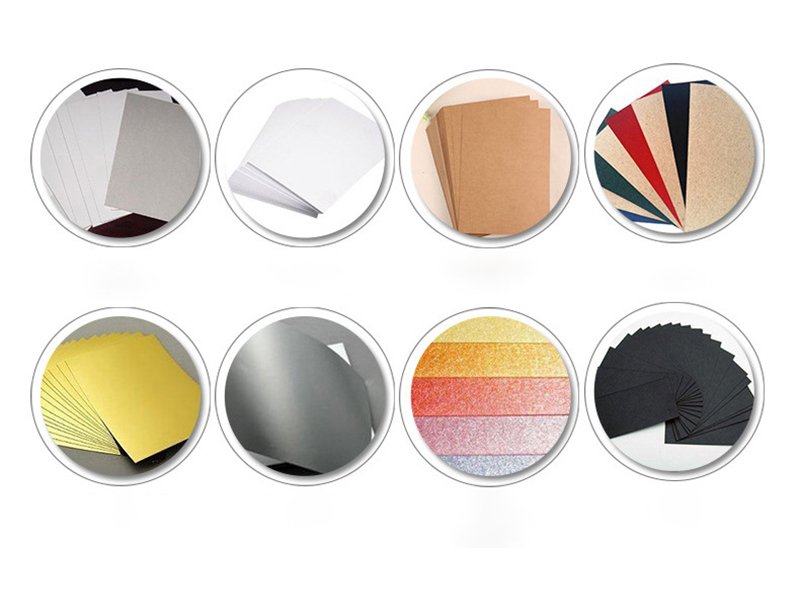
Common material options include:
White paperboard
White paperboard is suitable for clean-looking internal structures and lighter components. It can provide a neat presentation and can be printed when branding or instructions are needed.
Kraft paperboard
Kraft paperboard offers a natural appearance and is often selected for packaging projects that emphasize a simple, paper-based material aesthetic.
Corrugated board
Corrugated board provides a fluted structure that can offer useful cushioning and rigidity. It may be suitable for heavier smart devices or kits requiring additional internal support.
Greyboard
Greyboard is commonly used in rigid box construction. Depending on its thickness and structural design, it can also be considered for specific internal support applications.
Material selection should consider more than GSM. Paper weight, caliper, density, stiffness, flute structure, folding performance, and insert geometry all influence the final result.
For heavier devices, the insert should be evaluated under realistic loading and transportation conditions rather than selected by paper weight alone.
9. Smart Device Packaging for Different IoT Product Categories
Smart home and IoT products vary significantly in shape and configuration. Their packaging structures should be customized according to their specific components.
Smart security cameras
Camera kits often include a camera body, power cable, adapter, wall mount, screws, and documentation. A dedicated main cavity and separate accessory compartments can create an organized layout.
Video doorbells
Video doorbell packaging may need to accommodate the doorbell unit, mounting plate, screws, charging accessories, and installation instructions. A compact layered insert can help separate the main device from metal accessories.
Wi-Fi routers and mesh systems
Routers may have larger dimensions and require space for antennas, power adapters, Ethernet cables, and documentation. A reinforced paper insert or corrugated internal structure may be appropriate.
Smart sensors
Small sensors, magnetic contacts, and control modules may be supplied in multi-unit kits. Compartmentalized paper inserts can prevent different components from becoming mixed together.
Smart home hubs and control panels
These products may contain screens, buttons, or sensitive exterior surfaces. Their inserts should provide stable positioning and avoid abrasive contact.
The best packaging structure is determined by the actual product configuration, not simply by the product category.
10. Smart Device Packaging and Product Protection During Transportation
A paper insert must do more than organize accessories. It should also help limit unwanted product movement during distribution.
Electronic products may experience vibration, impact, compression, and repeated handling during storage and transportation.
A properly designed insert can reduce direct contact between components and help maintain their intended positions.
For example, separating a power adapter from a camera body can reduce the risk of hard components rubbing against the device’s surface. A shaped cavity can also help prevent the main product from moving freely inside the box.
However, paper inserts should not automatically be considered equivalent to tested protective packaging.
Protection depends on the complete packaging system, including:
Outer box strength
Insert material and geometry
Product weight and center of gravity
Clearance around each component
Closure and retention design
Transportation and handling conditions
For products distributed through e-commerce channels or international shipping networks, brands should consider appropriate package testing based on the intended distribution environment.
Depending on the product and shipping requirements, the retail presentation box may also need an additional corrugated shipping carton.

11. Smart Device Packaging and the Customer Unboxing Experience
A smart home device is often the starting point of a larger connected-home experience.
Customers may purchase a security camera, smart hub, router, or sensor kit because they expect convenience, reliability, and easy installation. The packaging should support these expectations from the moment the box is opened.
An organized paper insert makes the contents immediately understandable.
The customer can identify the main device, locate the power adapter, find the cable, and access the installation instructions without searching through a disorganized package.
A well-planned opening sequence can follow this structure:
Open the outer box.
View the main device in its dedicated compartment.
Remove the device without disturbing other components.
Access the accessory layer or separate compartments.
Find the installation guide and supporting documents.
For brands, this improves the perceived organization and usability of the product kit.
A premium unboxing experience does not always require expensive materials or complicated mechanisms. Often, precise compartment design and logical component arrangement create the greatest improvement.
12. Smart Device Packaging: Balancing Sustainability and Structural Performance
Many smart home brands are evaluating ways to reduce unnecessary plastic components in their packaging.
Paper-based inserts can be an alternative to certain plastic trays or foam components, depending on the product’s protection requirements.
They also offer practical design advantages:
Can be produced in customized shapes through die-cutting.
Can integrate multiple compartments into one structure.
Can be designed to work with paperboard or corrugated outer boxes.
Can support printing and product information.
May simplify material separation when designed with compatible paper-based components.
However, paper-based packaging is not automatically sustainable in every application.
Coatings, laminations, adhesives, mixed materials, and local recycling infrastructure can affect recyclability. The total environmental impact also depends on material consumption, production, transportation, and product protection performance.
The best approach is to reduce unnecessary packaging volume and material use while maintaining adequate protection.
For IoT brands, a compact paper packaging box with a well-engineered paper insert can support both efficient packaging and a more paper-oriented material strategy.
13. Smart Device Packaging: Common Design Mistakes to Avoid
Even a visually attractive package may fail if its internal structure is not properly engineered.
Several common mistakes can affect the performance of multi-component smart device packaging.
Mistake 1: Designing the box before measuring the complete kit
The packaging designer must consider every component, including cables, adapters, brackets, and documents. Designing around the main device alone can lead to insufficient internal space.
Mistake 2: Using one large compartment for all accessories
When cables, adapters, and mounting parts are placed together, they may move around and contact the main product. Dedicated compartments improve organization.
Mistake 3: Making the insert too tight
A very tight cavity may make products difficult to remove and may create pressure on sensitive areas. Suitable clearance should be included.
Mistake 4: Ignoring assembly efficiency
A complicated insert may require excessive manual folding or multiple assembly steps. The structure should be practical for mass production.
Mistake 5: Choosing materials only by GSM
Paper weight alone does not determine structural performance. Material thickness, stiffness, geometry, and loading conditions must also be evaluated.
Mistake 6: Skipping prototype testing
A digital drawing cannot fully demonstrate the actual loading process, product fit, or transportation performance. Physical samples should be tested before mass production.
Avoiding these mistakes helps brands develop packaging that is both attractive and commercially practical.
14. Why Choose BM as Your Custom Paper Box Manufacturer for Smart Device Packaging?
BM is a custom paper packaging manufacturer with more than ten years of industry experience. We provide customized paper boxes, packaging display stands, paper bags, and other paper packaging products for brands across multiple industries.
Our packaging applications include food packaging boxes, gift boxes, cosmetic packaging boxes, electronics packaging boxes, and other customized paper packaging projects.
For smart home and IoT brands, BM understands that a packaging project must consider the complete product kit rather than only the outer box.
A smart device packaging project may involve a main unit, power adapter, cables, brackets, connectors, screws, manuals, and other accessories. These components need a carefully planned internal layout to ensure organized presentation and practical protection.
BM can support customers with:
Custom structural design
We evaluate product dimensions, component quantities, packaging objectives, and distribution requirements to develop a suitable box structure.
Die-cut paper insert development
Paper inserts can be designed with custom compartments for the main device, power adapters, cables, and small accessories.
Paper material selection
We help customers consider suitable paperboard, kraft paperboard, corrugated board, greyboard, and other materials according to the required structure and performance.
Printing and finishing
Custom graphics, brand colors, logos, and suitable surface finishes help create packaging that matches the brand identity.
Prototype and production coordination
Physical samples allow customers to evaluate product fit, loading convenience, insert stability, and overall presentation before mass production.
Whether you are developing packaging for smart security cameras, Wi-Fi routers, smart sensors, video doorbells, or home automation kits, BM can work with your team to develop a customized paper packaging solution.
As an experienced custom paper box manufacturer, BM aims to combine structural design, practical manufacturing, and brand presentation in one coordinated packaging project.

15. How to Develop a Custom Smart Device Packaging Solution
A successful smart device packaging project should follow a structured development process.
The following steps help brands and packaging manufacturers coordinate requirements and reduce development errors.
Step 1: Prepare a complete product list
Provide the main device, cables, adapters, brackets, manuals, and all other components that will be included in the retail package.
Step 2: Confirm product dimensions and weight
Measure every component and identify fragile areas, protruding parts, and surfaces that require additional protection.
Step 3: Define the packaging objectives
Determine whether the package is intended for retail display, e-commerce, distributor shipments, or multiple sales channels.
Step 4: Develop the internal compartment layout
Arrange the components and determine whether a single-layer, multi-layer, or folded paper insert is most suitable.
Step 5: Select the outer box structure
Choose an appropriate folding carton, rigid box, corrugated box, or other paper packaging structure.
Step 6: Confirm paper materials and finishing
Select the paperboard specifications, printing method, surface finish, and internal material according to the product and budget.
Step 7: Produce a physical prototype
Check the box dimensions, component fit, insert assembly, product removal, and opening sequence.
Step 8: Evaluate packaging performance
Assess whether the structure provides suitable support and protection for the intended handling and distribution conditions.
Step 9: Approve specifications and begin production
Finalize the artwork, material specifications, box dimensions, insert structure, and production requirements before mass production.
This process helps ensure that the final packaging is not only visually appealing but also practical to manufacture, pack, transport, and use.
Frequently Asked Questions About Smart Device Packaging
Q1: What is Smart Device Packaging?
Smart Device Packaging is the packaging system designed for smart home and IoT products, including security cameras, routers, sensors, smart hubs, video doorbells, and connected home devices. It typically needs to organize the main device and multiple accessories within one package.
Q2: What are paper inserts used for in smart device packaging?
Paper inserts are internal components designed to hold and separate products and accessories. They can create dedicated compartments for the main device, power adapter, cables, mounting brackets, screws, and documentation.
Q3: Are die-cut paper inserts suitable for electronic products?
Yes. Die-cut paper inserts can be customized to match the dimensions and shapes of different electronic components. Their suitability depends on the product weight, insert material, structural design, and required protection level.
Q4: Can paper inserts replace plastic trays in IoT packaging?
In many applications, paper inserts can replace certain plastic trays. However, the replacement should be evaluated according to product geometry, protection requirements, manufacturing feasibility, and distribution conditions.
Q5: How can smart device packaging reduce box size?
A packaging designer can optimize component arrangement, use shared compartment walls, integrate flat documents into unused spaces, and consider multi-layer insert structures. The goal is to reduce unused volume without compromising protection or packing efficiency.
Q6: Which paper material is best for smart device packaging inserts?
There is no single best material for every product. White paperboard, kraft paperboard, and corrugated board are common options. The choice depends on product weight, geometry, protection needs, appearance, and cost.
Q7: What should brands provide when requesting a smart device packaging quotation?
Brands should provide product dimensions, product weight, accessory lists, packaging quantities, artwork, target market, and distribution requirements. Physical product samples can also help the packaging manufacturer develop a more accurate structure.
Better Smart Device Packaging Begins with Smarter Internal Structure Design
Smart home and IoT products often contain multiple components that must be organized within a compact retail package. A successful Smart Device Packaging solution must do more than hold the main device. It should create a logical arrangement for cables, power adapters, mounting accessories, and documentation while providing suitable protection and an intuitive unboxing experience.
Custom die-cut paper inserts offer an effective way to achieve this objective. Through carefully designed compartments, folded supports, and multi-layer structures, brands can use internal space more efficiently and reduce unnecessary packaging complexity.
For smart security cameras, Wi-Fi routers, video doorbells, smart sensors, and home automation kits, the right paper insert design can improve product presentation, simplify packing, and support a more professional customer experience.
With more than ten years of custom paper packaging experience, BM provides customized paper boxes, paper inserts, packaging display stands, and other paper packaging solutions for different industry brands.
BM — Your Custom Paper Packaging Partner for Smart Home, IoT, and Consumer Electronics Products.
BMペーパーボックスメーカーについて
当社は、10年の業界経験を持つ、紙製パッケージボックスのカスタマイズを専門とする工場です。独創的なデザインと卓越した技術を駆使し、家電製品、医療機器消耗品、化粧品など、幅広い分野に対応した高品質なカスタマイズパッケージソリューションを提供することで、お客様の製品に無限の魅力を添えます。.
プロの紙製パッケージボックスカスタマイズ工場として、当社は家電製品、医療機器消耗品、化粧品など幅広い分野に対応しています。高級家電製品の洗練されたギフトボックス、医療機器のプロフェッショナルなパッケージ、化粧品のファッショナブルな外箱など、お客様のニーズと製品の特性に合わせて最適なパッケージソリューションをご提案いたします。当社の専門性は多くのブランド顧客から高く評価され、信頼できるパートナーとして認められています。.
BMペーパーボックスファクトリーを選ぶ理由
最高品質:中国有数のカスタム紙箱メーカーとして、当社の品質管理チームは、お客様にお届けするすべての製品が最高品質であることを保証します。当社はプロ仕様の品質検査機を保有しています。.
製品設計:当社のサンプル部門は、図面を実際の製品に仕上げる全工程を網羅しています。また、長年の経験に基づき、お客様の製品設計を改善いたします。ぜひご意見をお聞かせください。.
安定した納期:最高のギフトボックスメーカーおよびサプライヤーとして、当社は十分な製造能力を有しており、大量注文でも対応可能です。お客様のご注文を期日通りにお届けいたします。.
最安値:当社は紙箱の製造工場であり、中国で最高のメーカーです。そのため、最高品質の袋を最安値で提供できます。.
精密な管理:精密な管理を実施しなければ、何も達成できません。当社は、包括的な管理システムを備えた企業です。.
24時間365日対応:最高の紙箱メーカーとして、24時間365日迅速に対応いたします。お客様からのフィードバックを参考に、より良いサプライヤーを目指します。お問い合わせください。(+86 18925520049)
BMペーパーボックスに関するよくある質問
当社は中国の大手メーカーであり、工場は東莞市にあります。ぜひ工場見学にお越しください!
• 当社は、特にギフト包装分野において、紙製包装製品の専門サプライヤーです。多目的に使用できる様々な種類の紙箱や紙袋を製造できます。.
・当社はワンストップサービスを提供しており、お客様のご要望に応じたカスタムデザインも承ります。.
・もちろん、通常は無料サンプルをご提供いたしますので、送料のみご負担ください。カスタム印刷サンプルをご希望の場合は、サンプル費用を確認するため、ご要望をお送りください。.
・サンプル製作には約7日かかります。.
はい、弊社では無料のデザインサービス、構造設計、簡単なグラフィックデザインを提供しています。.
もちろんです。お客様のデザインでどんなパッケージでも製作可能です。現在、100個から500個までの少量生産に対応したODMパッケージサービスを開始しており、もちろんお客様独自のロゴを入れることもできます。.
注文数量と生産内容によって異なりますが、約15日から20日程度かかります。.
量産前には必ず試作品を作成し、出荷前には必ず最終検査を実施する。
・サイズ、素材、印刷の詳細、数量、配送先など.
・お客様のご要望をお聞かせいただければ、弊社から最適な製品をご提案いたします。.
・海上輸送、航空輸送、または速達便による輸送。.
• 中国国内に自社輸送業者をお持ちの場合、それは工場出荷価格またはFOB価格となります。.
•CFRまたはCIFなど。当社がお客様の代理で発送する必要がある場合。.
• DDPおよびDDUも使用できます。.
•より多くの選択肢をご用意いたします。ご希望に合わせて対応させていただきます。.
• 価格は数量、材質、加工方法、サイズなどの要因によって決まります。さらに、当社は継続的に
技術革新により、当社の製品の一部価格は非常に競争力があります。お見積もりをご希望の場合は、お問い合わせください。.