




Is a Coffee Bag in Box Really Eco-Friendly?
As sustainability becomes a purchasing priority for coffee brands and consumers alike, packaging is under greater scrutiny than ever before. Coffee chains, specialty roasters, catering companies, and beverage distributors are actively looking for environmentally responsible alternatives to single-use plastic containers and rigid beverage dispensers.
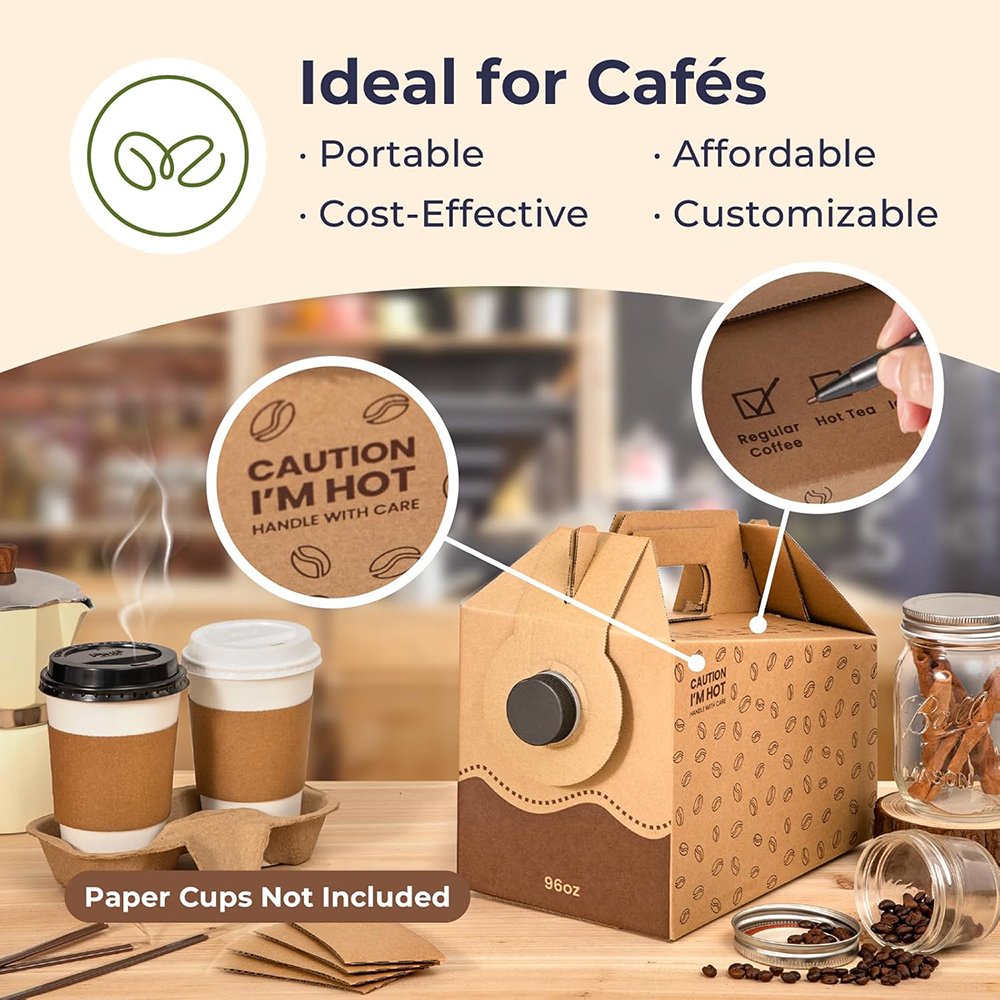
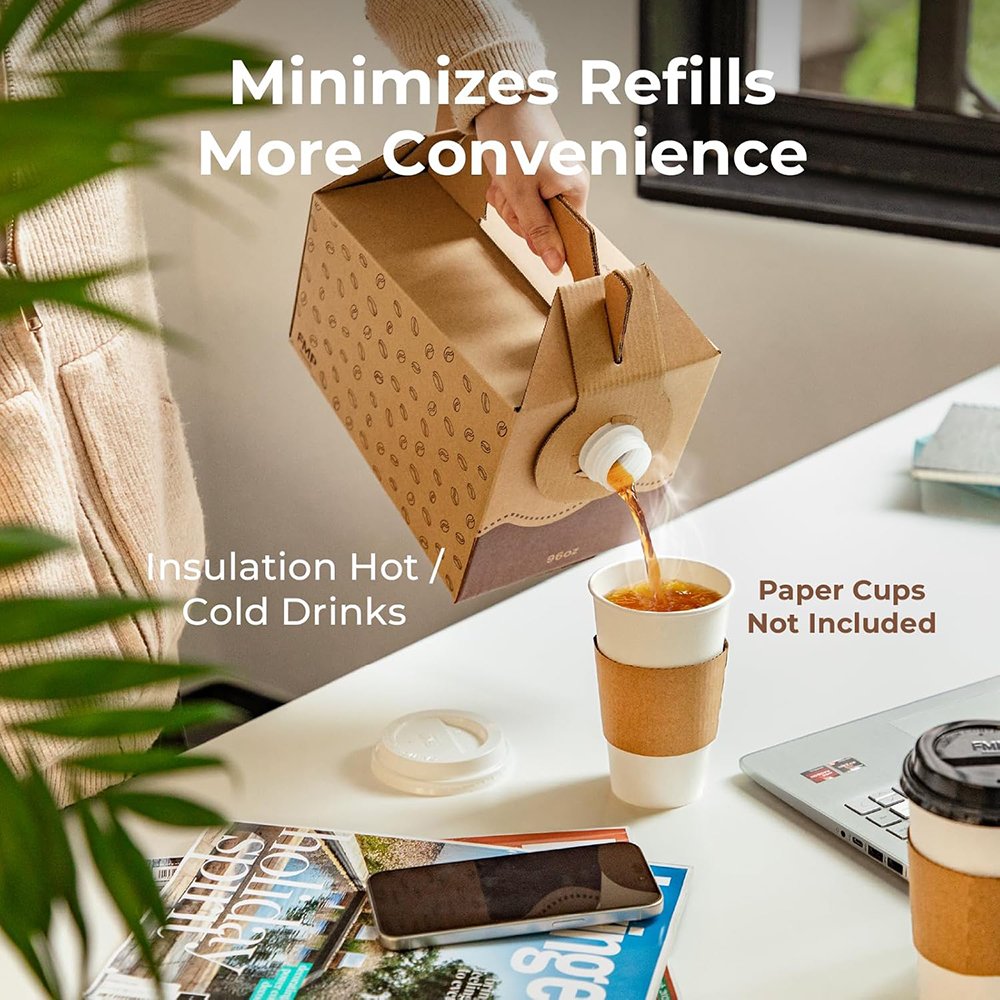
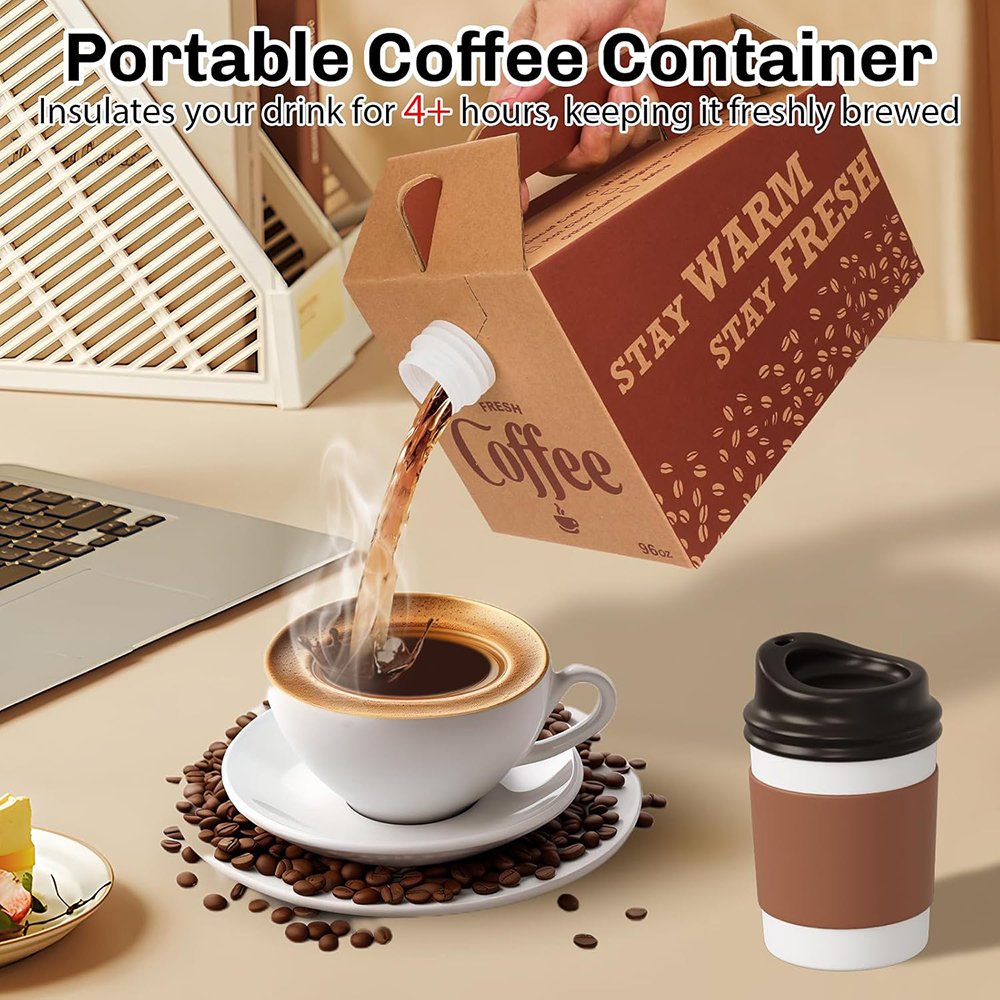
Among the most popular solutions is the coffee bag in box, also known as coffee BIB. Combining a corrugated paper outer box with a flexible inner bag and dispensing tap, a coffee bag in box offers excellent portability, reduced transportation costs, and a premium customer experience.
However, one question is asked repeatedly by procurement managers, sustainability officers, and environmentally conscious consumers:
Is a coffee bag in box truly 100% recyclable if the outer box is made from kraft paper but the inner bag consists of multiple plastic layers?
The short answer is:
Usually no—but it is still one of the most sustainable beverage packaging systems available today when properly designed, separated, and recycled.
Understanding why requires looking beyond simple marketing claims.
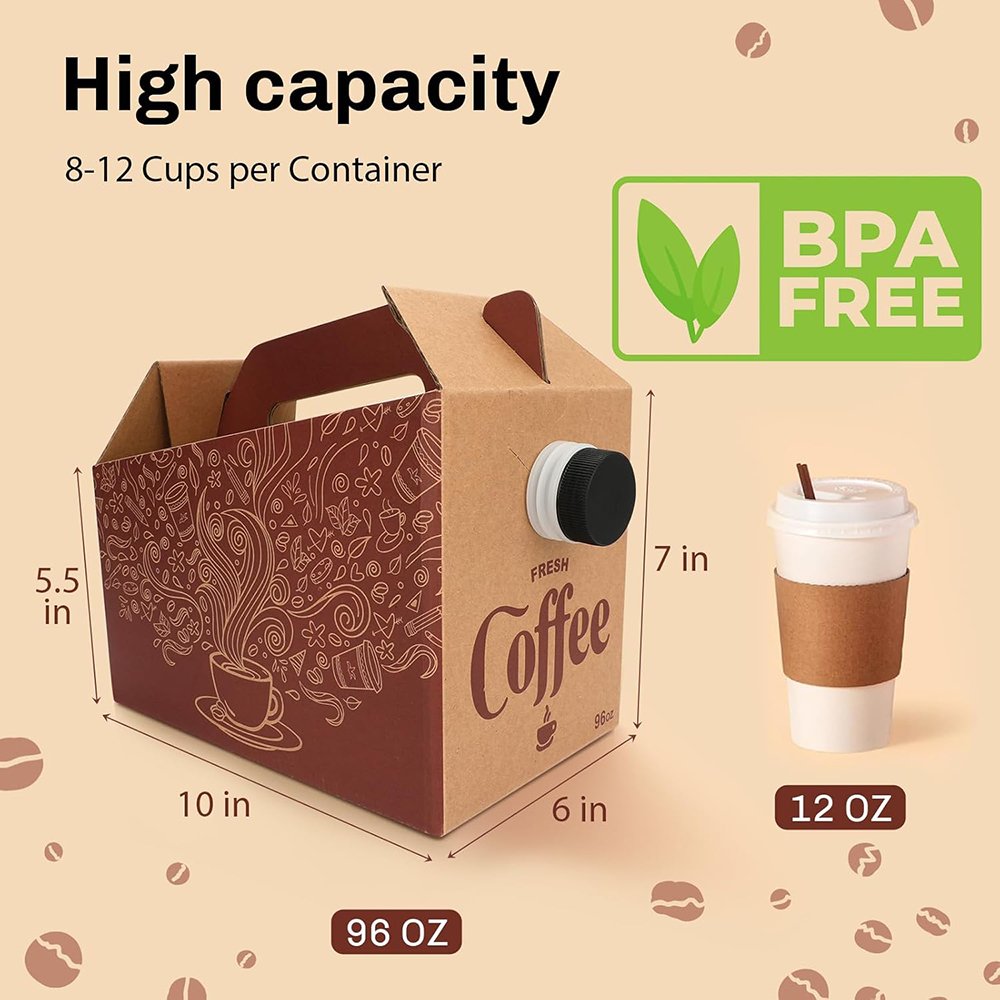
As an experienced coffee bag in box manufacturer, BM has over ten years of expertise designing customized beverage packaging solutions for coffee brands worldwide. Our engineering team continuously develops environmentally responsible Coffee to Go Containers, Coffee Box Dispensers, and Portable Coffee Carrier Containers that balance product protection, food safety, user convenience, and sustainability.
This comprehensive guide explains how a coffee bag in box is constructed, what components are recyclable, why multilayer films are still necessary, emerging recyclable-material technologies, and how coffee brands can reduce their environmental footprint without sacrificing product performance.
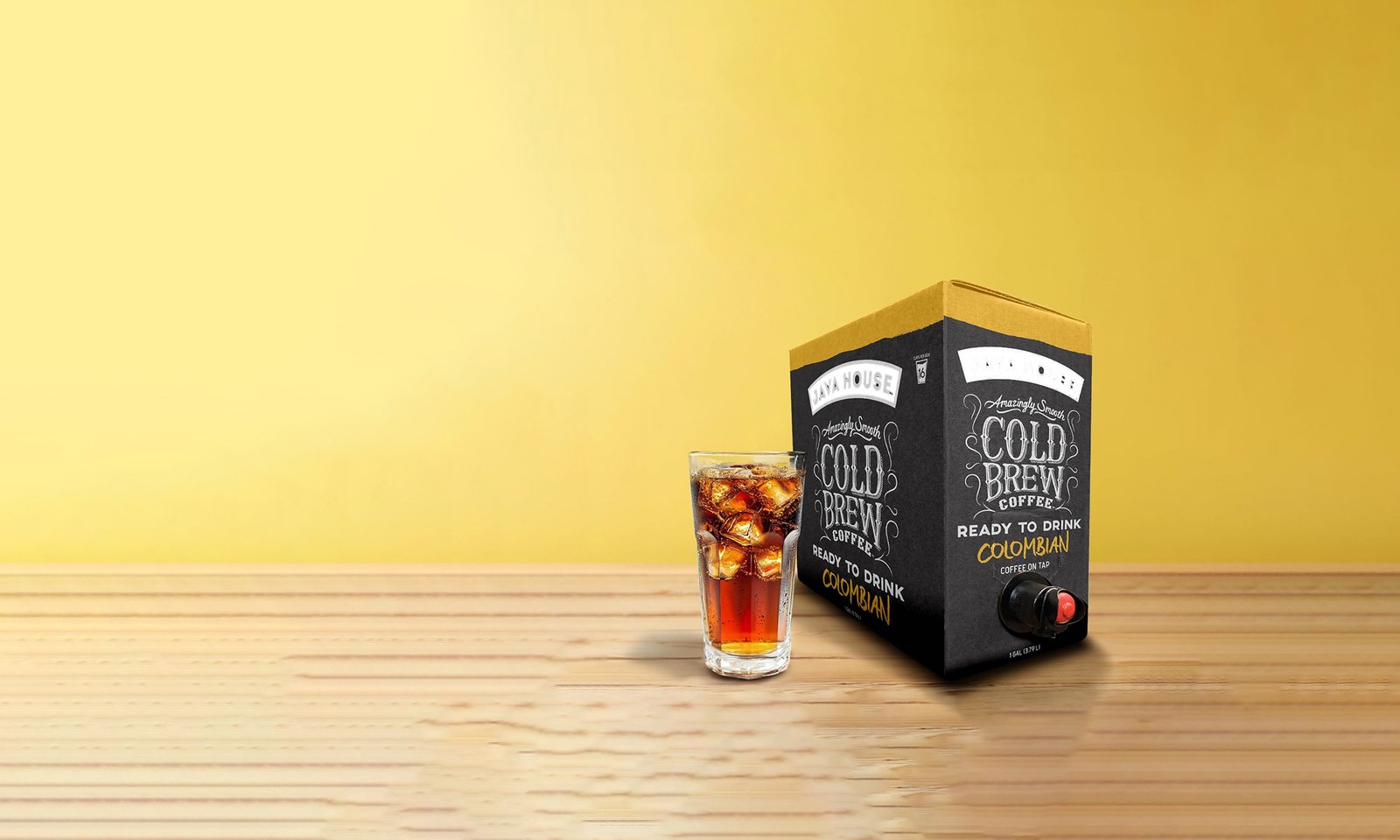
Understanding the Structure of a Coffee Bag in Box
Before discussing recyclability, it is important to understand the individual components of a coffee bag in box.
A typical system contains:
- Corrugated kraft paper outer box
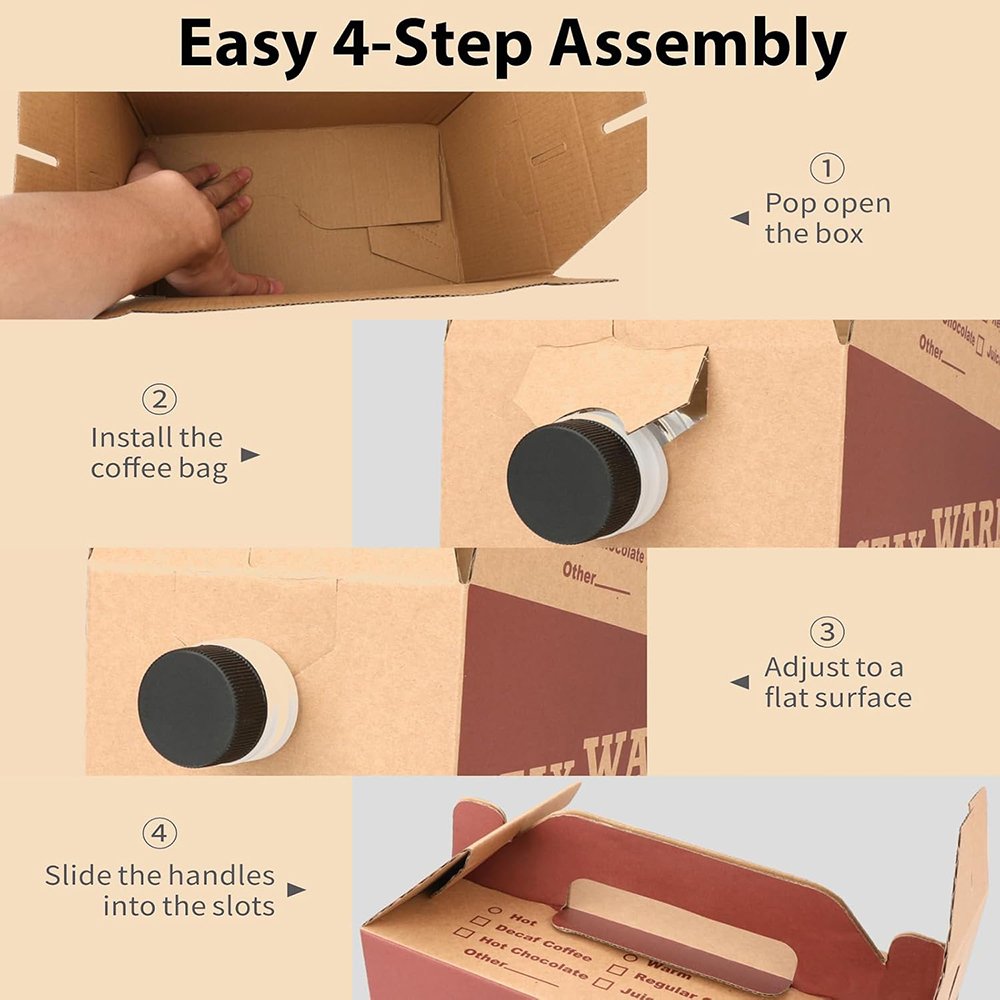
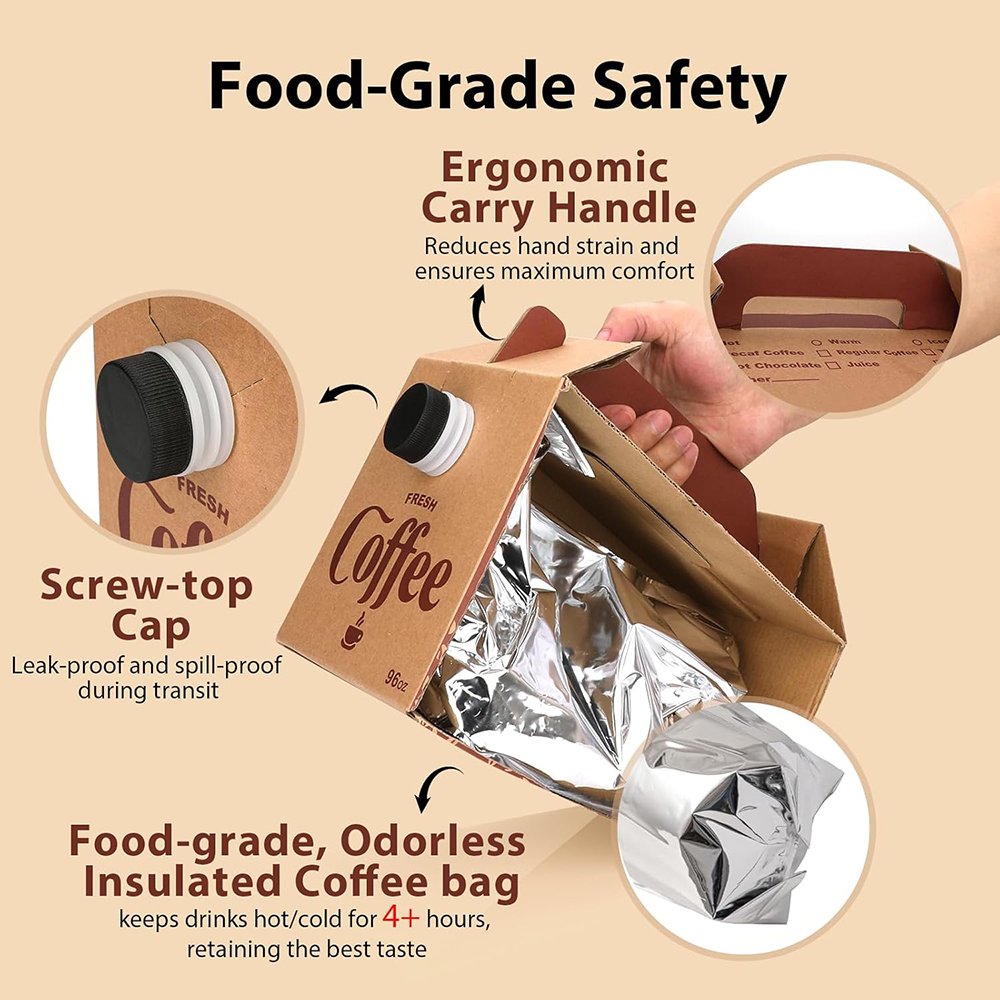
- Flexible inner barrier bag
- Dispensing tap (spigot)
- Optional carrying handle reinforcement
- Printing inks
- Adhesives
- Protective coatings
Each material has different recycling characteristics.
Coffee Bag in Box Outer Kraft Box: Highly Recyclable
The corrugated kraft box is generally the easiest component to recycle.
High-quality kraft paper typically offers:
- Excellent fiber recovery
- High recycled fiber value
- Wide acceptance in paper recycling systems
- Renewable raw materials
- Low transportation emissions due to flat shipping
If designed without excessive plastic lamination, the outer coffee bag in box can usually enter conventional paper recycling streams after use.
Why Coffee Bag in Box Uses Multi-Layer Plastic Bags
Many consumers wonder why manufacturers do not simply replace the plastic bag with paper.
The answer lies in beverage preservation.
Coffee is extremely sensitive to:
- Oxygen
- Moisture
- Light
- Aroma loss
- Microbial contamination
Paper alone cannot provide sufficient protection.
Therefore, most coffee bag in box systems use multilayer barrier films combining different polymers, each performing a unique function.
Typical layers may provide:
- Heat sealing
- Mechanical strength
- Oxygen barrier
- Moisture barrier
- Puncture resistance
- Flexibility
Without these properties, coffee quality and shelf life would decline significantly.
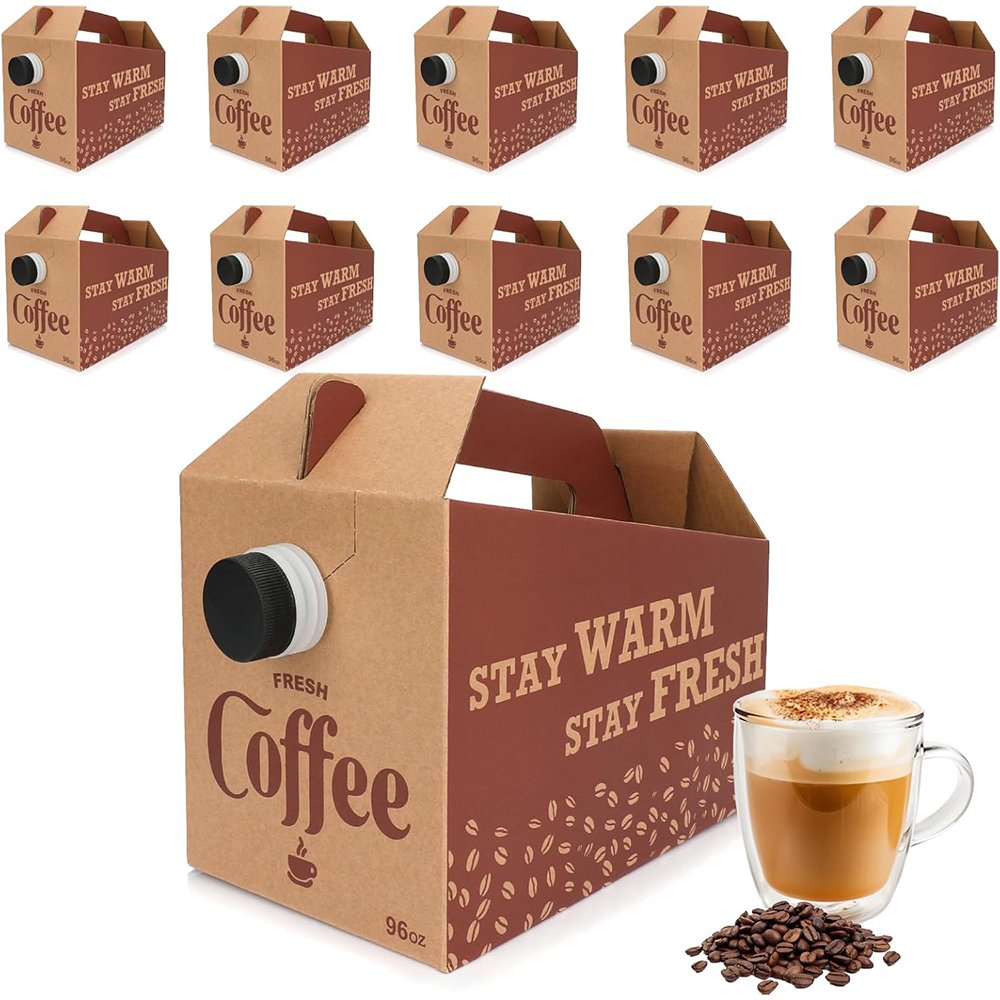
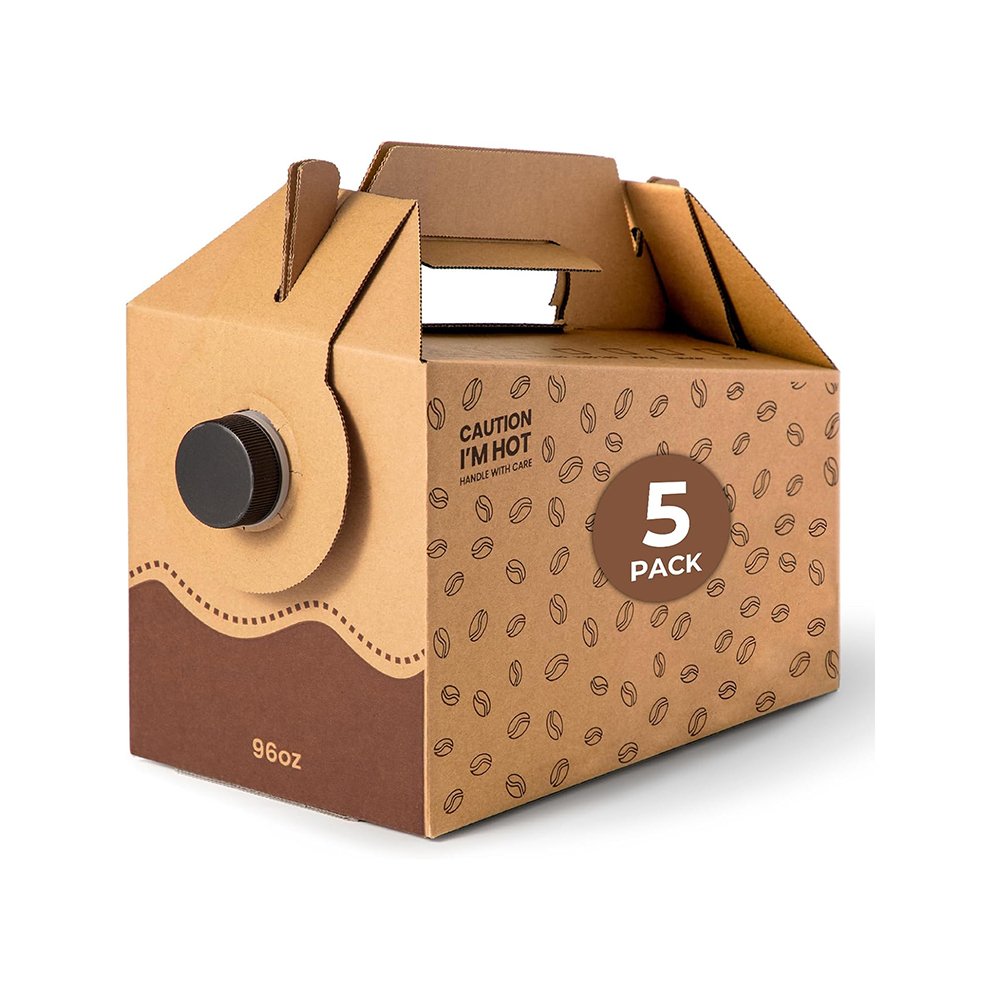
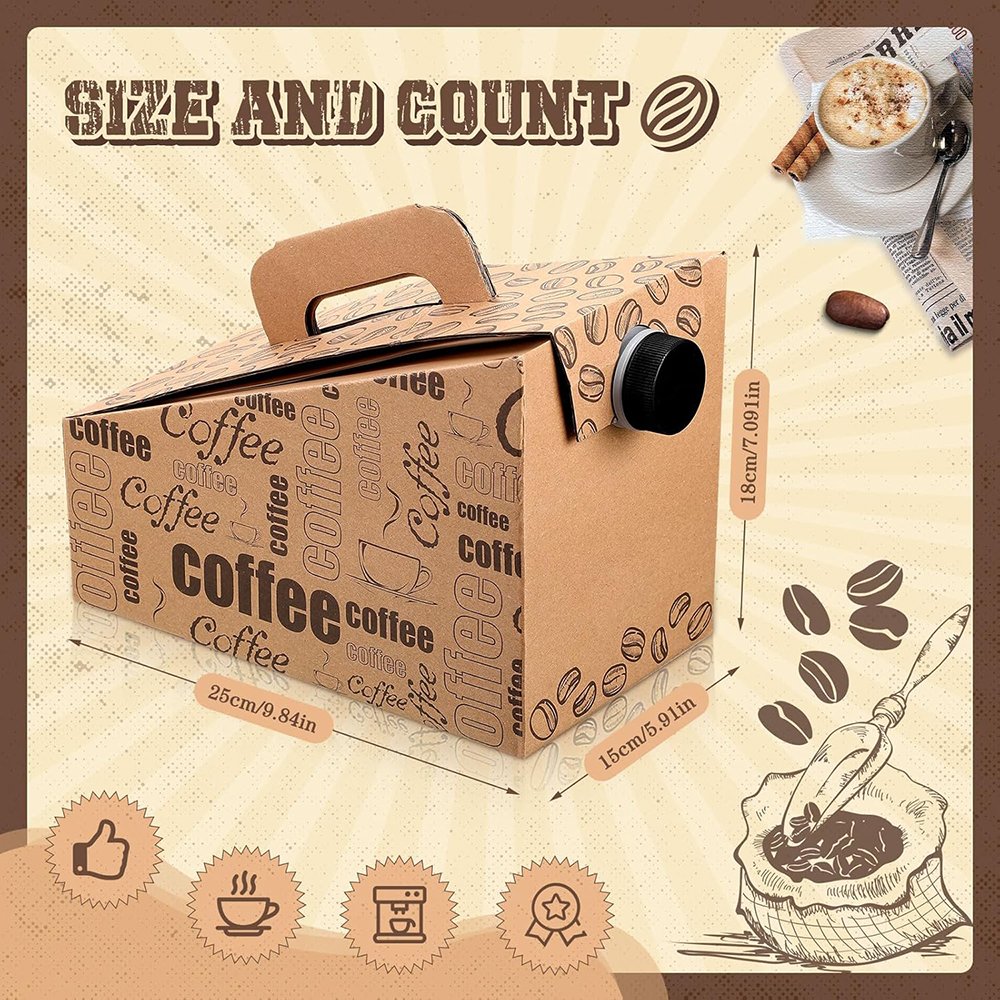
Why Multi-Layer Plastic Makes Coffee Bag in Box Recycling More Difficult
The challenge is not plastic itself.
The challenge is multiple materials permanently bonded together.
A multilayer beverage bag may contain combinations of:
- Polyethylene (PE)
- EVOH
- Nylon (PA)
- Metallized films
- Adhesive tie layers
These layers cannot easily be separated during conventional recycling.
As a result, many municipal recycling systems currently do not process them alongside standard plastic films.
Can a Coffee Bag in Box Be Considered 100% Recyclable?
Strictly speaking, most current coffee bag in box systems are not 100% recyclable as a complete unit because:
- The kraft box is recyclable.
- The inner multilayer bag often requires specialized recycling.
- The plastic tap may require separate disposal or dedicated recycling.
- Some coatings and laminations may limit recyclability.
However, this does not mean the packaging is environmentally poor.
In many life-cycle assessments, Bag-in-Box systems compare favorably with rigid plastic containers because they use significantly less plastic per liter of beverage and reduce transportation emissions through lightweight construction.
Coffee Bag in Box Material Separation Is the Key
One important principle often overlooked is component separation.
Instead of evaluating the package as one object, sustainability should consider whether individual components can be separated easily.
An optimized coffee bag in box should allow users to:
- Remove the inner bag.
- Separate the dispensing tap if possible.
- Flatten the kraft outer box.
- Recycle the corrugated carton through local paper recycling.
- Dispose of or recycle the remaining components according to local facilities.
Simple separation improves the likelihood that valuable paper fibers are recovered.
Coffee Bag in Box Has a Lower Plastic-to-Product Ratio
Compared with rigid beverage jugs or buckets, a coffee bag in box generally uses much less plastic for the same beverage volume.
For example:
- A rigid container must support itself structurally.
- A flexible bag relies on the corrugated carton for support.
Because of this shared structural design, the plastic component can often be significantly lighter while still protecting the coffee.
This reduced material usage is one reason Bag-in-Box systems are widely recognized as resource-efficient packaging formats.
Coffee Bag in Box Reduces Transportation Emissions
Sustainability extends beyond recycling.
Transportation efficiency plays a major role in overall environmental impact.
A coffee bag in box offers several logistics advantages:
- Flat-packed corrugated boxes save shipping space.
- Flexible bags weigh less than rigid containers.
- More units fit on each pallet.
- Reduced transportation weight lowers fuel consumption.
For global coffee brands, these efficiencies contribute to a smaller carbon footprint.
Coffee Bag in Box and Food Waste Reduction
Packaging sustainability also includes preventing product waste.
Discarded coffee has its own environmental footprint due to:
- Water consumption during cultivation
- Energy used in roasting
- Transportation emissions
- Packaging materials
- Brewing resources
A well-designed coffee bag in box with high-barrier films helps preserve flavor and freshness, extending usable shelf life and reducing beverage waste. In many cases, the environmental benefit of preventing product spoilage outweighs the impact of using a more complex barrier film.
Emerging Recyclable Materials for Coffee Bag in Box
Packaging technology continues to evolve.
Several promising developments include:
Mono-Material PE Barrier Films
Instead of combining multiple incompatible polymers, newer mono-material polyethylene structures aim to provide barrier performance while improving recyclability where suitable collection systems exist.
Recyclable Barrier Technologies
Advanced coatings are being developed to replace certain traditional barrier layers without compromising coffee protection.
Bio-Based Plastics
Some manufacturers are exploring renewable feedstocks derived from plants rather than fossil resources. These materials can reduce dependence on petroleum, though recyclability and performance vary.
Fiber-Based Dispensing Components
Research is also underway into paper-based or hybrid dispensing elements that reduce virgin plastic content.
Designing a More Sustainable Coffee Bag in Box
A responsible coffee bag in box manufacturer considers sustainability throughout the design process.
Important practices include:
Minimize Material Usage
Use only the amount of paper and plastic necessary to achieve required performance.
Avoid Unnecessary Laminations
Excessive plastic coatings on the outer carton may hinder paper recycling.
Optimize Structural Strength
Stronger engineering can sometimes reduce material consumption without sacrificing durability.
Use Water-Based or Low-Impact Printing Systems
Environmentally responsible inks can improve recyclability and reduce emissions during production.
Design for Easy Disassembly
Simple separation of paper, plastic bag, and tap encourages proper recycling.
Coffee Bag in Box Certifications to Consider
Coffee brands increasingly request packaging that aligns with recognized environmental standards.
Depending on the product and market, relevant certifications or sourcing practices may include:
- Responsibly sourced paper fiber
- Food-contact compliance
- Responsible manufacturing systems
- Chain-of-custody documentation for certified paper where required
Specific certification needs vary by region and customer requirements.
Common Sustainability Myths About Coffee Bag in Box
Myth 1: Multi-Layer Plastic Means the Entire Package Is Non-Recyclable
False.
The recyclable kraft carton remains a valuable recovered material even if the flexible bag follows a different end-of-life pathway.
Myth 2: Paper Packaging Is Always Better Than Plastic
Not necessarily.
If replacing a barrier film causes product spoilage or dramatically shortens shelf life, the total environmental impact may increase due to wasted coffee.
Myth 3: Heavier Packaging Is More Sustainable
Generally incorrect.
Using more material than necessary increases resource consumption and transportation emissions.
Myth 4: Recyclability Is the Only Sustainability Metric
A comprehensive assessment also considers:
- Carbon emissions
- Transportation efficiency
- Material consumption
- Product protection
- Food waste prevention
- Renewable resource use
How BM Develops Sustainable Coffee Bag in Box Solutions
As a professional coffee bag in box manufacturer, BM believes sustainability begins at the design stage.
Our engineering team works with coffee brands to optimize:
- Corrugated kraft board selection
- Lightweight structural engineering
- Efficient dieline layouts
- Barrier bag compatibility
- Dispensing tap integration
- Transportation performance
- Material efficiency
- Easy component separation for recycling
Our customized beverage packaging solutions include:
- Coffee Bag in Box
- Coffee BIB
- Coffee Box Dispensers
- Coffee to Go Containers
- Coffee to Go Drink Containers
- Portable Coffee Carrier Containers
We help customers balance product protection, branding, operational efficiency, and environmental responsibility without compromising beverage quality.
Future Trends in Coffee Bag in Box Sustainability
The next generation of coffee bag in box packaging is likely to focus on:
Recyclable Mono-Material Barrier Bags
Improving compatibility with plastic recycling streams where infrastructure exists.
Lower-Carbon Paperboard
Using responsibly sourced and lighter-weight corrugated materials while maintaining strength.
Plastic Reduction
Redesigning taps, handles, and accessories to minimize virgin plastic use.
Circular Packaging Design
Creating systems that are easier to separate, recycle, and reintroduce into manufacturing cycles.
Digital Product Information
QR codes and smart packaging can guide consumers on proper disposal and recycling practices, helping increase actual recycling rates.
Frequently Asked Questions
Is a coffee bag in box 100% recyclable?
In most current designs, no. The corrugated outer box is typically recyclable, while the multilayer plastic bag and dispensing tap may require different recycling or disposal methods depending on local infrastructure.
Why not replace the plastic bag with paper?
Paper alone cannot provide the oxygen, moisture, and aroma barriers needed to preserve coffee quality and shelf life.
Is a coffee bag in box still environmentally friendly?
Yes. When thoughtfully engineered, it can reduce material use, improve transportation efficiency, protect the beverage from spoilage, and recover valuable paper fibers through recycling.
Can sustainability be improved further?
Absolutely. Ongoing innovations in mono-material barrier films, lightweight paper engineering, recyclable components, and easier material separation continue to improve the environmental performance of Bag-in-Box systems.
Sustainable Coffee Bag in Box Design Is About the Entire System
The question is not simply whether a coffee bag in box is “100% recyclable.” The better question is:
How can the entire packaging system minimize environmental impact while still protecting premium coffee?
A high-performance coffee bag in box combines:
- Recyclable corrugated kraft paper
- Efficient use of barrier materials
- Durable yet lightweight construction
- Reduced transportation emissions
- Excellent product protection
- Easy separation of components after use
- Continuous innovation toward more recyclable materials
When these elements are carefully engineered together, Bag-in-Box packaging remains one of the most resource-efficient solutions available for transporting and dispensing coffee.
As an experienced coffee bag in box factory and coffee bag in box manufacturer, BM is committed to helping coffee brands develop sustainable packaging that meets today’s operational needs while preparing for tomorrow’s circular economy. From custom Coffee Box Dispensers and Coffee Beverage Dispenser solutions to Coffee to Go Containers, Coffee to Go Drink Containers, and Portable Coffee Carrier Containers, we provide tailored packaging systems that combine performance, premium branding, and responsible environmental design.
About BM Paper Box Manufacturer
We are a professional paper packaging box customization factory with ten years of industry experience. We focus on providing customers with high-quality customized packaging solutions, covering consumer electronics, medical equipment consumables, cosmetics and other fields, with ingenious design and exquisite technology, to add infinite charm to customers’ products.
As a professional paper packaging box customization factory, our service range is wide, covering consumer electronics, medical equipment consumables, cosmetics and other fields. Whether it is the exquisite gift box of high-end consumer electronics, the professional packaging of medical equipment, or the fashion outer box of cosmetics, we can tailor the most suitable packaging solution according to the needs of customers and the characteristics of the product. Our professional strength has been recognized by many brand customers and become their trusted partner.
Why Choose BM Paper Box Factroy
HIGH END QUALITY:As one of the best customized paper box manufacturer in china, our QC team will ensure every single product you receive are best quality. We have professional quality testing machine.
PRODUCT DESIGN:Our sampling department has complete process of making drawings into reality. We also improve your product design based on our years of working experience.Tell us what you think.
STABLE DELIVERY TIME:As the best gift box manufacturer & supplier,we have sufficient manufacturing capacity, big orders won’t beat us, we can still deliver the order for you in time.
BEST PRICE:We are source factory of paper boxes and the best manufacturer in China, that’s why we can provide high quality bags with best price.
PRECISE MANAGEMENT:Nothing can be achieved if we don’t implement precise management. We are a company with complete management system.
7-24 SERVICE:As the best paper box manufacturer, 24-7 immediate response: We’ll receive your feedback to make us a better supplier.contact us(+86 18925520049)
FAQs About BM Paper Box
We are a Chinese top manufacturer and our factory is located in Dongguan. Welcome to visit our factory!
• We are a professional paper packaging product provider, especially in the gift packaging field. We can produce kinds of paper boxes and paper bags for multi-purpose.
• We provide one-stop services and accept custom designs as your requirements.
•Of course, usually we will provide free samples, and you only need to cover the freight. For custom printed samples, pls send your requirements to us for checking the sample cost.
• It takes about 7 days for sample production.
Yes, we provide free design services, structural design and simple graphic design.
Sure. We can do any packaging with your design. Now we open a ODM packaging which is for small quantity from 100pc to 500pc,but you can still have your own logo.
Depending on the order quantity and production details, it will take about 15 to 20 days.
Always a pre-production sample before mass production; Always final Inspection before shipment
• Size, material, printing details, quantity, shipping destination, etc.
• You can also just tell us your requirements and we will recommend products to you.
• By sea, by air or by express.
• If you have your own freight forwarder in China, it is the ex-factory or FOB price.
•CFR or CIF, etc., if you need us to ship on your behalf.
• DDP and DDU can also be used.
• More choices, we will consider your choices.
• The price is determined by the quantity, material, processing method, size and other factors. In addition, due to our continuous
technological innovation, the prices of some of our products are extremely competitive, please contact us to quote.