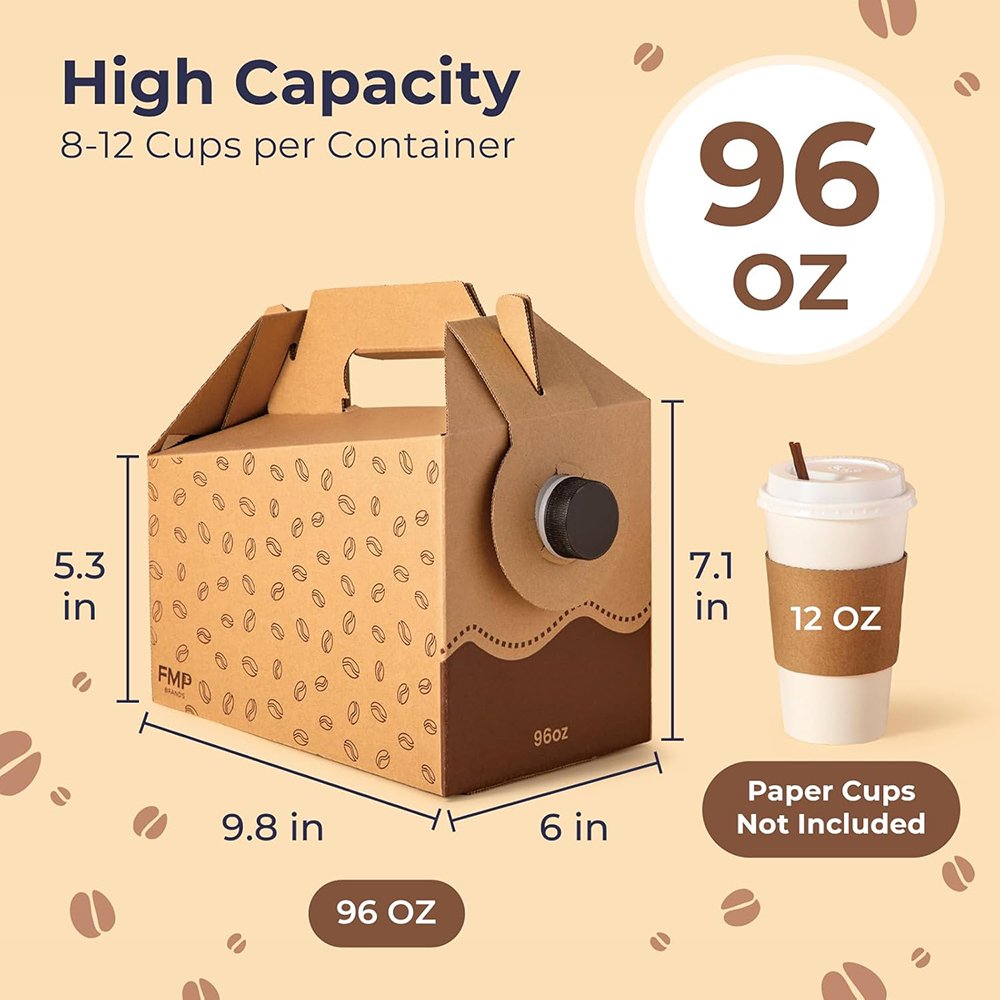
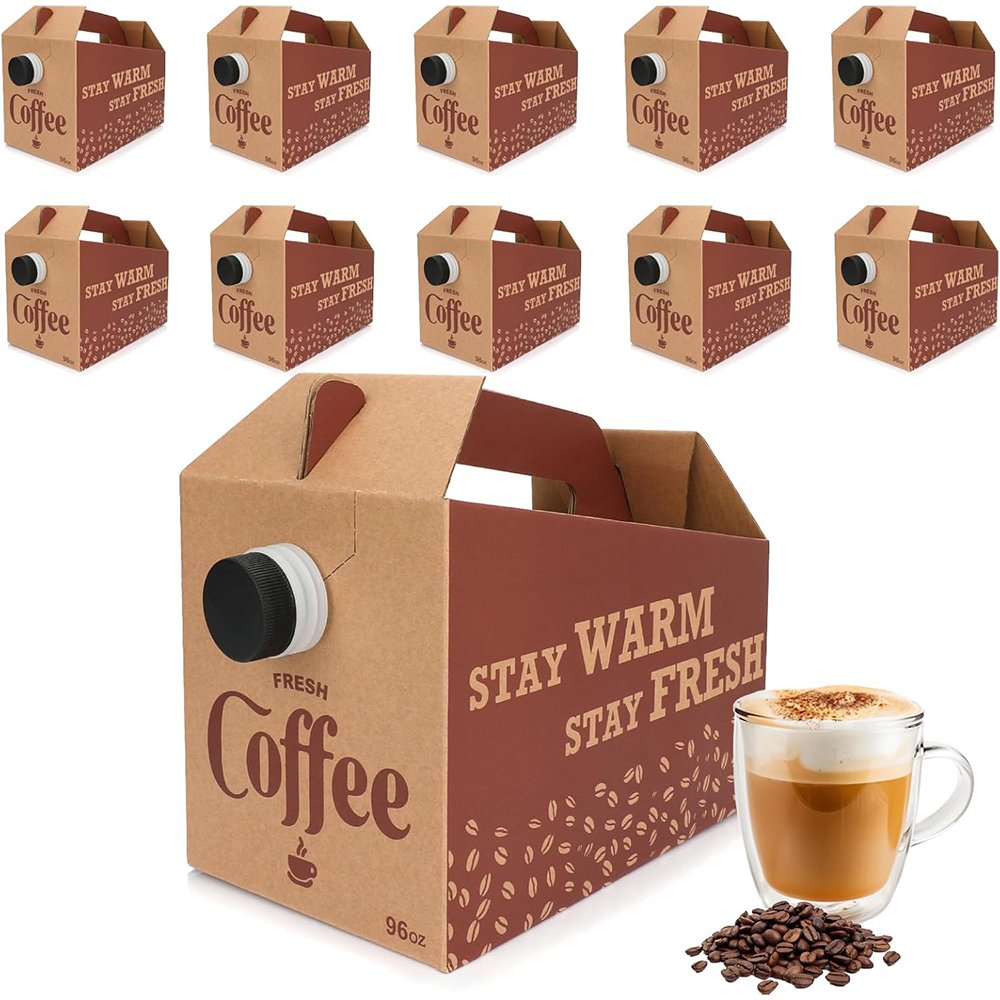
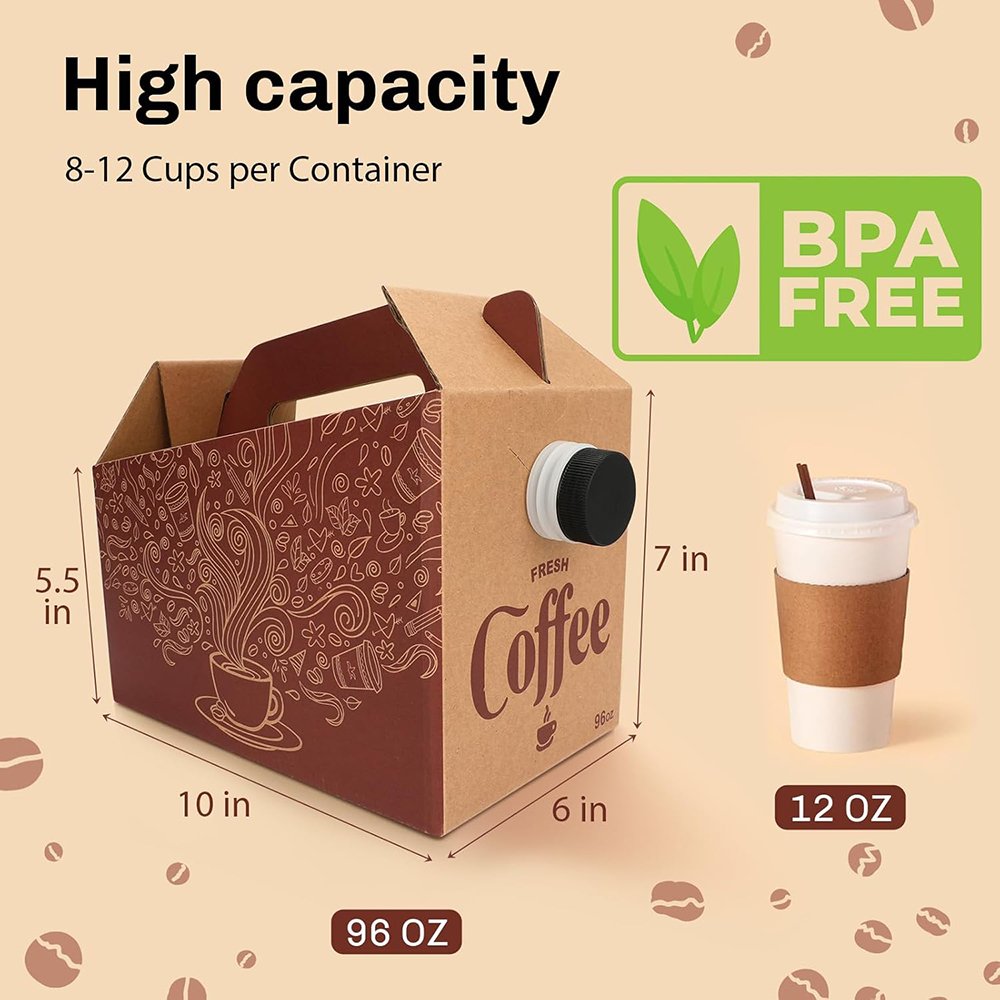
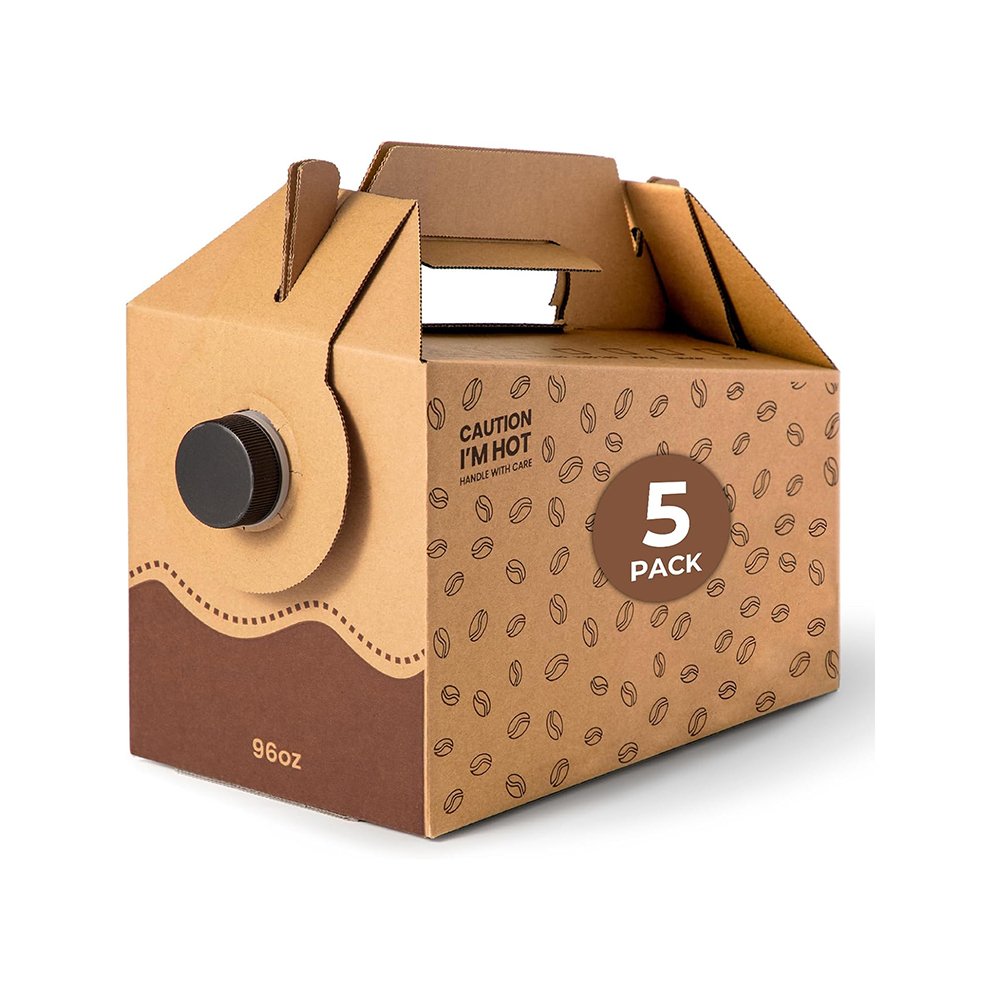
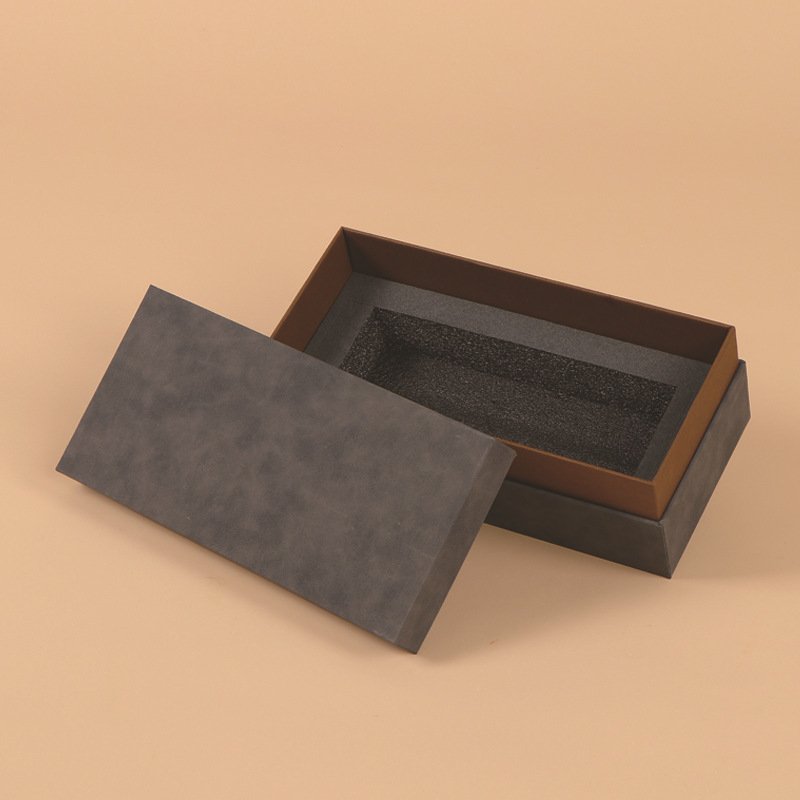
Can a Corrugated Coffee Dispenser Keep Coffee Hot Without Foam?
As coffee consumption continues to shift toward takeaway, catering, corporate events, and mobile beverage service, corrugated coffee dispenser packaging has become one of the fastest-growing alternatives to traditional insulated beverage containers. Modern coffee brands are looking for packaging that is portable, sustainable, brandable, and capable of maintaining serving temperature without relying on expanded polystyrene (EPS) or other plastic foam inserts.
At the same time, environmental regulations and consumer expectations are changing. Many countries and retailers are reducing or banning foam packaging due to recycling challenges, pushing manufacturers to develop plastic-free thermal packaging solutions.
One common question from coffee brands is:
“How long can a corrugated coffee dispenser keep coffee at approximately 80°C without using plastic foam insulation?”
The answer depends on far more than simply choosing thicker corrugated board. Heat retention is influenced by multiple design variables, including box structure, corrugated flute combination, air insulation, bag material, dispenser capacity, tap position, ambient temperature, and transportation conditions.
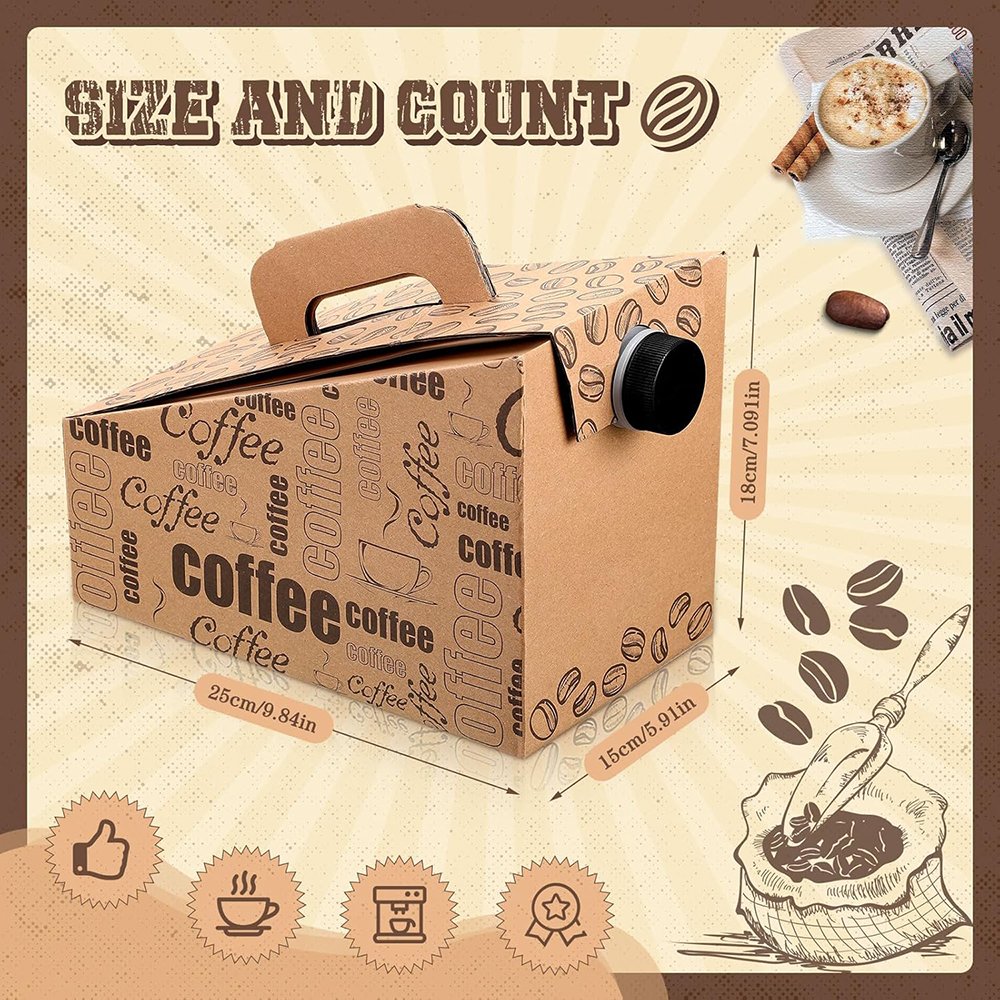
As a professional coffee bag in box manufacturer, BM has more than ten years of experience developing customized paper packaging, beverage dispensers, gift boxes, and retail display solutions. We work with coffee chains, beverage brands, foodservice distributors, and event organizers to design Coffee Box Dispensers, Coffee to Go Containers, Portable Coffee Carrier Containers, and complete coffee BIB systems that balance insulation, sustainability, durability, and attractive branding.
This guide explores how a corrugated coffee dispenser retains heat, what factors affect thermal performance, and how innovative structural design can significantly extend hot coffee holding time—without adding plastic foam inserts.
Why Corrugated Coffee Dispenser Packaging Is Replacing Foam-Based Beverage Containers
Traditional insulated beverage dispensers often rely on:
Expanded polystyrene (EPS)
Polyurethane foam
Plastic insulation shells
Although these materials provide excellent insulation, they also introduce several disadvantages:
For many coffee brands, sustainable packaging has become part of the overall customer experience.
How a Corrugated Coffee Dispenser Retains Heat
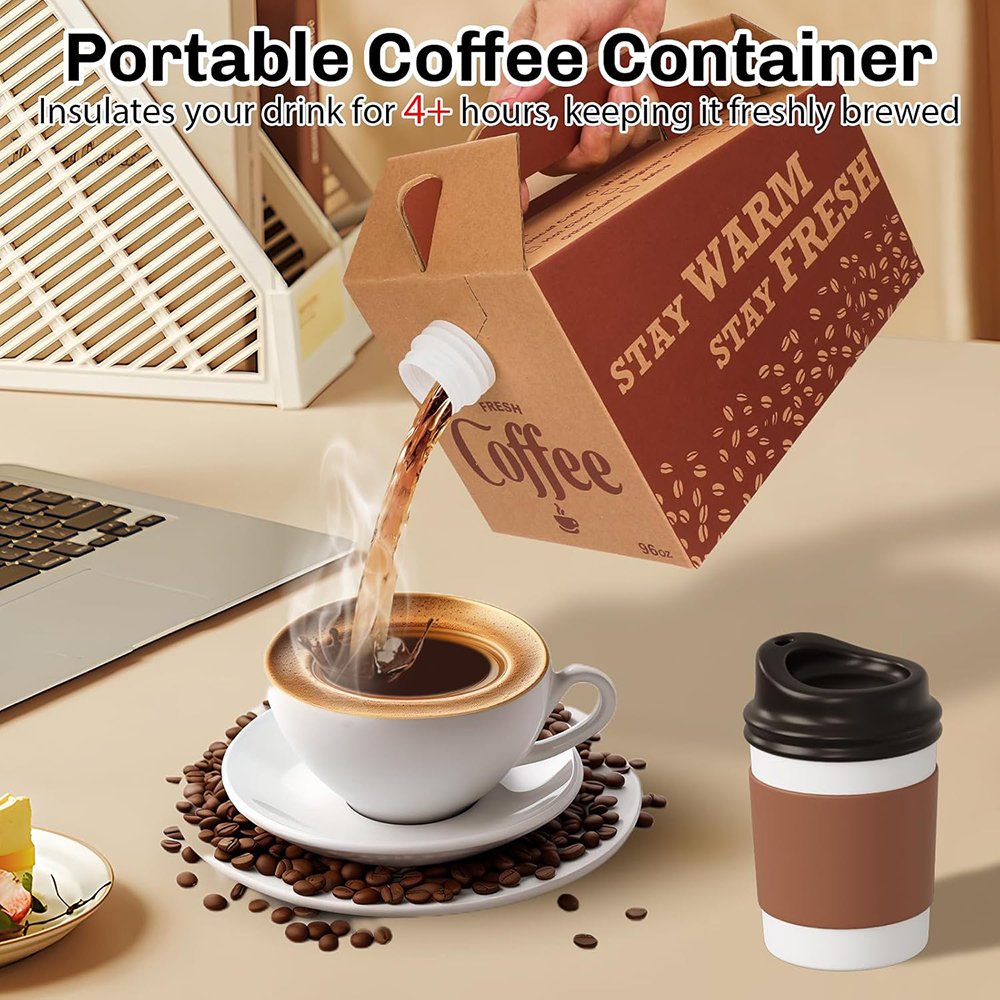
Unlike vacuum-insulated containers, a corrugated coffee dispenser does not actively trap heat. Instead, it slows heat loss by reducing thermal transfer through carefully engineered packaging layers.
Heat escapes through three primary mechanisms:
1. Heat Conduction
Heat naturally travels from hot coffee toward the cooler environment.
Major conduction paths include:
Inner bag
Corrugated board
Dispensing tap
Handle area
Reducing conductive heat transfer is one of the primary goals of structural packaging design.
2. Heat Convection
Air movement removes heat from the package surface.
Outdoor events, delivery vehicles, or air-conditioned cafés accelerate this process.
Packaging engineers can reduce convection by minimizing unnecessary openings and creating enclosed air chambers within the box.
3. Thermal Radiation
Even without direct contact, hot surfaces continuously radiate heat.
Although radiation represents a smaller percentage of overall heat loss compared with conduction and convection, reflective inner materials or optimized board structures can help minimize this effect.
This approach maintains sustainability while improving insulation performance.
The Coffee Bag Also Influences Heat Retention
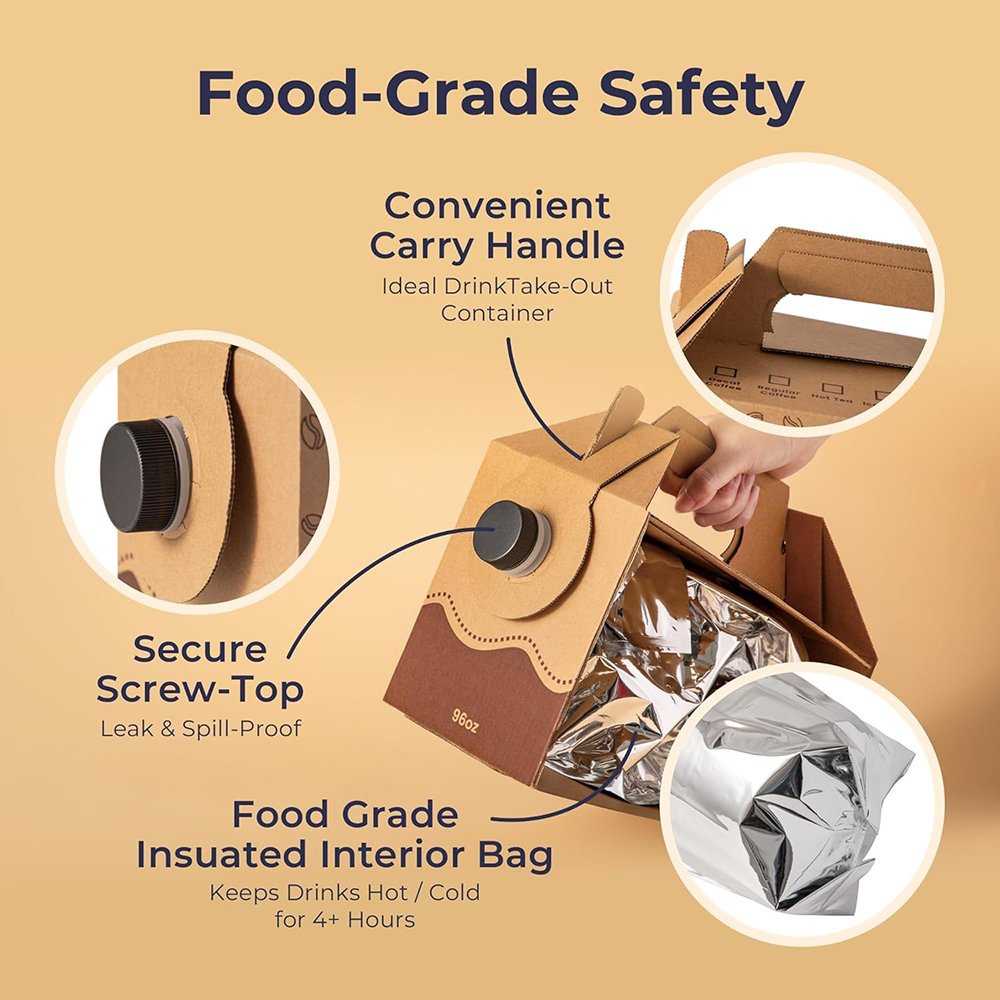
The outer box receives most of the attention, but the inner coffee BIB bag also affects thermal performance.
A professional coffee bag in box manufacturer carefully evaluates:
Film thickness
Barrier structure
Heat resistance
Flexibility
Certain multilayer barrier films reduce thermal loss more effectively than thin single-layer films while also preserving coffee aroma and preventing oxygen ingress.
Capacity Matters: Larger Coffee Dispensers Stay Hot Longer
Thermal mass is one of the biggest contributors to heat retention.
A 10L dispenser naturally cools more slowly than a 3L dispenser because:
Larger liquid volume stores more heat energy.
The surface-area-to-volume ratio decreases.
Less heat escapes per liter of coffee.
Approximate trends under typical indoor conditions (20–25°C ambient temperature) are:
Capacity
Relative Heat Retention
3L
Suitable for short events or takeaway service
5L
Balanced performance for cafés and meetings
10L
Longest temperature retention for catering and events
Actual holding time depends on dispenser design, dispensing frequency, ambient temperature, and whether the tap is opened repeatedly.
How Corrugated Coffee Dispenser Structure Improves Thermal Performance
Heat retention varies dramatically depending on where the dispenser is used.
Common factors include:
Outdoor temperature
Wind exposure
Air conditioning
Direct sunlight
Repeated dispensing frequency
For example:
A dispenser used inside a meeting room will typically retain serving temperature significantly longer than the same dispenser used outdoors during winter or in a delivery vehicle with frequent door openings.
Therefore, manufacturers should design packaging based on actual usage scenarios rather than laboratory conditions alone.
Testing Methods Used by Professional Coffee Dispenser Manufacturers
Reliable thermal performance should always be validated through testing.
Professional coffee box factory engineering teams typically perform:
Thermal Holding Tests
Measure beverage temperature over time under controlled ambient conditions.
Transportation Simulation
Evaluate thermal stability after vibration, handling, and stacking.
Structural Compression Testing
Ensure insulation structures do not collapse under liquid weight.
Dispensing Cycle Testing
Repeated dispensing is simulated to understand how opening frequency affects temperature retention.
These evaluations provide practical data that supports packaging optimization.
Common Design Mistakes That Reduce Heat Retention
Using Thin Single-Wall Board
Although economical, single-wall corrugated board often loses heat quickly in commercial beverage applications.
Oversized Internal Space
Large empty gaps allow excessive air circulation inside the package, accelerating cooling.
Ignoring Tap Placement
Poorly positioned taps expose larger portions of the beverage system to ambient air.
Prioritizing Appearance Over Structure
Premium printing is important, but structural engineering determines insulation performance.
A visually attractive dispenser that cools too quickly ultimately reduces customer satisfaction.
How BM Designs High-Performance Corrugated Coffee Dispensers
Our engineering team collaborates with customers to optimize:
Capacity selection
Corrugated flute combinations
Paperboard grades
Internal reinforcement
Handle design
Tap positioning
Printing finishes
Logistics performance
Whether the application is a Coffee Box Dispenser, Coffee to Go Container, Coffee to Go Drink Container, or Portable Coffee Carrier Container, BM focuses on creating packaging that performs reliably while enhancing the customer’s brand image.
Future Trends for Corrugated Coffee Dispenser Packaging
The next generation of corrugated coffee dispenser solutions will increasingly combine sustainability with advanced engineering.
Emerging trends include:
Plastic-free insulation systems
Recyclable paper honeycomb thermal structures
Lightweight high-strength corrugated materials
Bio-based moisture-resistant coatings
Digital temperature indicators
Smart NFC-enabled coffee BIB packaging
Improved thermal barrier paper technologies
These innovations will help coffee brands reduce environmental impact while maintaining excellent beverage quality.
Smart Structural Design Can Extend Heat Retention Without Plastic Foam
A corrugated coffee dispenser can effectively maintain hot coffee without plastic foam inserts—but success depends on intelligent engineering rather than simply adding thicker paper.
The best-performing systems combine:
Optimized corrugated flute structures
Multi-layer air chamber design
High-performance coffee BIB films
Moisture-resistant paperboard
Strong compression-resistant construction
Carefully designed dispensing taps
Real-world transportation and thermal testing
Rather than relying on foam insulation, modern paper-based engineering enables coffee brands to deliver sustainable, premium, and reliable beverage packaging that meets both customer expectations and environmental goals.
As a trusted coffee dispenser factory and coffee bag in box manufacturer, BM provides customized packaging solutions for global coffee brands, including Coffee Box Dispensers, Coffee Beverage Dispenser supplier services, Coffee to Go Containers, Coffee to Go Drink Containers, and Portable Coffee Carrier Containers.
By combining packaging innovation with manufacturing expertise, BM helps customers develop corrugated coffee dispenser systems that protect beverage quality, strengthen brand value, and support a more sustainable future.
About BM Paper Box Manufacturer
We are a professional paper packaging box customization factory with ten years of industry experience. We focus on providing customers with high-quality customized packaging solutions, covering consumer electronics, medical equipment consumables, cosmetics and other fields, with ingenious design and exquisite technology, to add infinite charm to customers’ products.
As a professional paper packaging box customization factory, our service range is wide, covering consumer electronics, medical equipment consumables, cosmetics and other fields. Whether it is the exquisite gift box of high-end consumer electronics, the professional packaging of medical equipment, or the fashion outer box of cosmetics, we can tailor the most suitable packaging solution according to the needs of customers and the characteristics of the product. Our professional strength has been recognized by many brand customers and become their trusted partner.
Why Choose BM Paper Box Factroy
HIGH END QUALITY:As one of the best customized paper box manufacturer in china, our QC team will ensure every single product you receive are best quality. We have professional quality testing machine.
PRODUCT DESIGN:Our sampling department has complete process of making drawings into reality. We also improve your product design based on our years of working experience.Tell us what you think.
STABLE DELIVERY TIME:As the best gift box manufacturer & supplier,we have sufficient manufacturing capacity, big orders won’t beat us, we can still deliver the order for you in time.
BEST PRICE:We are source factory of paper boxes and the best manufacturer in China, that’s why we can provide high quality bags with best price.
PRECISE MANAGEMENT:Nothing can be achieved if we don’t implement precise management. We are a company with complete management system.
7-24 SERVICE:As the best paper box manufacturer, 24-7 immediate response: We’ll receive your feedback to make us a better supplier.contact us(+86 18925520049)
FAQs About BM Paper Box
Are you a manufacturer or a trader?
We are a Chinese top manufacturer and our factory is located in Dongguan. Welcome to visit our factory!
What is your product range?
• We are a professional paper packaging product provider, especially in the gift packaging field. We can produce kinds of paper boxes and paper bags for multi-purpose. • We provide one-stop services and accept custom designs as your requirements.
Can you provide samples?
•Of course, usually we will provide free samples, and you only need to cover the freight. For custom printed samples, pls send your requirements to us for checking the sample cost. • It takes about 7 days for sample production.
Can you provide a free design for my box?
Yes, we provide free design services, structural design and simple graphic design.
Can I have my custom logo , design or size?
Sure. We can do any packaging with your design. Now we open a ODM packaging which is for small quantity from 100pc to 500pc,but you can still have your own logo.
What's the delivery time?
Depending on the order quantity and production details, it will take about 15 to 20 days.
How can we guarantee quality?
Always a pre-production sample before mass production; Always final Inspection before shipment
What information should I provide for a quotation?
• Size, material, printing details, quantity, shipping destination, etc. • You can also just tell us your requirements and we will recommend products to you.
How to ship goods?
• By sea, by air or by express. • If you have your own freight forwarder in China, it is the ex-factory or FOB price. •CFR or CIF, etc., if you need us to ship on your behalf. • DDP and DDU can also be used. • More choices, we will consider your choices.
How much is it?
• The price is determined by the quantity, material, processing method, size and other factors. In addition, due to our continuous technological innovation, the prices of some of our products are extremely competitive, please contact us to quote.
EVE-Designed Paper Box expert
Foreign trade business director
13 years of business experience
Serve well-known brand customers
Any questions, please feel free to contact me immediately!